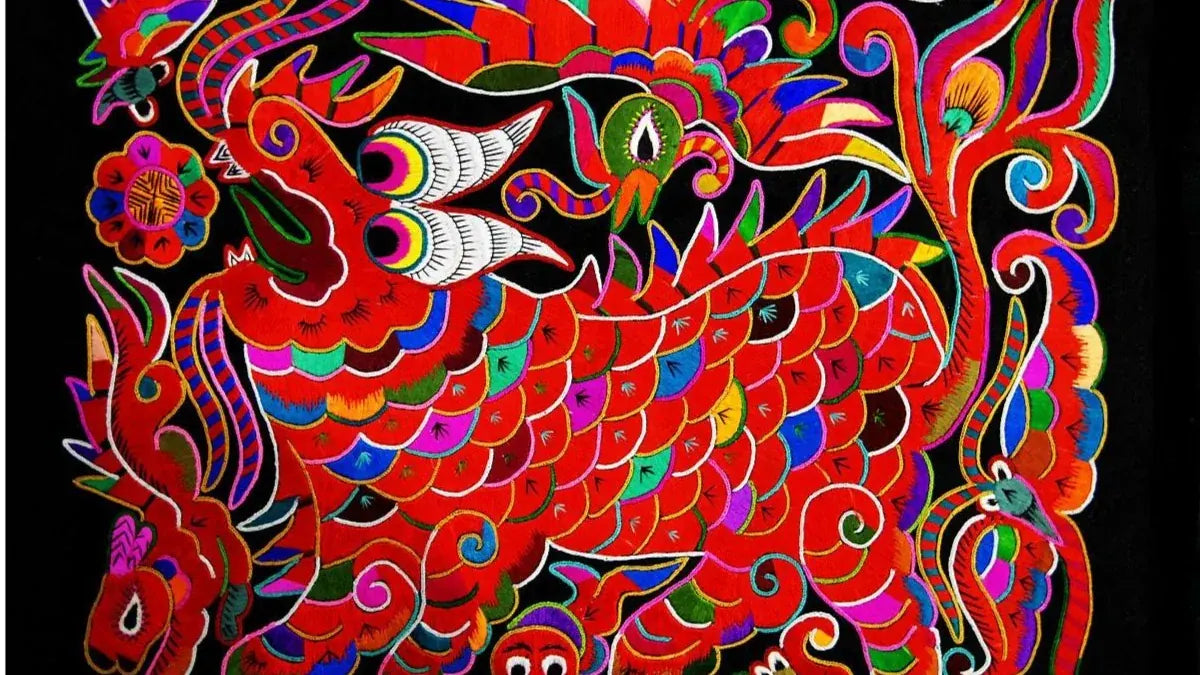
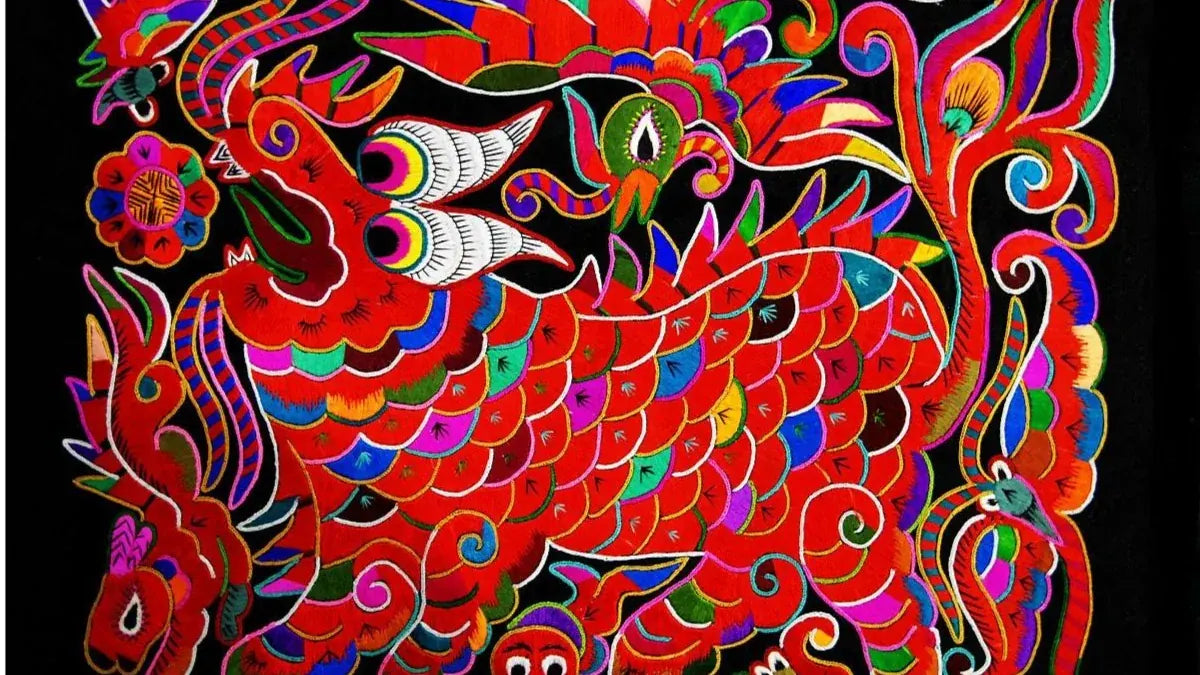
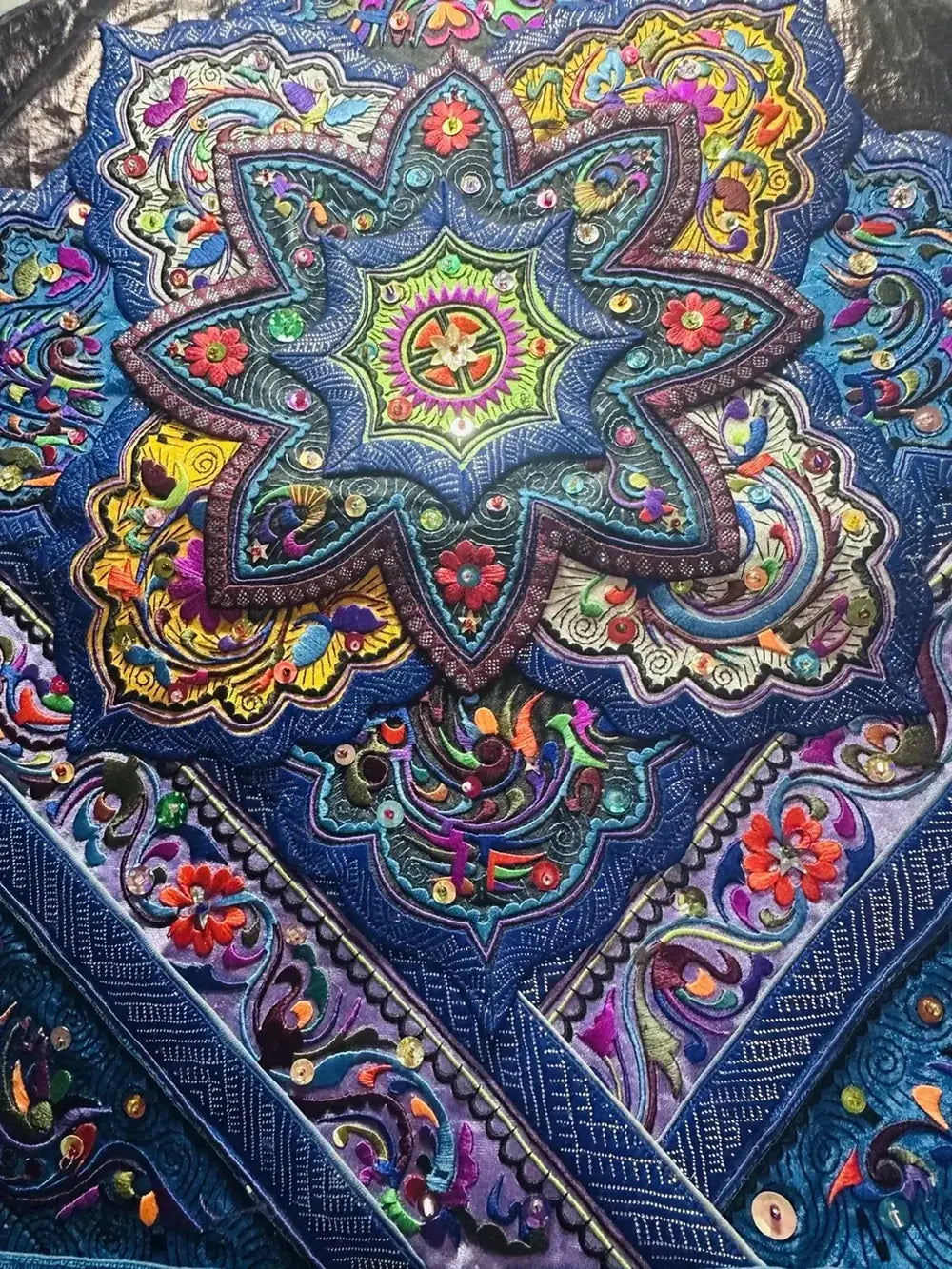
Miao embroidery is an ancient textile art created by the Miao (Hmong) people of Guizhou, China. Because the Miao historically possessed no written alphabet, women recorded clan migrations, creation myths, and ancestral genealogies directly into hand-stitched cloth—making Miao embroidery famous as a "wearable history book" (无字史书). Master embroiderers employ over a dozen specialized hand-stitching traditions, including split-silk, braid embroidery, and tin-thread work, taking months or even years to complete a single ceremonial garment.
What Is Miao Embroidery?
Miao embroidery is a traditional hand-stitching craft passed down through maternal lineages across southwest China for over two thousand years. Practiced primarily by women in mountainous Guizhou, Hunan, and Yunnan provinces, it combines vivid silk threads, handwoven base cloth, and geometric or figurative iconography to adorn ceremonial jackets, baby carriers, festive aprons, and heirloom banners.
Unlike commercial decorative embroidery that follows pre-printed machine templates, authentic Miao embroidery is drafted entirely freehand from memory. A young girl typically begins learning basic cross-stitch and satin stitch from her mother and grandmother around age seven. By her teenage years, she starts drafting and executing the elaborate panels for her own bridal ensemble—a monumental labor that often requires three to five years of dedicated handwork.
Why Is Miao Embroidery Important?
In cultural anthropology, Miao embroidery holds a unique distinction: it served as the primary historical archive for a civilization without a written script. Following ancient military conflicts in the Yellow River valley thousands of years ago, the ancestors of the Miao migrated southward through river gorges and mountain ranges. Along this arduous journey, Miao women encoded their history into the collars, sleeves, and sashes of their garments so their descendants would never forget their roots.
Every stitched garment functions as an encyclopedic record of clan history. When a Miao elder examines an antique collar band, she is not merely evaluating aesthetic needlework; she is reading migration routes, river crossings, clan alliances, and sacred cosmological myths. In 2006, Miao embroidery was formally inscribed onto China's First National Intangible Cultural Heritage list, and it remains recognized globally as one of the world's most complex hand-textile traditions.
Common Miao Embroidery Symbols and Meanings
The visual vocabulary of Miao embroidery draws deeply from folklore, animist spiritual beliefs, and agricultural life. Rather than generic floral patterns, each recurring motif carries specific ancestral significance:
- The Yellow River & Migration Paths: Parallel wave-like bands, zigzag running stitches, and interlocking geometric steps represent the rivers crossed and mountain ridges scaled during ancient clan migrations southward.
- The Butterfly Mother (Mai Bang): The supreme creation deity in Miao mythology, depicted with anthropomorphic heads and spiral wings, symbolizing fertility, ancestral protection, and the origin of all living things.
- Water Dragons & Fish: Playful curved water dragons and swimming fish symbolize abundant rainfall, fruitful agricultural harvests, and harmonious family life.
- The Sun & Bronze Drum Stars: Multi-pointed radial stars and concentric solar rings honor ancestral bronze drums and celestial guides used by traveling ancestors.
- Centipedes & Horned Spirits: Stylized arthropods and water buffalo horns function as protective talismans to guard the wearer against misfortune and forest dangers.
Traditional Techniques and Materials
The technical diversity of Miao embroidery is vast, encompassing over a dozen recognized stitch types that vary from county to county across Guizhou. Five legendary techniques represent the pinnacle of this artisanal heritage:
| Stitching Technique | Native Chinese Name | Distinctive Execution Method | Visual Texture & Depth |
|---|---|---|---|
| Split-Silk Embroidery | 破线绣 (Pò Xiàn Xiù) | A single silk thread is split by hand into 8 to 16 hair-thin filaments using bamboo needles and saliva. | Mirror-smooth, lustrous sheen with seamless color gradients resembling oil paintings. |
| Braid Embroidery | 辫绣 (Biàn Xiù) | Multiple silk strands are first plaited into a flat miniature braid, then coiled and couched onto fabric. | High-relief, structural three-dimensional ridges with substantial tactile weight. |
| Tin-Thread Embroidery | 锡绣 (Xī Xiù) | Thin strips of real tin metal wire are threaded through warp yarns on dark indigo hemp fabric. | Metallic silver luster resembling chainmail armor that glints under sunlight. |
| Seed Stitch Embroidery | 打籽绣 (Dǎ Zǐ Xiù) | Minute, tightly wound French knots are clustered together to fill motif silhouettes. | Granular, pearl-like beaded surface with exceptional durability and wear resistance. |
| Appliqué & Purl Work | 贴布与缠粒绣 | Layers of hand-dyed silk ribbons and cut felt shapes are applied and bordered with horsehair cord. | Bold sculptural contrast, architectural line definitions, and vivid heraldic silhouettes. |
How to Tell If Miao Embroidery Looks Handmade
With industrial replication common in souvenir markets, learning to distinguish genuine handmade Miao embroidery from factory-printed fabric or computer-guided machine stitching is essential:
- Inspect the Reverse Side: Handmade embroidery displays visible starting knots, varied directional tension, and slight imperfections where thread colors transition. Machine embroidery has a uniformly flat, sterile backing with continuous white bobbin threads.
- Feel the Tactile Relief: Authentic hand stitches—especially braid embroidery and seed knots—create tangible sculptural depth you can feel beneath your fingertips. Machine-printed patterns are completely flat on the fabric surface.
- Examine Thread Sheen & Split Variation: Hand-split silk reflects light organically from different angles because human fingers apply subtle tension shifts during each pass. Synthetic polyester threads look uniformly shiny and plastic.
- Look for Organic Asymmetry: In handmade pieces, paired motifs (such as two mirrored butterflies) exhibit tiny, charming differences in wing curves and stitch counts, revealing the personal touch of the artisan maker.
Miao Embroidery vs Hmong Embroidery
Shoppers and textile collectors frequently wonder about the connection between Miao embroidery and Hmong embroidery. They are sister branches of the same broader cultural family, shaped by different geographic and historical journeys:
- Miao Embroidery (China): Refers to the ancestral textile traditions practiced by Miao communities remaining in Guizhou, Hunan, and Yunnan. It is celebrated for ancient specialized techniques like split-silk, tin-thread, and braid embroidery, deeply rooted in ancestral migration epics.
- Hmong Embroidery (Southeast Asia & Diaspora): Refers to the textile arts developed by Hmong clans who migrated into Laos, Vietnam, and Thailand in the 18th and 19th centuries, and later to the United States and France. Diaspora Hmong artisans developed famous narrative "Story Cloths" (Paj Ntaub) featuring figurative scenes of village life, refugee escapes, and cross-cultural resettlement.
Both traditions share deep reverence for geometric borders, spiral protection motifs, and rich needlework heritage, while reflecting their unique geographic contexts.
Featured Authentic Miao Embroidery Pieces
To bring this ancient textile heritage into modern daily life, our collection features authentic handcrafted artisan pieces created by skilled needlewomen in Guizhou:
Retro Miao Embroidery Dangle Earrings
Handmade Silk Needlework
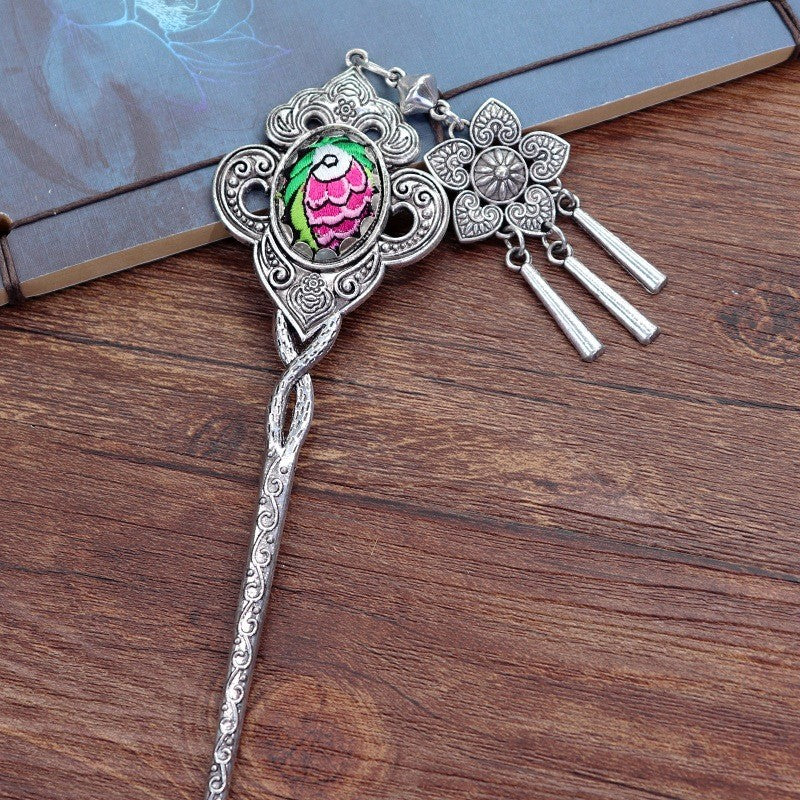
Miao Silver Embroidery Hairpin & Hair Stick
Silver & Silk Fusion
Miao Embroidery in Modern Wear and Decor
While full ceremonial jackets are museum-grade heirlooms, modern enthusiasts can easily incorporate Miao embroidery into everyday contemporary lifestyle:
- Statement Jewelry & Accessories: Embroidered earrings, silk hairpins, and textile cuff bracelets pair effortlessly with linen shirts, neutral knits, and casual denim, adding an artisanal pop of color.
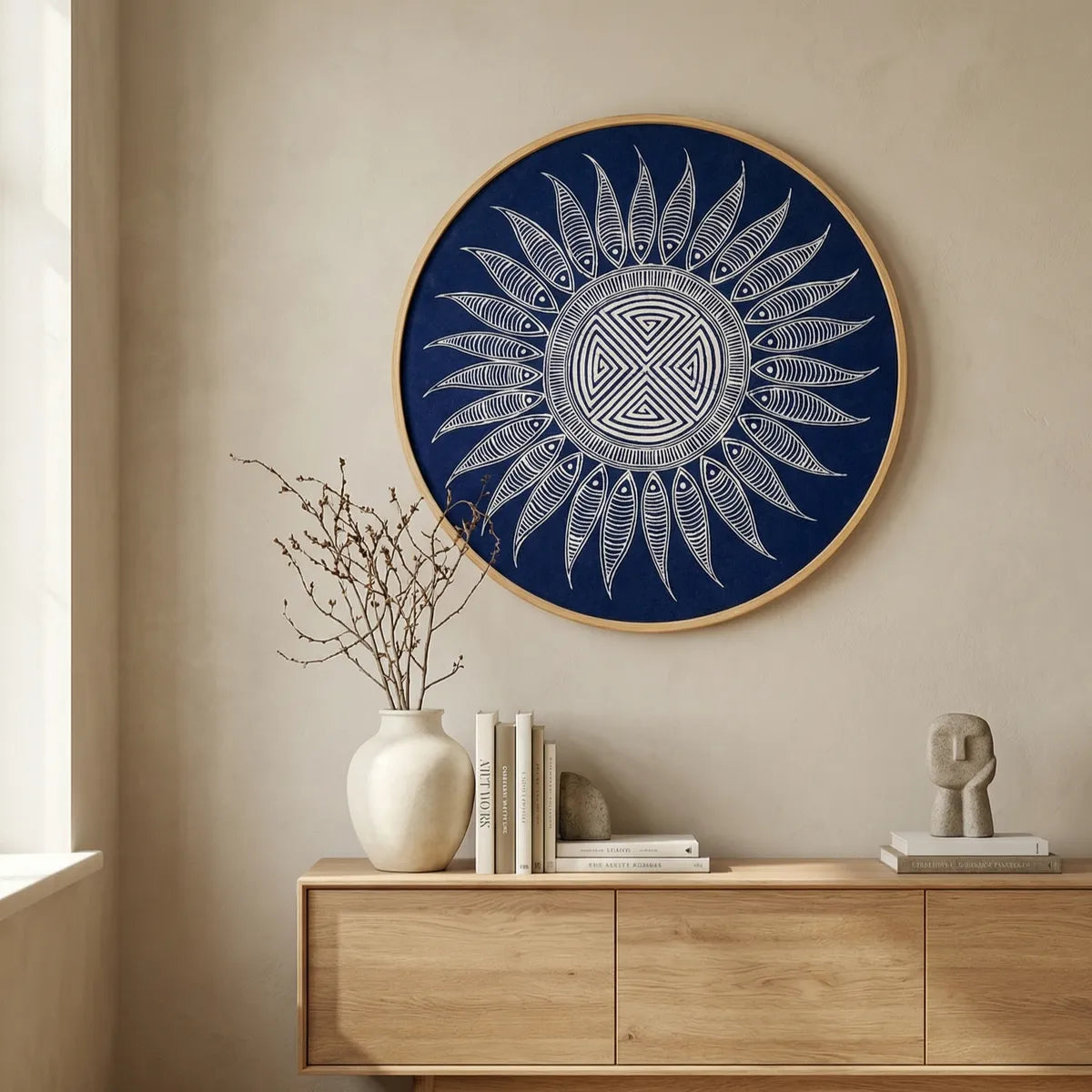
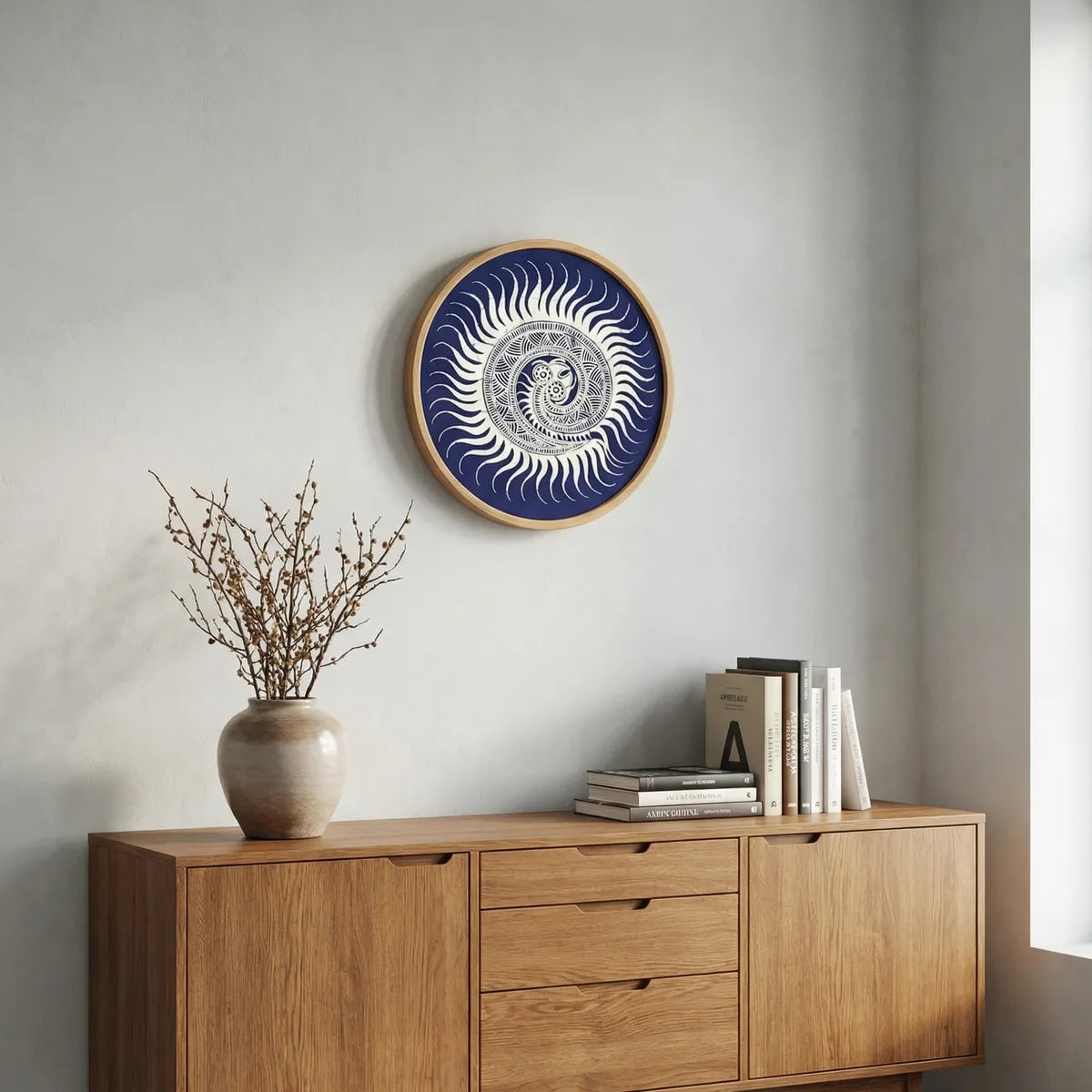
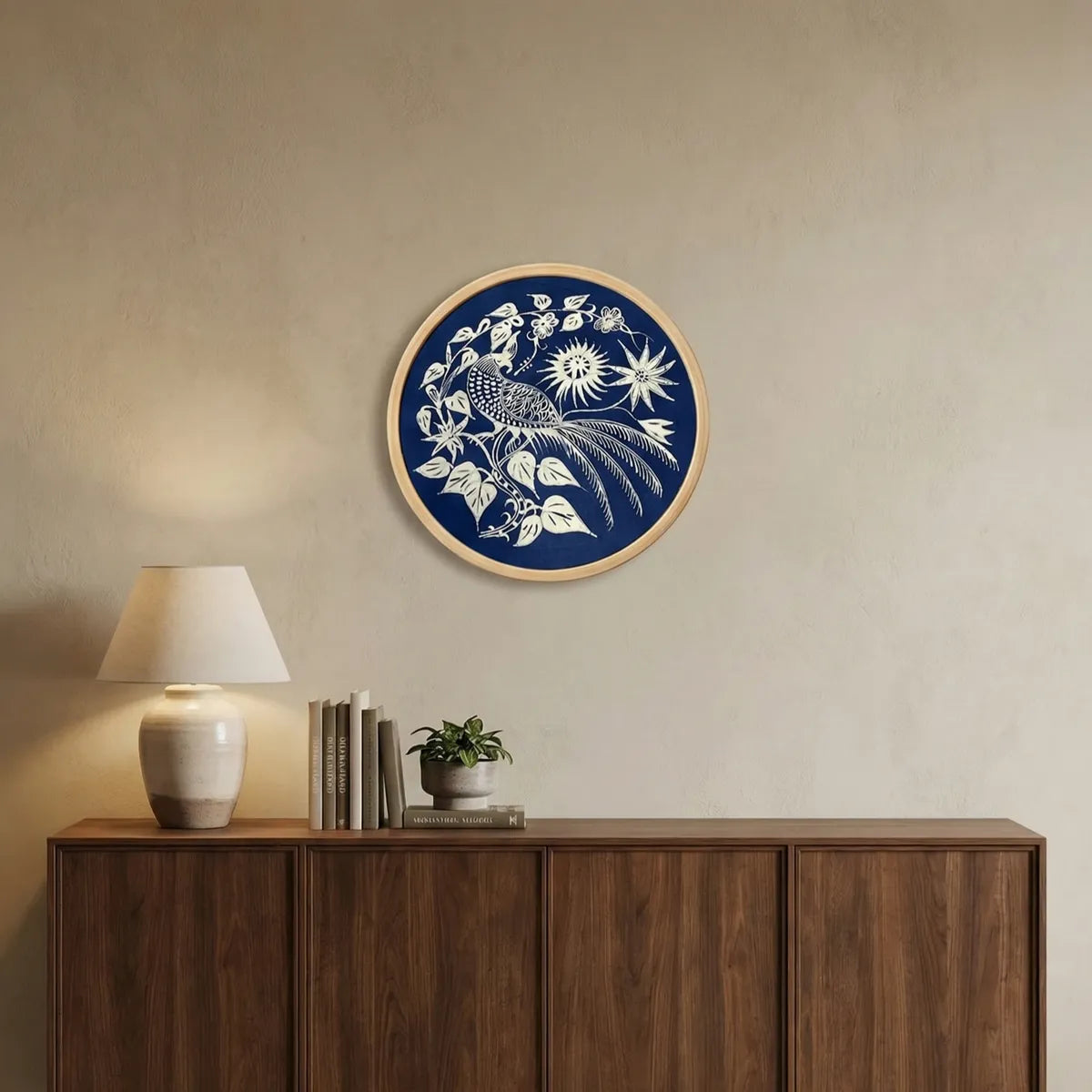
- Framed Textile Art: Antique and contemporary embroidered collar bands or sleeve panels framed under UV-protective museum glass make dramatic focal points in modern minimalist, Japandi, or bohemian interiors.
- Handmade Bags & Accents: Embroidered clutches, tote patches, and throw pillow covers infuse living spaces with tactile warmth and authentic heritage storytelling.
More Miao Handicrafts to Explore
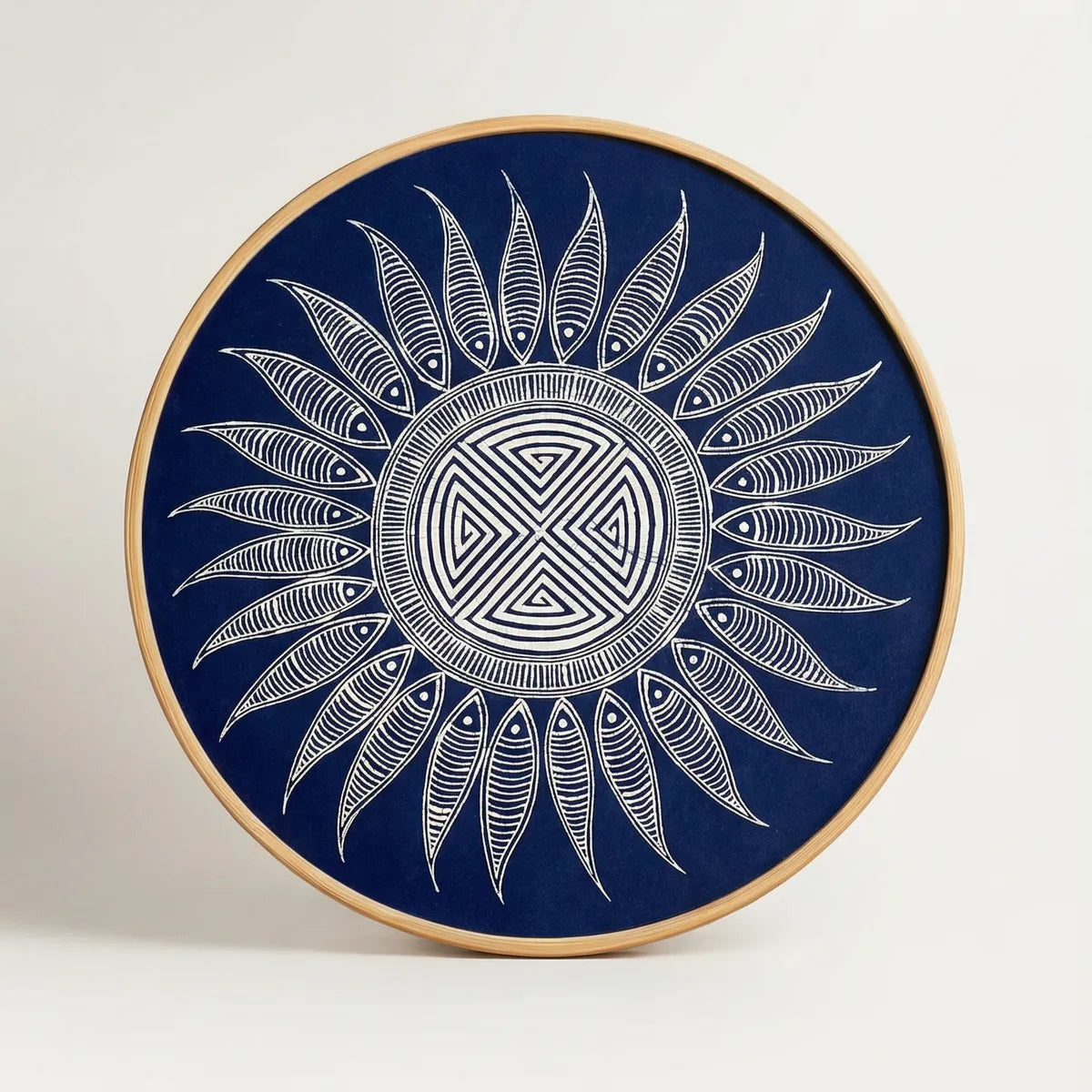
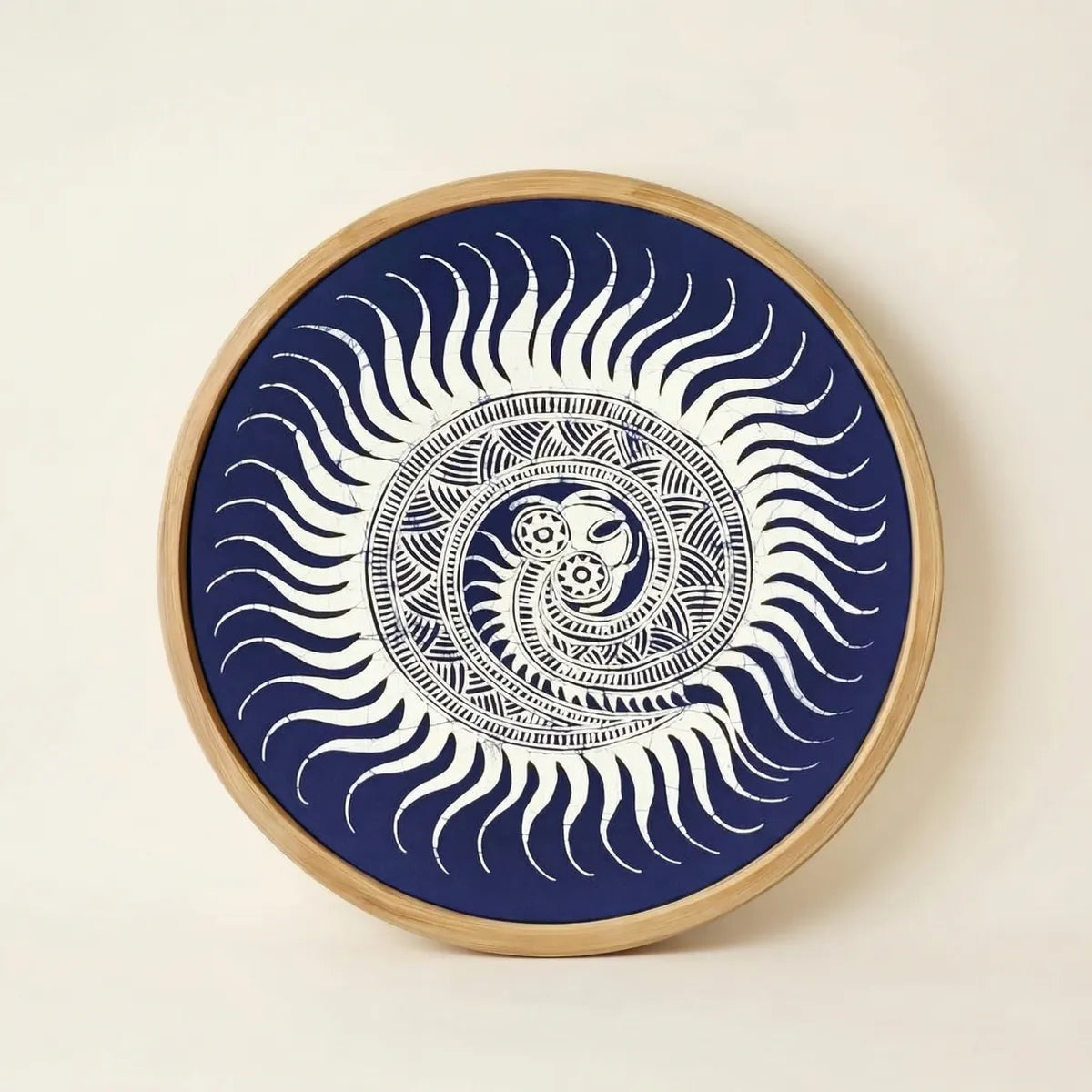
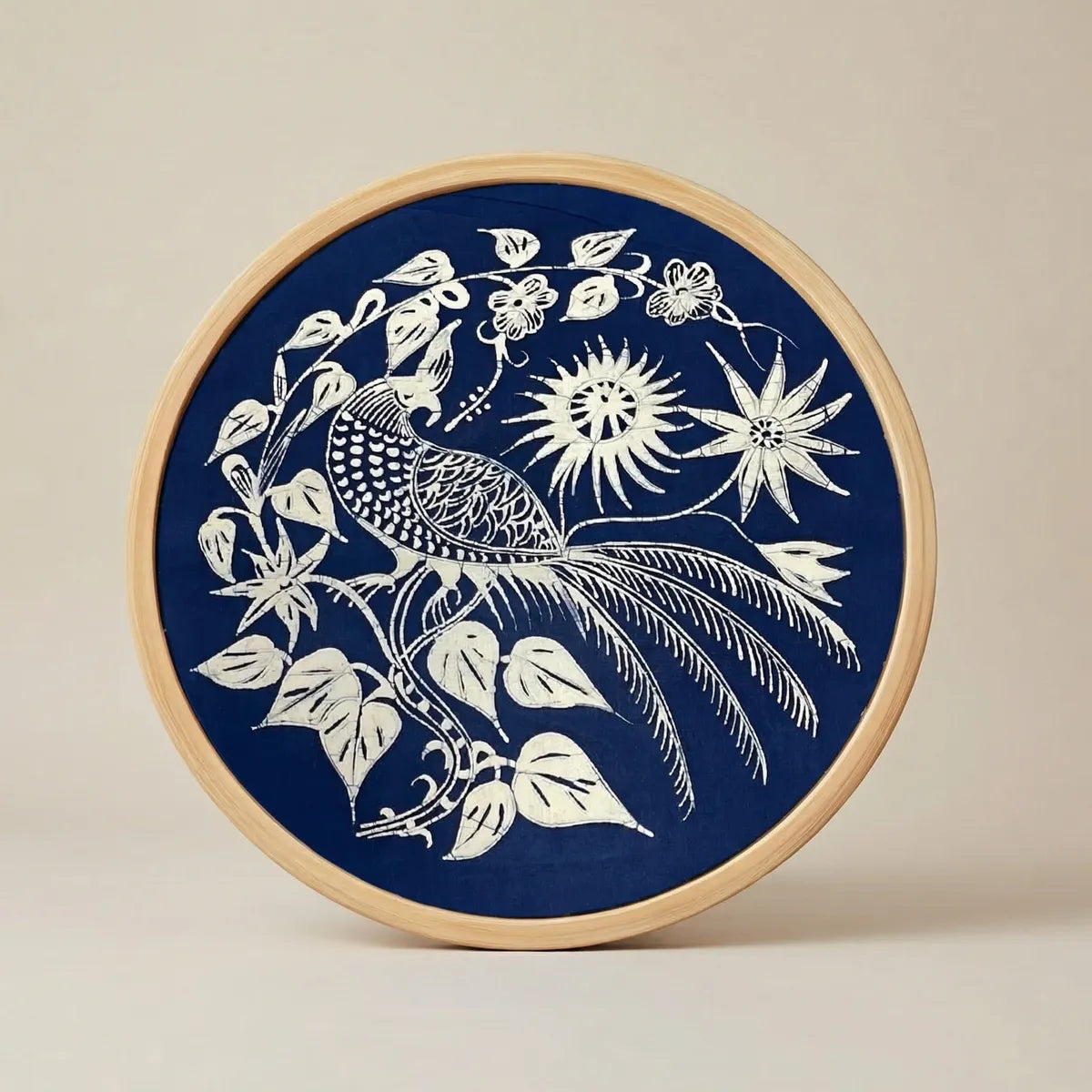
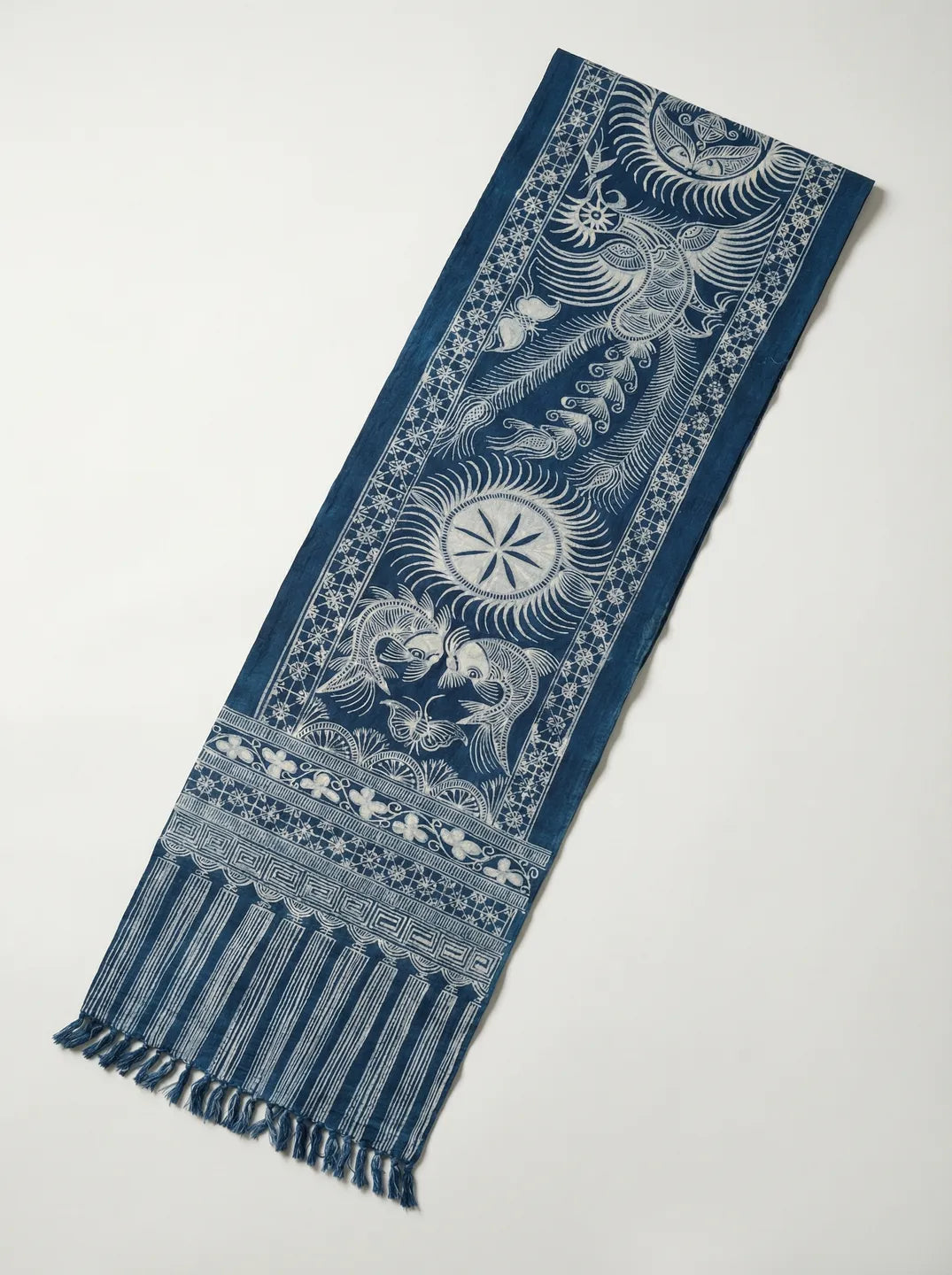
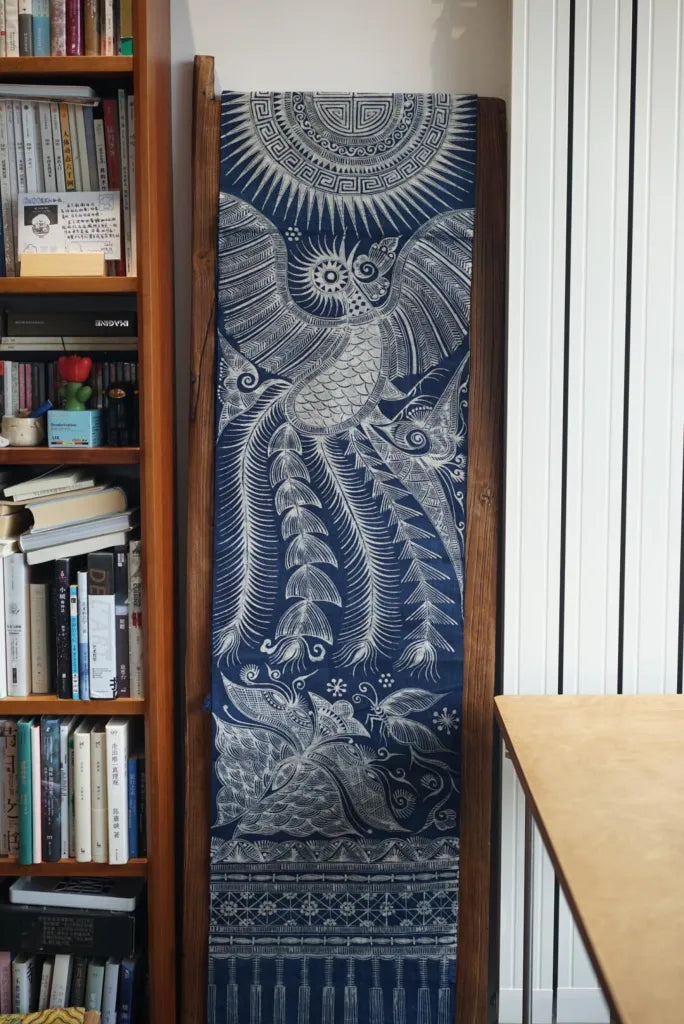
Miao embroidery forms part of an interconnected triad of sacred crafts in Miao culture, alongside Miao silver jewelry and Miao wax-resist batik. Together, these three arts furnish the complete visual universe of traditional Miao life.
For deeper exploration of regional ethnic heritage, explore our guides on the Miao people's history, the Butterfly Mother creation myth, and batik vs tie-dye techniques.
FAQ: Miao Embroidery
What is Miao embroidery?
Miao embroidery is a traditional hand-stitching textile art practiced by the Miao people of southwest China. Using natural silk threads on handwoven cloth, it records ancient clan migration history, ancestral legends, and spiritual motifs without the use of a written alphabet.
What do Miao embroidery patterns mean?
Patterns depict ancestral creation myths (like the Butterfly Mother), historical river crossings, cosmic celestial bodies, and protective spirit animals (such as dragons, fish, and centipedes) that safeguard the wearer and preserve clan memory.
Is Miao embroidery handmade?
Authentic Miao embroidery is 100% crafted by hand, from splitting silk filaments to executing specialized stitches like French knots, braid coiling, and satin filling. Genuine pieces feature visible hand-tension variations and textured backs.
Is Miao embroidery the same as Hmong embroidery?
They share the same cultural ancestry. Miao embroidery generally refers to traditions within China known for ancient technical complexity (such as split-silk and tin-thread), while Hmong embroidery encompasses Southeast Asian and diaspora styles, including famous narrative Story Cloths.
What is Miao embroidery used for today?
Beyond traditional festival garments and bridal dowries, modern artisans craft wearable jewelry (earrings, rings, hairpins), bags, wall hangings, and decorative pillow covers suited for modern wardrobes and interiors.
Is Miao embroidery a good gift?
Yes. Because each piece is handmade and carries deep cultural blessings of protection, longevity, and vitality, Miao embroidered accessories make uniquely thoughtful and meaningful gifts for textile lovers and art collectors.
What is split-silk embroidery (Po Xian Xiu)?
Split-silk embroidery is one of the most demanding Miao stitching arts, where an artisan splits a single silk thread into 8 to 16 microscopic strands. This allows seamless blending of hues, creating a mirror-like finish that resembles an oil painting on cloth.
How should authentic Miao embroidery be cared for?
Keep embroidered textiles out of direct harsh sunlight to prevent natural dye fading. For routine maintenance, gently dust with a soft brush. If cleaning is necessary, spot-clean delicately with cool water and neutral silk detergent; never machine wash or wring.
How is it different from Miao batik?
Miao embroidery builds tactile patterns on fabric using colored silk threads and needles, whereas Miao batik creates flat graphic patterns using hot beeswax resist and natural indigo dye vats.
Final Thoughts
Miao embroidery is far more than decorative surface ornamentation. It is a living, tactile archive of human resilience, cultural pride, and extraordinary hand skill passed down across countless generations. When you wear or display a piece of authentic Miao embroidery, you hold a tangible chapter of this grand "wearable history book."