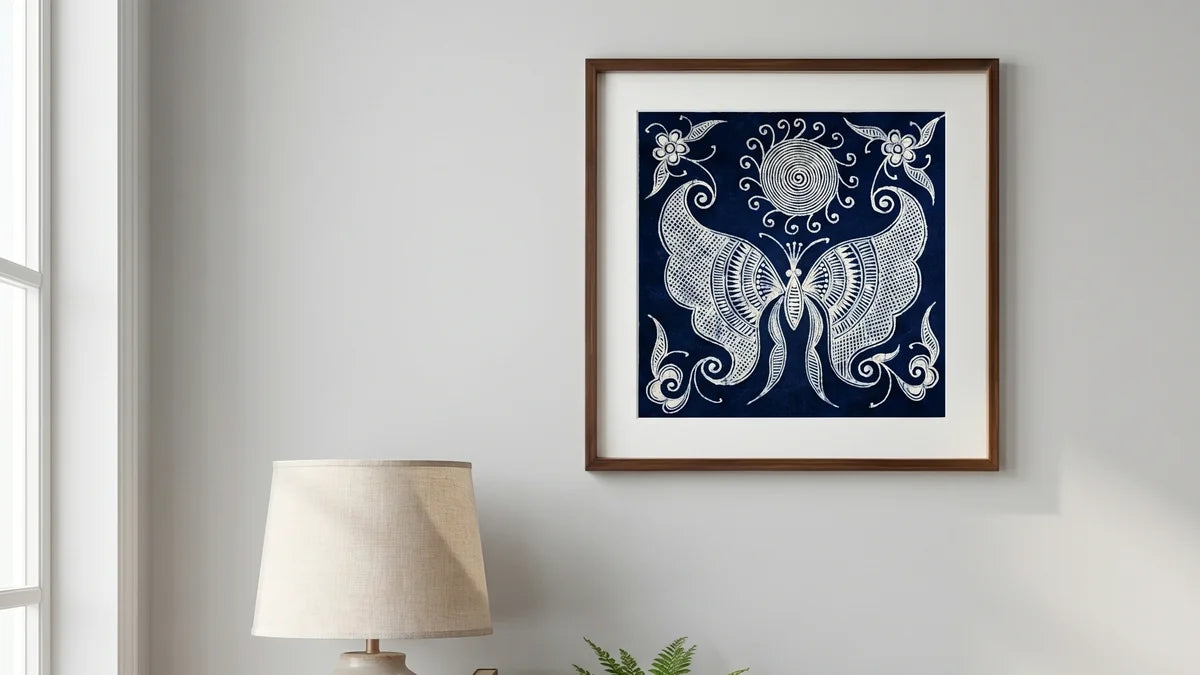
In Miao mythology, the Butterfly Mother (Mai Bang / 妹磅) is the supreme creation deity and primal matriarch of the human race. According to the oral epic Miao Epic Songs (苗族古歌), she emerged from a sacred sweetgum (maple) tree, mated with water foam, and laid twelve cosmic eggs. These eggs were nurtured by the Divine Jiwei Bird and hatched into humankind (represented by the first human ancestor, Jang Vang), alongside dragons, thunder spirits, tigers, and the creatures of the Earth. That is why butterfly motifs represent life origin, maternal protection, and cosmic harmony in Miao batik and embroidery.
The short version of the story
Many English readers first discover this legend through translations of the Ancient Miao Songs passed down orally by village bards in Guizhou. In the sacred creation cycle, the universe begins with primal mist and water. A divine sweetgum tree grows toward heaven, eventually falling and transforming its resin and heartwood into the divine Butterfly Mother (Mai Bang).
As she flies over primeval rivers, she mates with celestial water froth and lays twelve great cosmic eggs on the riverbank. Unable to brood them herself, she entrusts the eggs to the faithful Divine Jiwei Bird (鹡宇鸟), who sits on the nest across twelve long years of mountain seasons. When the shells finally crack open, each egg gives birth to a foundational entity of existence:
- The eldest egg hatches into Thunder (Leigong), the master of celestial rain and storms.
- The second egg hatches into The Water Dragon (Long Wang), guardian of mountain streams and fertility.
- The third egg hatches into The Tiger, monarch of forest wildlife.
- The central egg hatches into Jang Vang (Jiang Yang), the primal first ancestor of humanity.
- The remaining eggs hatch into cattle, silkworms, spirits, and living beings of nature.
Because humans and animals were born from the same mother's eggs, the Miao view all natural elements as kin—a philosophical foundation reflected in every piece of handmade textile art.
Why the butterfly keeps appearing in Miao textiles
People often wonder why the butterfly appears with such relentless frequency across Miao clothing, baby carriers, wall art, and silver ornaments. In Miao visual culture, the butterfly is not merely a pretty decorative garden insect. It is a powerful ancestral talisman and visual shorthand for maternal blessing, lineage continuity, and spiritual guardianship.
Because the Miao historically preserved their memories without a written alphabet, mothers hand-embroidered and wax-dyed the Butterfly Mother onto infant carriers to ask the primal matriarch to watch over the newborn child's health and soul. When worn on ceremonial sleeve bands and festival collars, the motif proclaims ancestral identity and honors the ancient matriarch who gave life to the clan.
How the motif appears in batik and embroidery
The depiction of the Butterfly Mother varies creatively across artistic mediums and artisan communities:
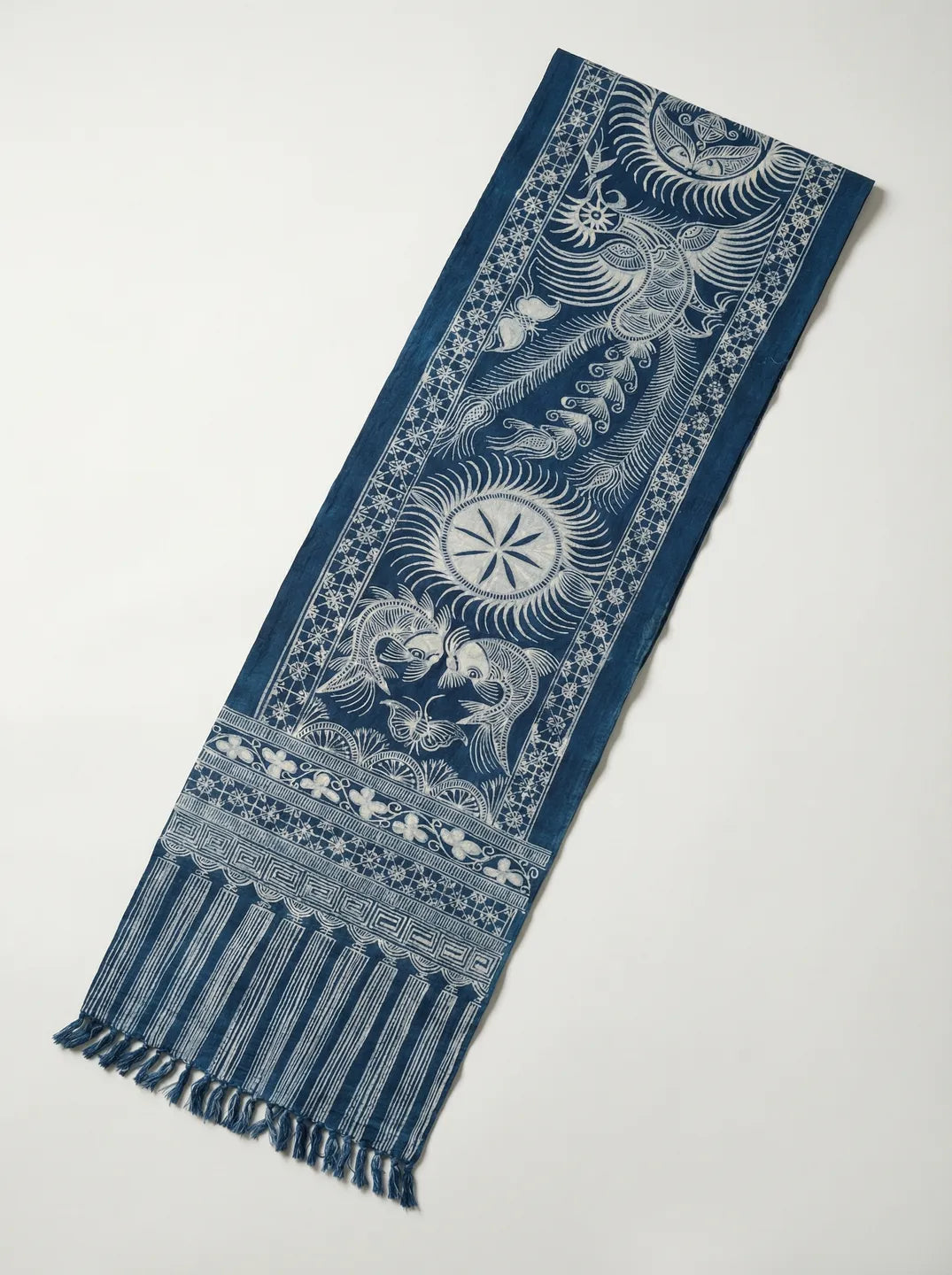
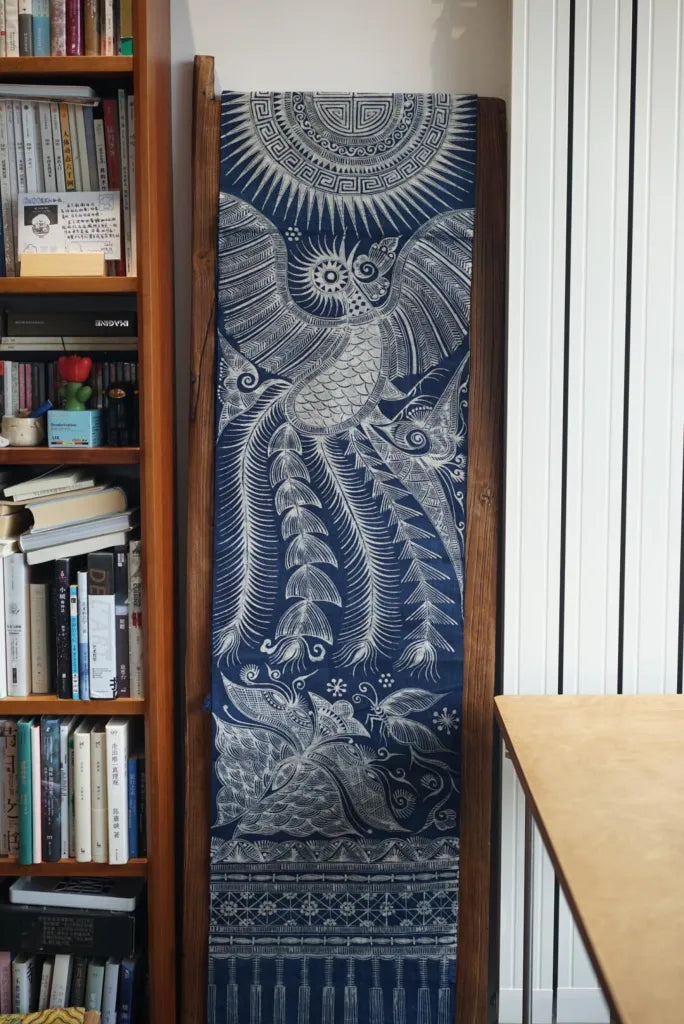
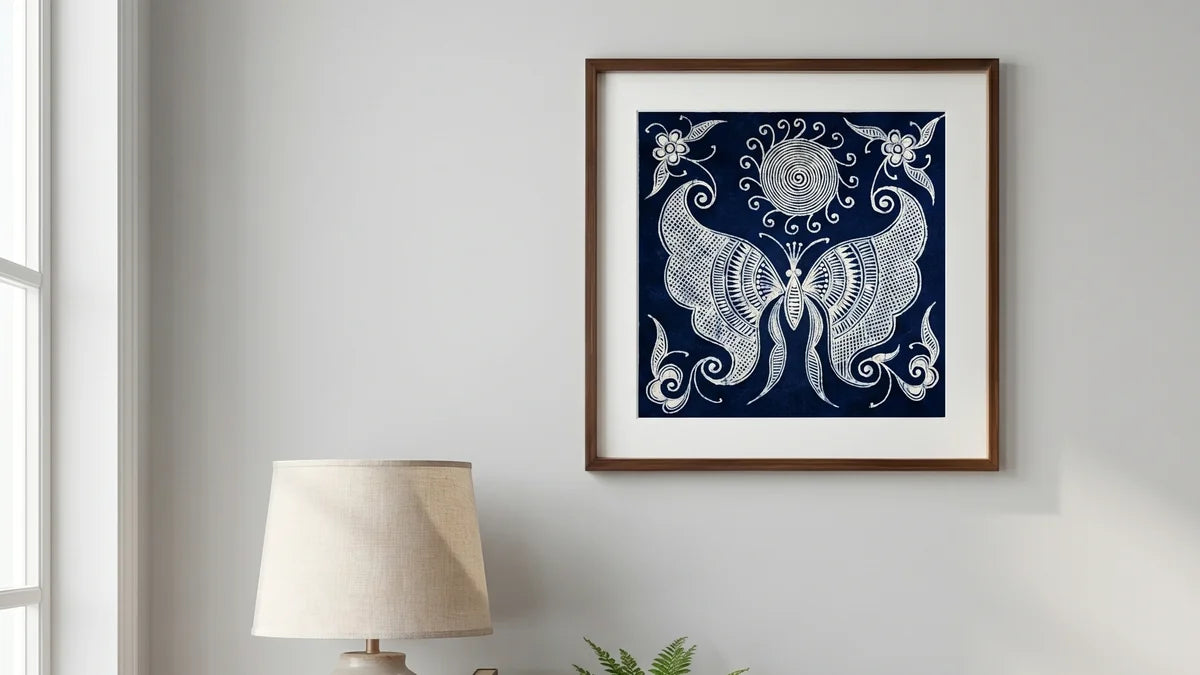
- In Wax-Resist Indigo Batik: Drawn freehand with heated beeswax using copper knives, the Butterfly Mother is often rendered with bold anthropomorphic features—including human-like crowned faces, spiral antenna eyes, and expansive symmetrical wings filled with flowing water ripples and crackle lines.
- In Hand Embroidery: Using dense satin stitches, split-silk gradients, or raised braid techniques, the motif bursts with colorful vitality, frequently integrated with swimming fish, curling lotus petals, and cosmic sun wheels inside the wing outlines.
- Symbiotic Wing Compositions: In many master textiles, you will notice that the butterfly's wings transform into fish tails, bird crests, or sprouting seedlings, visually reinforcing the creation myth that all life emerged from her twelve eggs.
Featured Authentic Butterfly Mother Artisan Creations
Explore living expressions of this ancient creation myth handcrafted by master artisans in Guizhou:
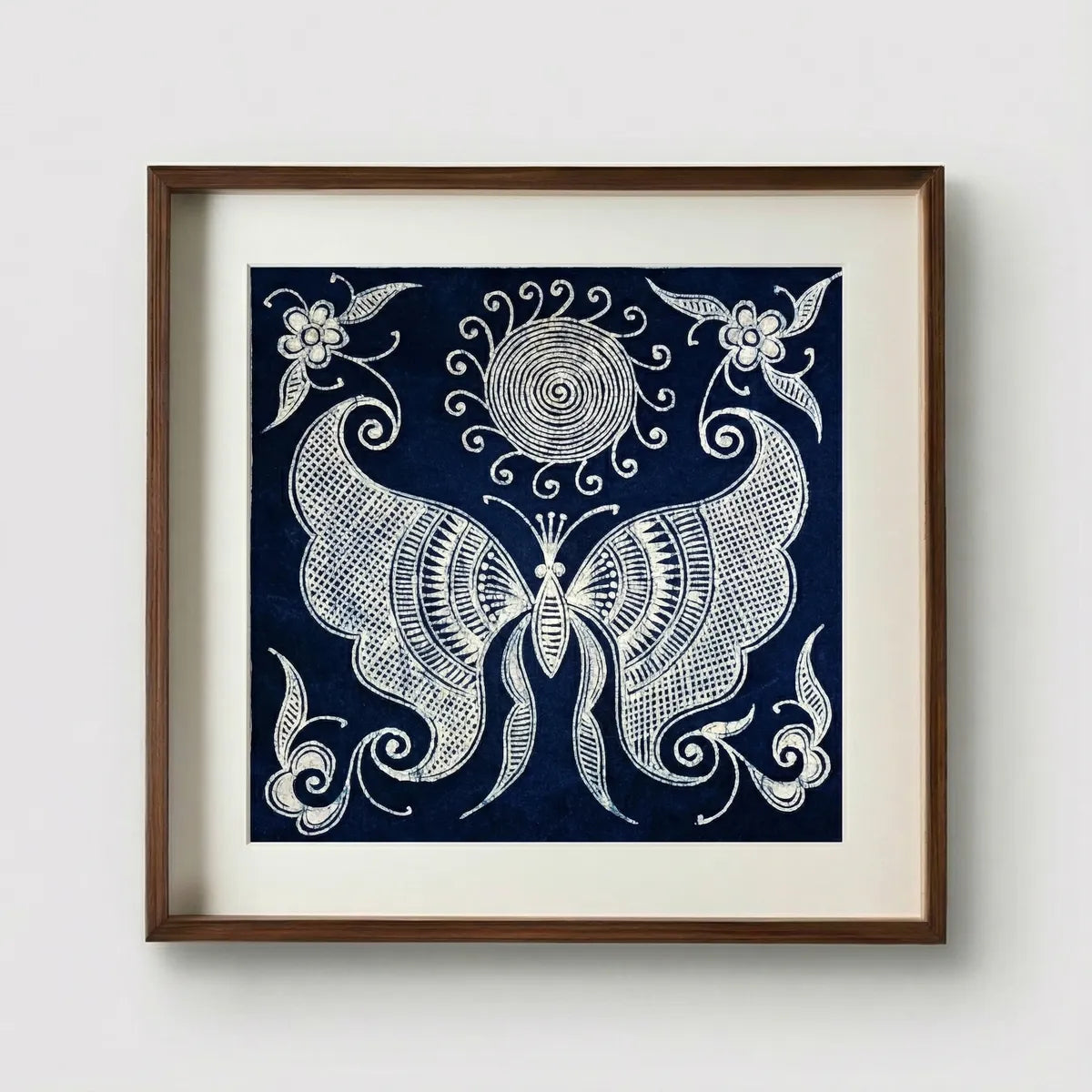
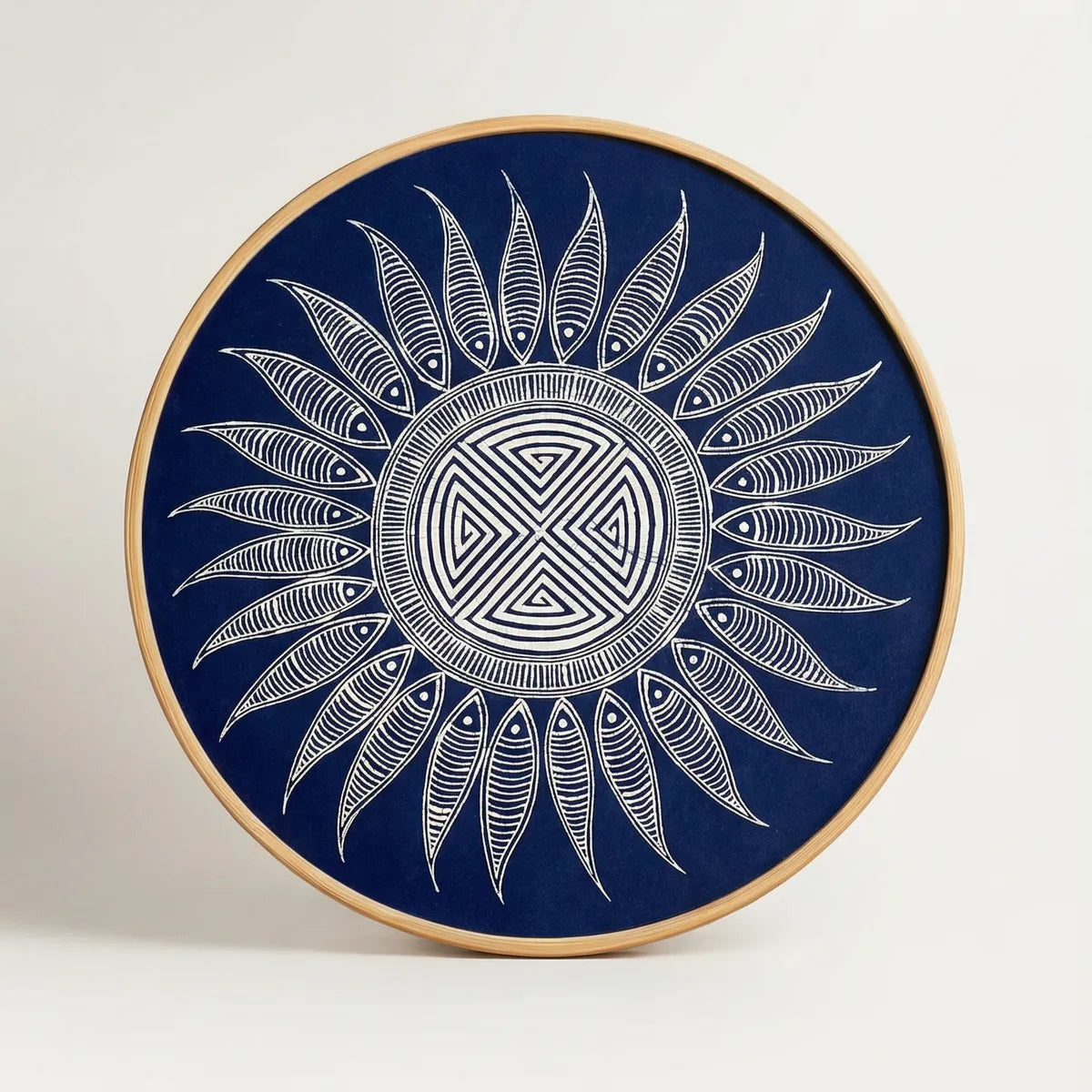
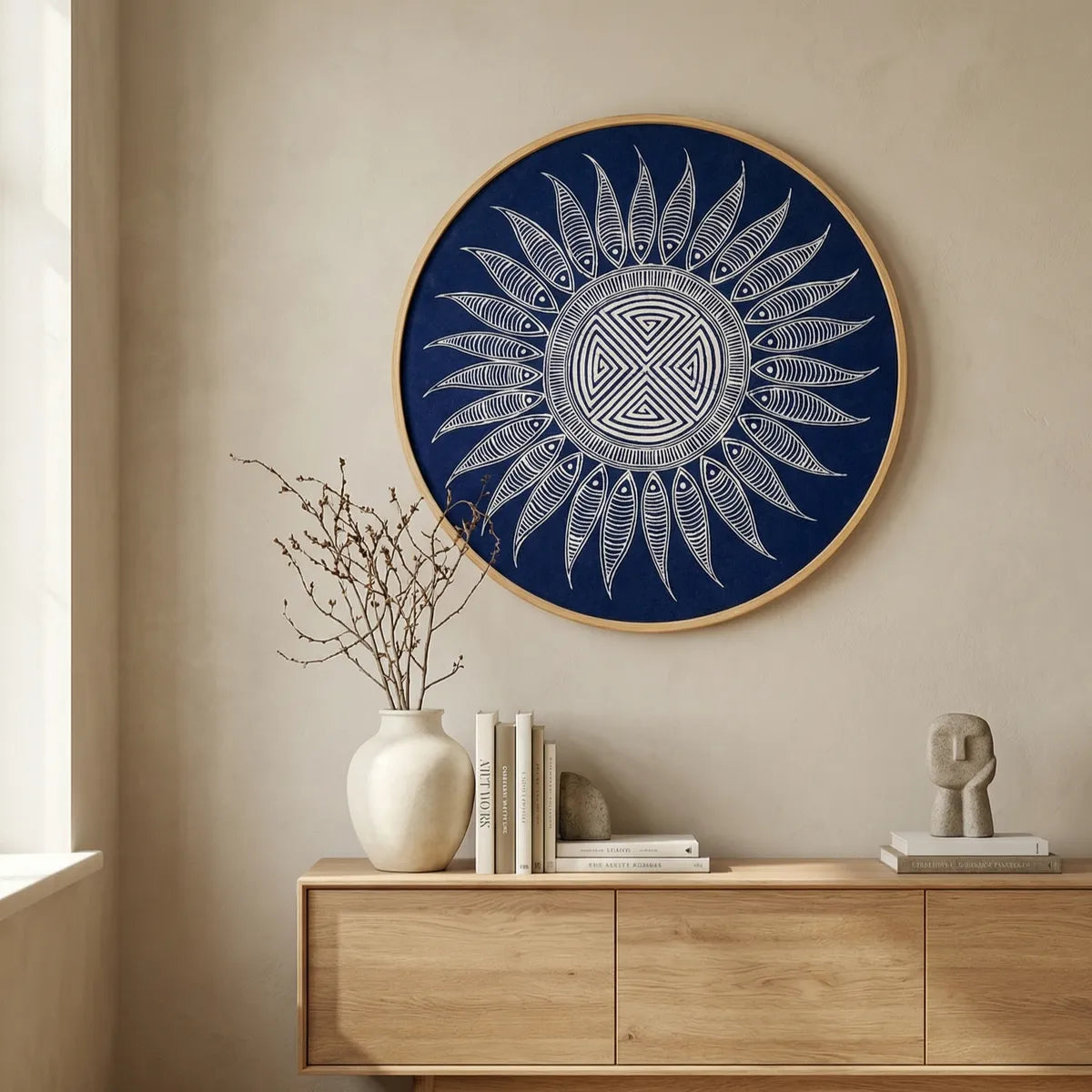
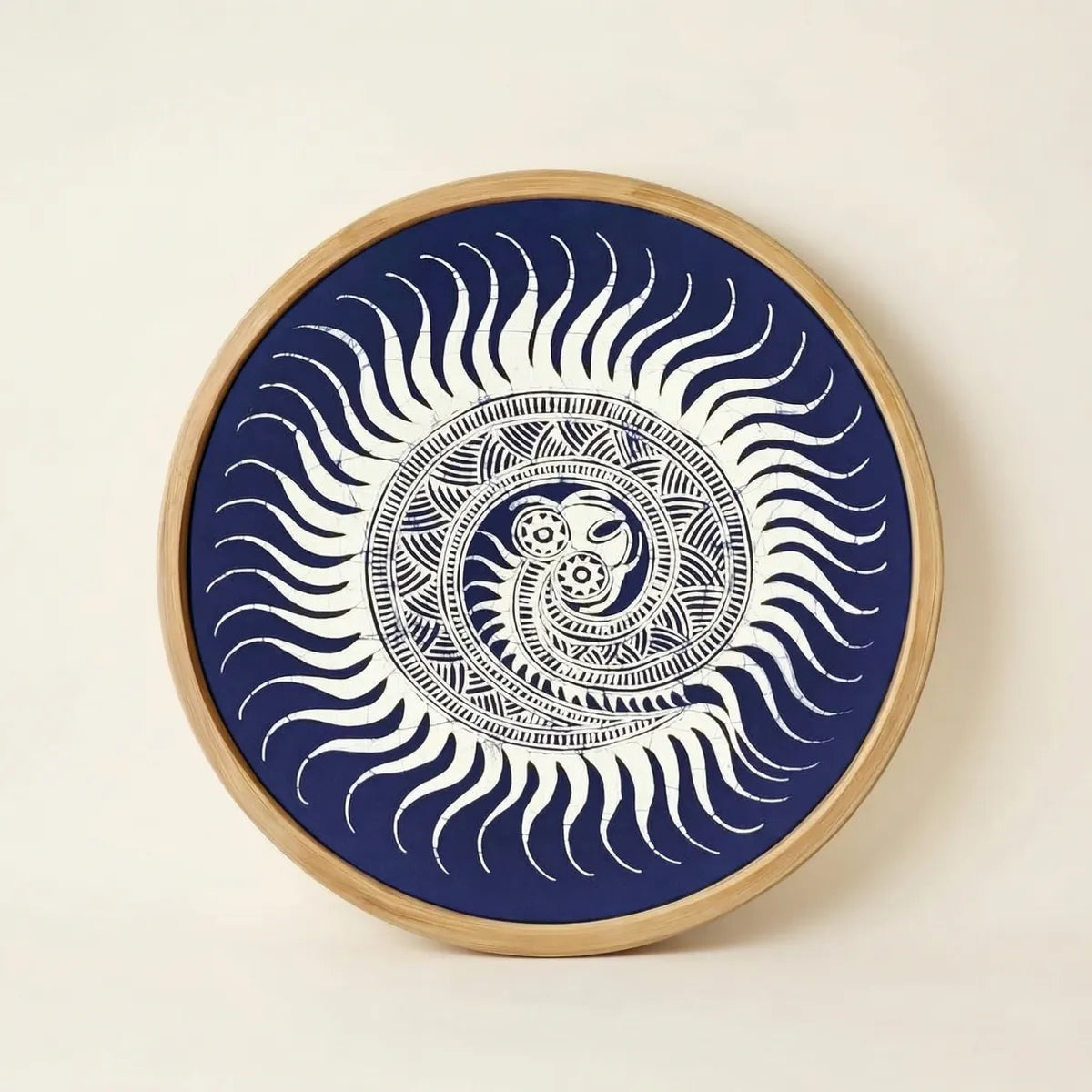
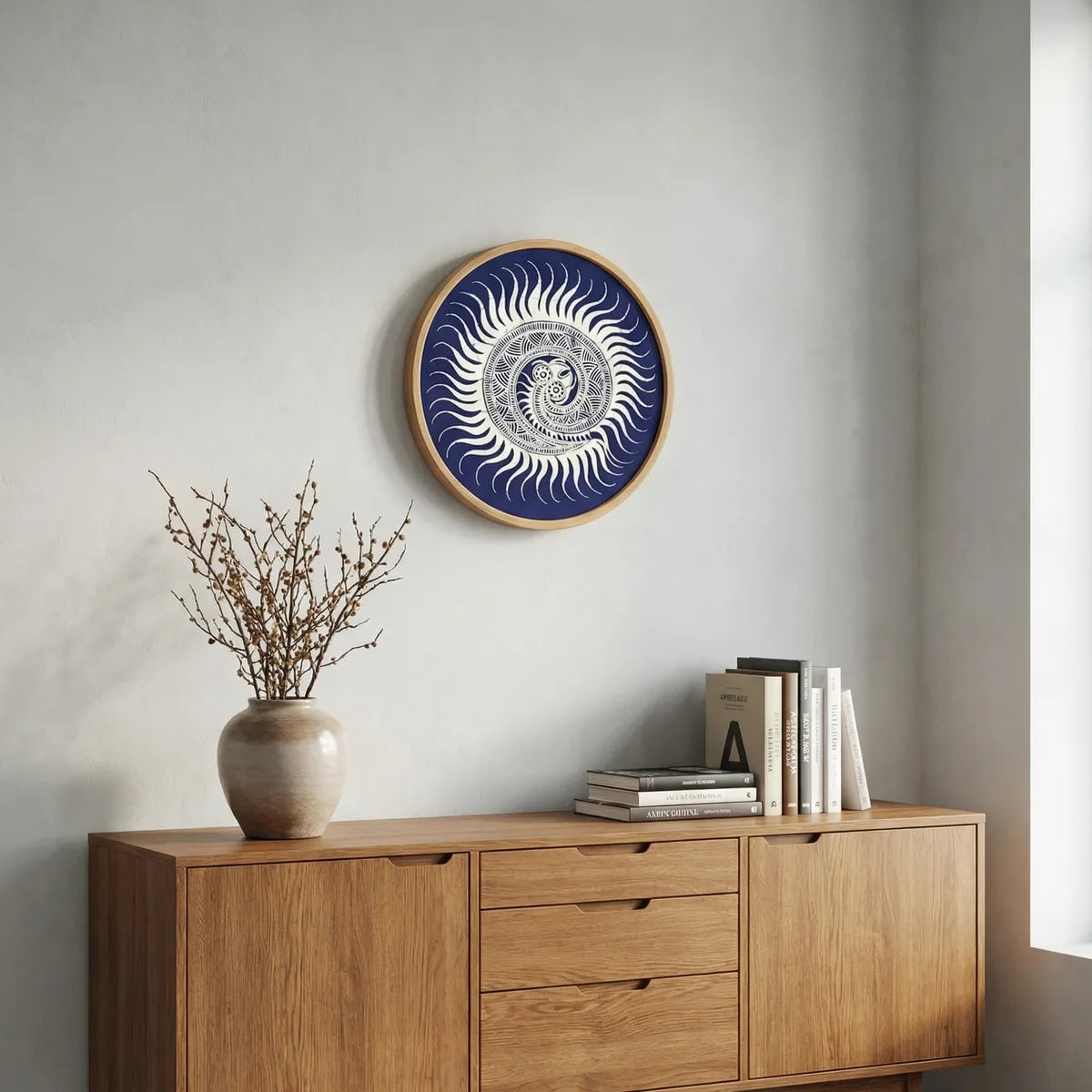
Handmade Miao Batik Butterfly Mother Wall Hanging
Indigo Wax-Resist Wall Art
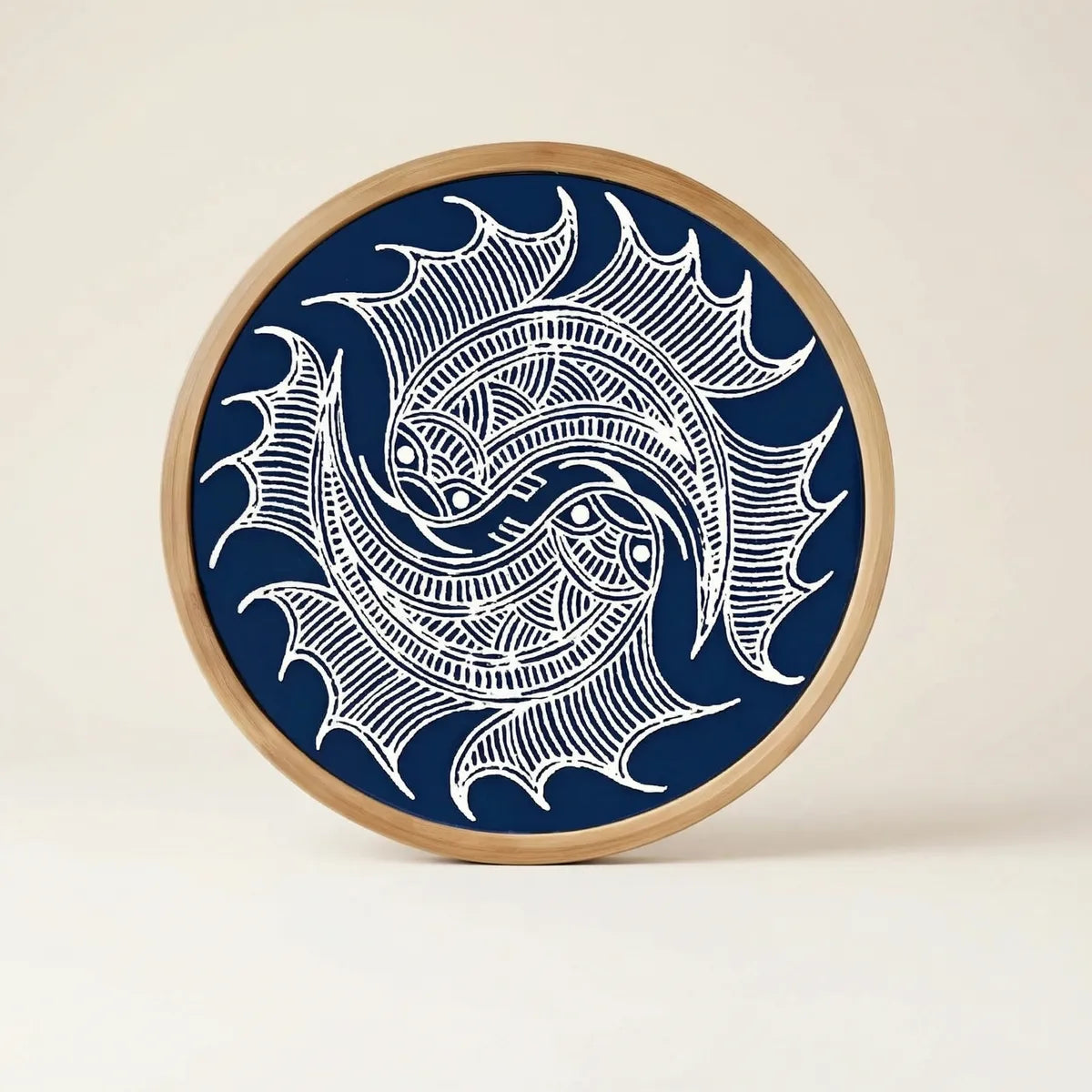
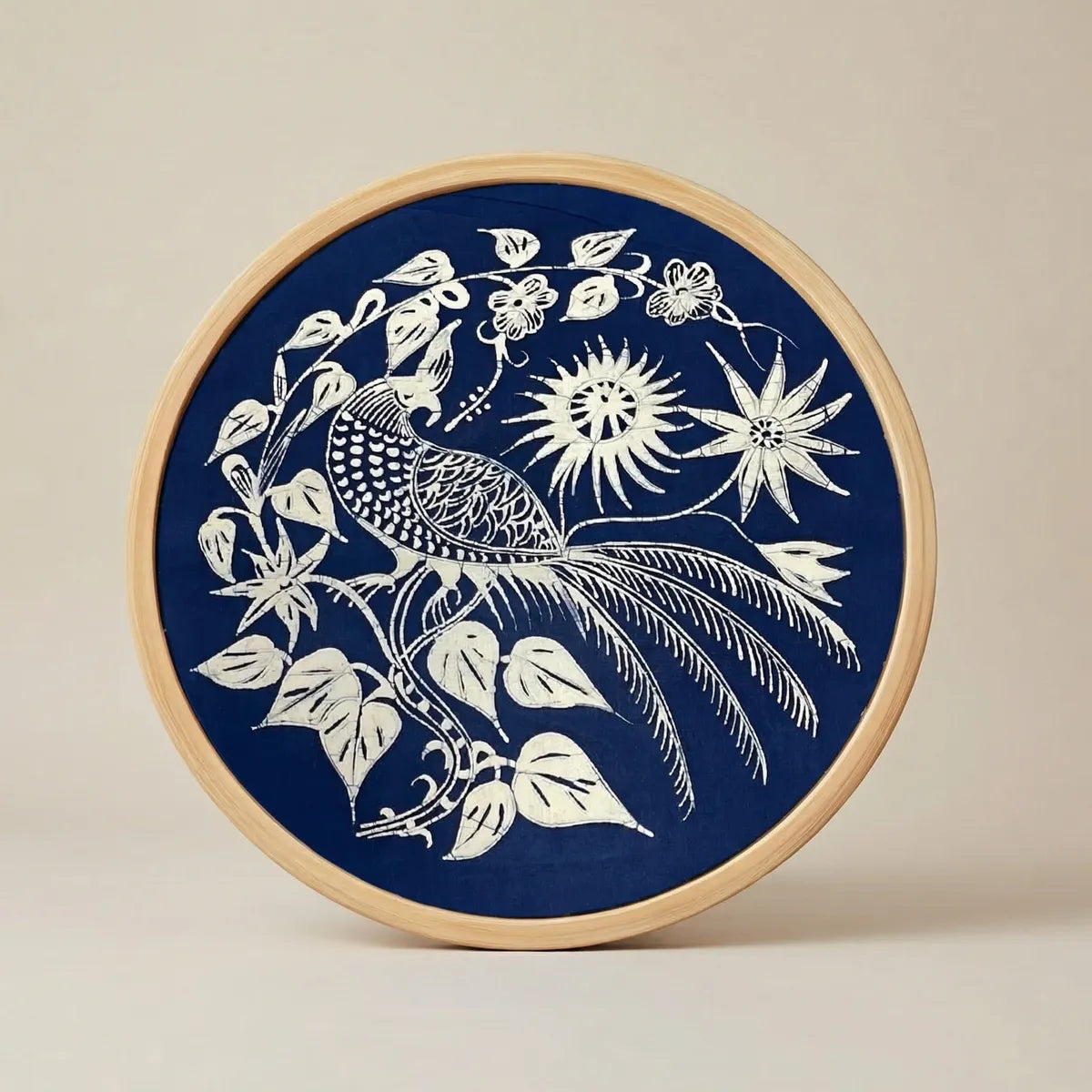
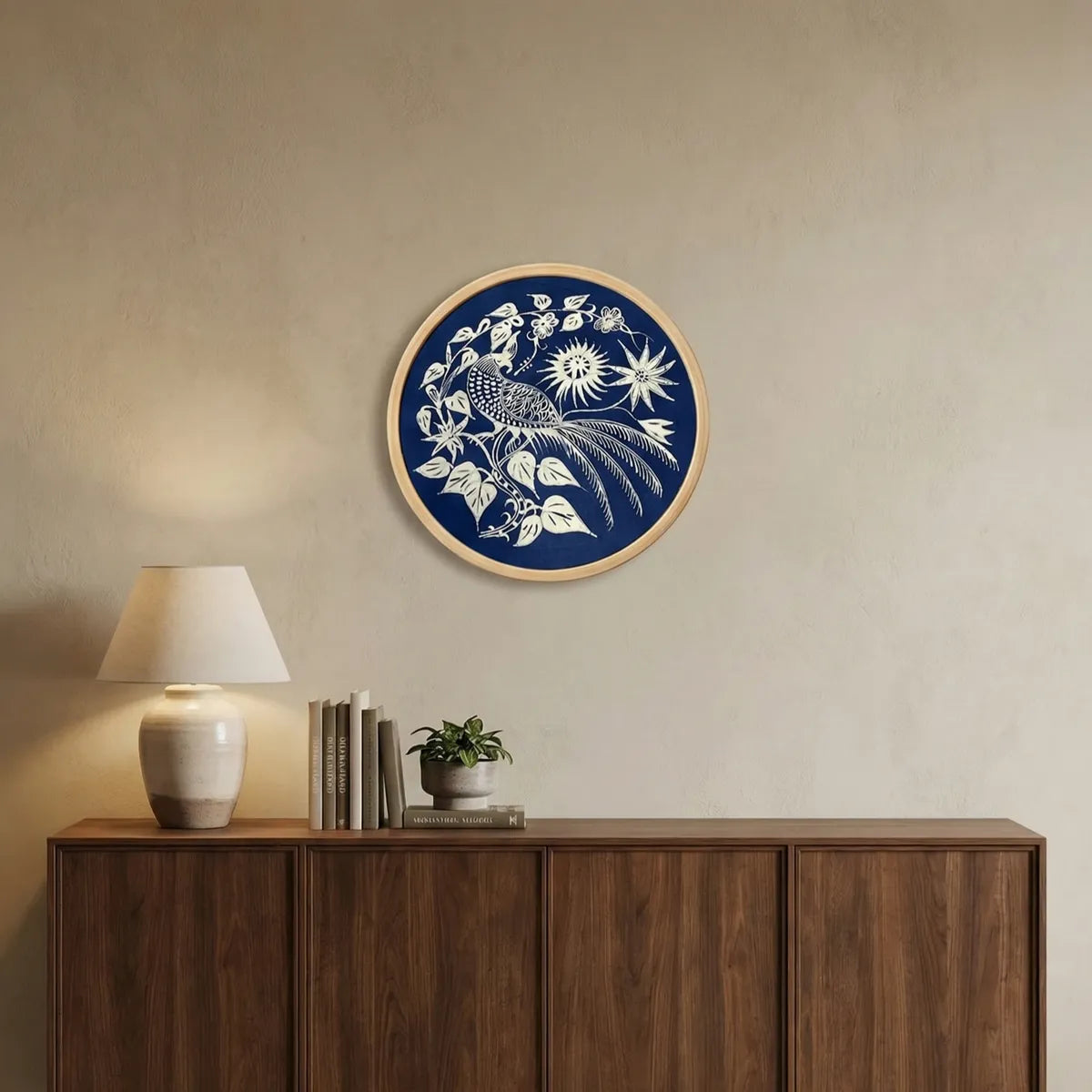
Round Miao Batik Wall Hanging: Ancestral Totem
Round Artisan Tapestry
How to read the symbol without over-reading it
A common beginner mistake when viewing Miao textiles is trying to assign a rigid, literal myth explanation to every single tiny curve. A more balanced, appreciative approach involves reading the whole visual composition:
- Look for Compositional Hierarchy: Is the butterfly the dominant central medallion of the cloth, or is it a repeating rhythmic rhythm along a border sash? Central medallions usually honor the mother deity directly, while border repetitions act as protective framing.
- Observe Companion Symbols: If the butterfly is surrounded by fish and lotus flowers, the piece emphasizes abundance and fertility. If surrounded by birds and solar circles, it emphasizes celestial ancestry and cosmic order.
- Appreciate Artistic Freedom: Miao textile artists do not work from rigid blueprints; each maker expresses her individual artistic voice through small variations in wing density and background filler motifs.
Why the story still matters
The Butterfly Mother motif connects the textile to Miao origin stories and maternal ancestry. On a wall hanging or embroidered piece, it gives you a specific story to share alongside the design.
| Visual Element | Mythological Association | Decorative Interpretation |
|---|---|---|
| Central Butterfly Body | Mai Bang (The Primal Matriarch) | Focal point of strength and family protection |
| Spiral Wing Antennae | Solar energy & celestial movement | Dynamic circular movement and life energy |
| Wing-Interior Fish & Birds | The Twelve Cosmic Eggs & Jiwei Bird | Interconnection between humans and nature |
| Indigo Crackle Lines | Flowing river currents and mountain mist | Authentic natural dye patina and textural depth |
FAQ: The Butterfly Mother
Who is the Butterfly Mother in Miao culture?
The Butterfly Mother (Mai Bang) is the foundational creation ancestor in Miao folklore who hatched from a sacred sweetgum tree and laid twelve cosmic eggs that gave birth to humanity, nature, and protective deities.
Is Butterfly Mother the same in every Miao community?
While the central premise of the maple tree, butterfly birth, and twelve eggs is shared widely across the Miao culture of Guizhou, local details, naming variants, and specific supporting characters vary naturally from river basin to mountain village.
Does every butterfly motif in Miao batik refer directly to Butterfly Mother?
Most butterfly motifs in traditional Miao textiles carry cultural resonance from this creation epic. However, some pieces use butterfly imagery to represent joyful courtship, springtime transformation, or harmonious nature.
Why do Miao people use butterfly patterns on their clothes?
Butterfly patterns are used on clothing, baby carriers, and festival garments as protective talismans to seek blessings of health, maternal fertility, good fortune, and ancestral guidance.
What is the connection between the Butterfly Mother and the sweetgum tree?
In the ancient epic song cycle, the Butterfly Mother was born from the heart and sap of a fallen divine sweetgum (maple) tree. As a result, sweetgum trees are regarded as sacred ancestral plants in many traditional Miao villages.
Why does this matter for someone buying or collecting Miao textiles?
Understanding the Butterfly Mother transforms a textile from an ordinary decorative wall hanging into a meaningful cultural artifact infused with thousands of years of oral storytelling and indigenous philosophy.