
Quick answer
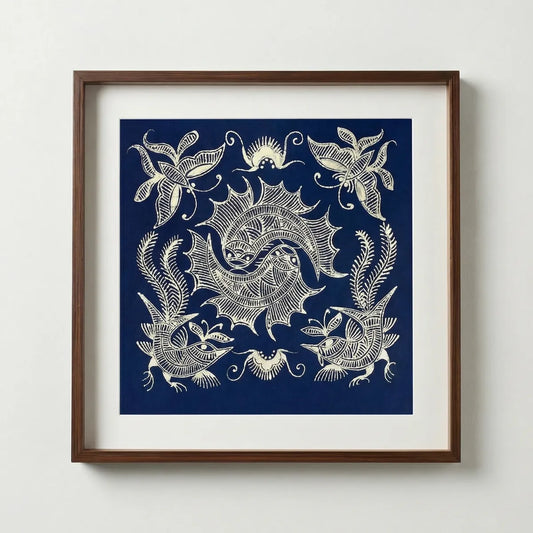
Miao batik can be read as cultural memory because its patterns, tools, and making habits are passed through people. A motif may refer to nature, travel, origin stories, or family teaching, while the cloth records the maker's hand.
Guide sections
Why people call batik a visual language
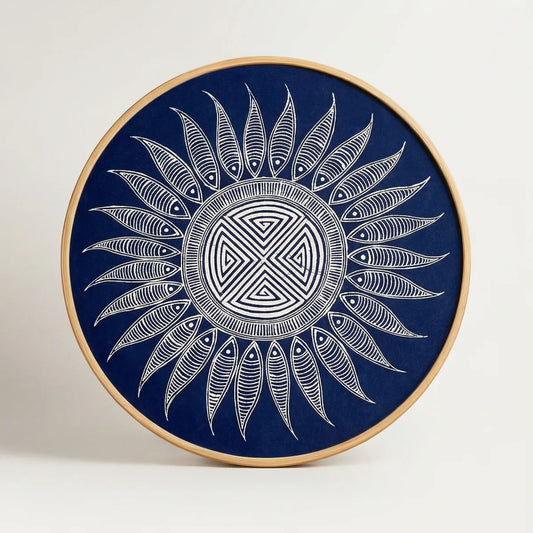
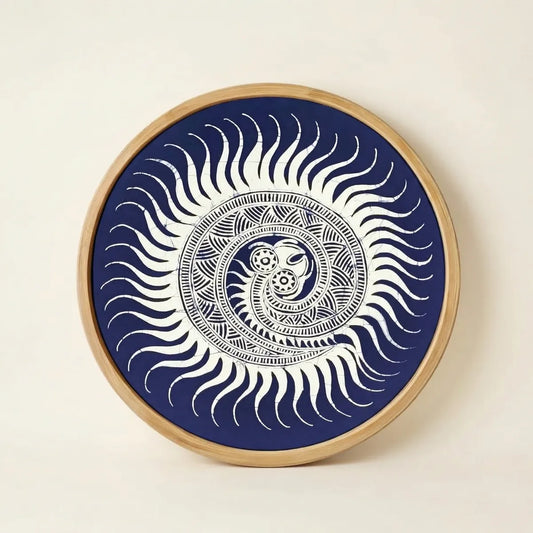
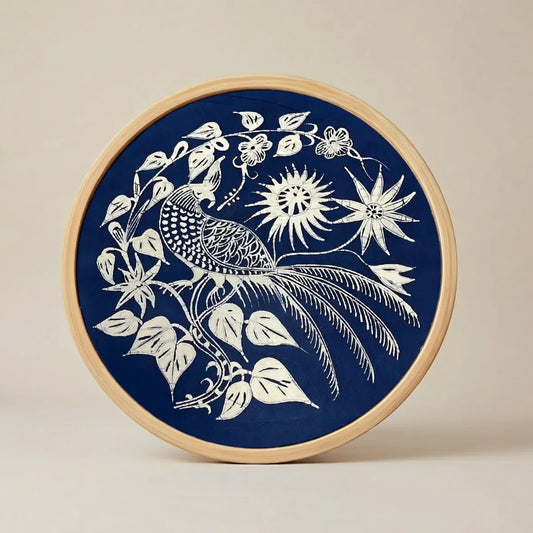
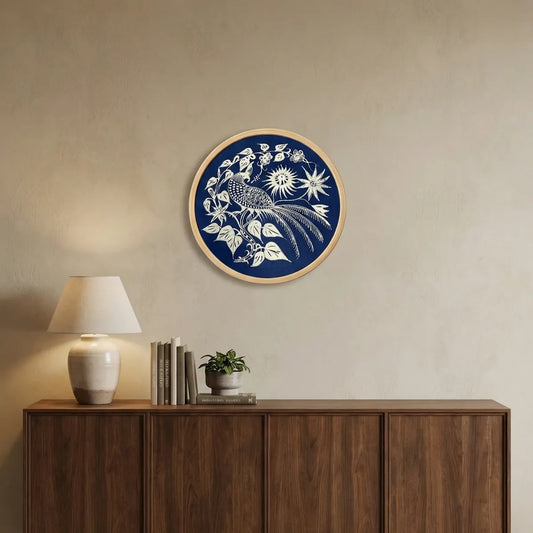
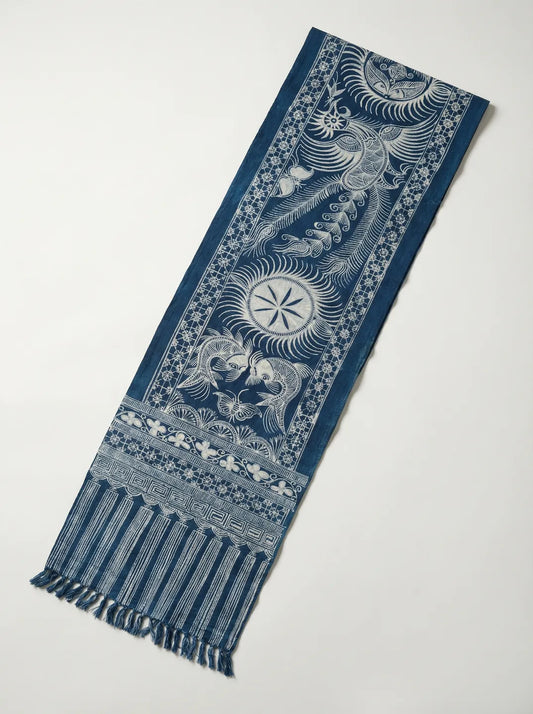
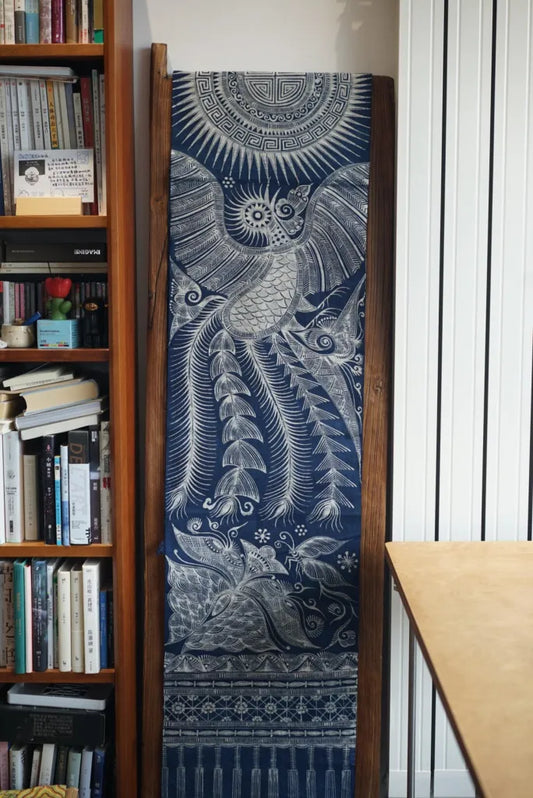
A textile cannot explain itself the way a book does. But a pattern can still signal a story, a place, or a family habit. In Miao batik, motifs such as butterflies, birds, fish, spirals, and paths often invite that kind of reading.
Meanings are not always universal. The same shape can be understood differently by different communities.
The role of the artisan
The maker does more than copy a pattern. She controls the wax, spacing, line pressure, and composition. Those choices decide how the story appears on cloth.
When an older artisan teaches a younger one, she passes on judgment as well as technique.
How indigo and wax preserve the hand
The wax knife leaves a line that is hard to fake perfectly. Indigo dye settles into cloth in small variations. Together they create a record of the making process.
This is why handmade batik often feels different from printed fabric even before you know the story behind it.
How to approach the meaning respectfully
Start with the technique, then the motif, then the context. Avoid claiming one fixed meaning for every butterfly or spiral. A better question is: where was this made, who made it, and how is this motif used?
That approach keeps the article honest and helps the reader avoid shallow interpretation.
Miao Batik is a traditional folk craft of Guizhou and one of China's ancient dyeing techniques, often hailed as the "First Dyeing of the East." Shizhaizhai, renowned for its batik, is known as the "Home of Miao Batik Art" and is one of the best-preserved sites of ancient batik artistry in China. The unique charm that has settled through history still has force today.
Recently, in Shizhaizhai, Miao batik practitioner Ma Xingfen was introducing visitors to the meanings behind various elements in batik patterns, saying, "This represents the path walked by people, this is the stars in the sky, and this is the whirlpool of water, hand in hand..."

As the wax knife glides over the fabric, dark gray wax flows from the copper tool, solidifying upon contact with the cloth, revealing the contours of traditional Miao designs. This is Ma Xingfen's expertise,batik. At 71, she began learning this craft at the age of eight, making this her 63rd year of passing down Miao batik traditions.
The simple yet elegant blue and white patterns reflect the life of this elder and tell the ancient stories passed down through generations of the Miao people.
"The art of batik was taught to me by my grandmother, who learned it from her grandmother. My mother then passed it on to me, and I taught my daughter, who in turn teaches her daughter. It's a tradition that must not be forgotten," Ma Xingfen explains about the transmission of Miao batik.
For a poet, batik is a "radiant landscape painting, a hazy poem of clouds." For Ma Xingfen, it embodies "the mission passed down through generations." Meanwhile, for the young artist Wu Dehua, it represents "innovation in heritage." He breathes new life into batik, transforming its rich history into fresh narratives.
Traditionally, the Miao culture passes batik skills down through women. However, Wu Dehua, fascinated by his mother's craft from a young age, has become the only male inheritor of Miao batik after years of dedication.
In 2013, Wu established the "June Sixth Miao Batik Workshop," blending traditional techniques with modern aesthetics. He has developed over a hundred creative tourism products, such as silk scarves, handbags, fans, and clothing, attracting numerous visitors. Wu has continually innovated, winning a bronze medal for his creation "Indigo-Dyed Bunny" at the 2024 Colorful Guizhou Tourism Product Competition. Recently, he completed a training program for unique tourism product design.

"I aim to create a brand that shows Miao batik culture and promotes it beyond Huangguoshu, encouraging more people to discover and stay in this beautiful area," Wu expressed.
From practicality to artistry and back again, these unique ethnic symbols merge with modern products, receiving widespread acclaim. Time flows silently, and batik acts as a quiet language waiting for us to listen. As generations pass, practitioners add new notes, carrying this heritage to even greater distances.
| Element | What to notice | What it may suggest |
|---|---|---|
| Butterfly | Central or repeated motif | Origin stories, transformation, family memory |
| Bird | Movement or paired shapes | Travel, blessing, connection |
| Fish | Curved forms or repeated bodies | Abundance or continuity |
| Geometric borders | Edges and frames | Order, protection, structure |
Frequently asked questions
Does every Miao batik pattern have one meaning?
No. Meanings can vary by region, maker, and family tradition.
Why is handmade batik better for cultural reading?
The maker's line, wax behavior, and dye variation are part of the object, more than decoration.
Can modern buyers understand the symbols?
They can start by learning the process and reading cautious, well-sourced explanations.


