

Comment lire un textile Miao Batik : guide visuel du débutant
Comment lire un textile Miao Batik : guide visuel du débutant
Si vous avez découvert la culture Miaozu pour la première fois grâce à une photo, une courte vidéo ou un textile bleu et blanc qui a arrêté votre défilement, apprendre à lire un textile batik Miao est une prochaine étape utile. Vous n’avez pas besoin de connaître tous les symboles pour que le tissu commence à avoir un sens.
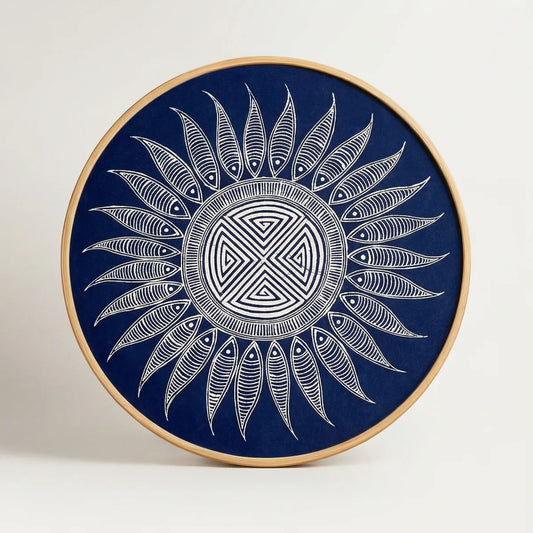
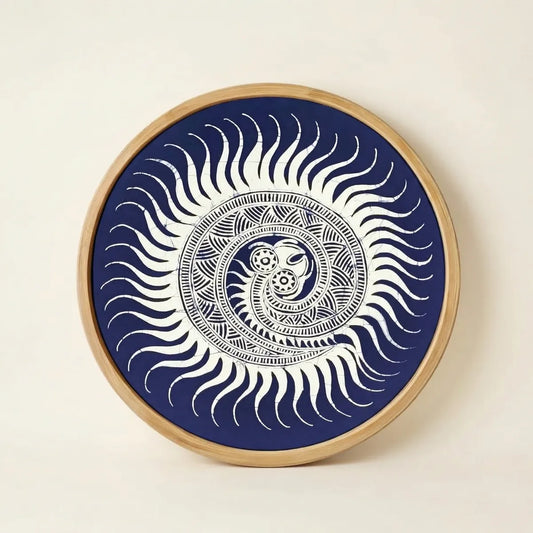
Commencez par ce que vous pouvez voir : le motif principal, la bordure, les formes répétées, le dessin au trait et la surface indigo. Un textile batik Miao est généralement plus facile à comprendre lorsque vous lisez d’abord la composition entière, puis recherchez ensuite les symboles individuels.

Réponse rapide :pour lire le batik Miao, commencez par le motif central, puis étudiez les bordures, les symboles répétés, les variations de lignes, le ton indigo et les marques faites à la main. Ne forcez pas chaque ligne à avoir une signification fixe. La composition compte autant que la liste des symboles.
Commencez par le motif central
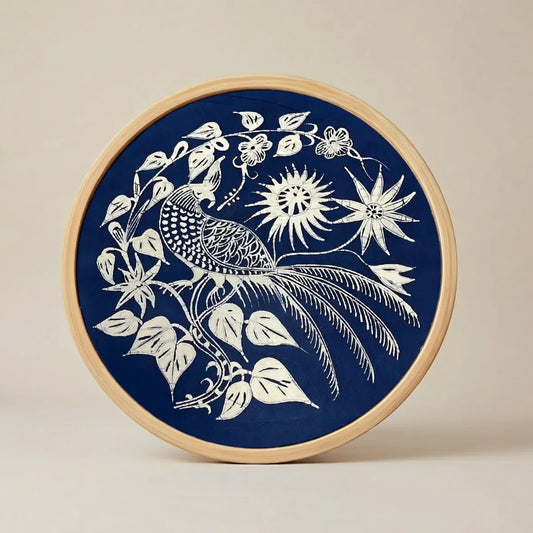
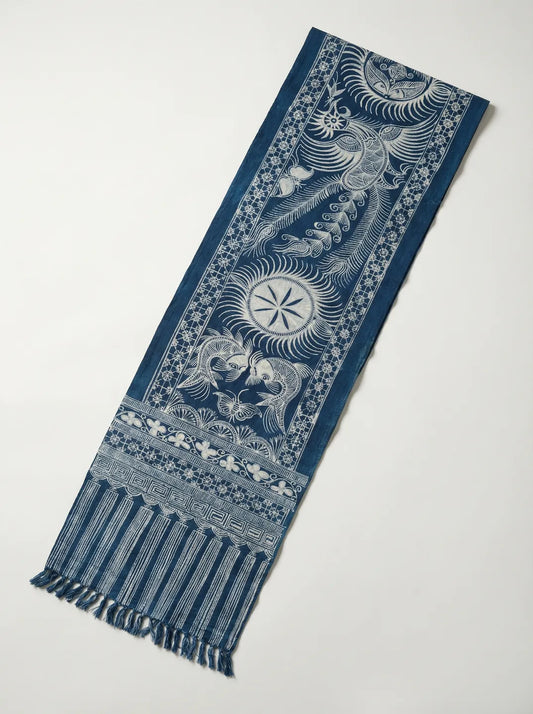
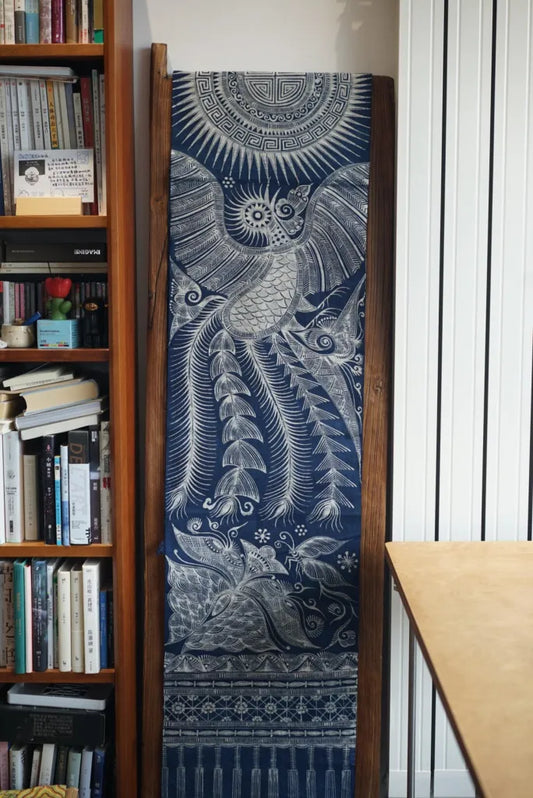
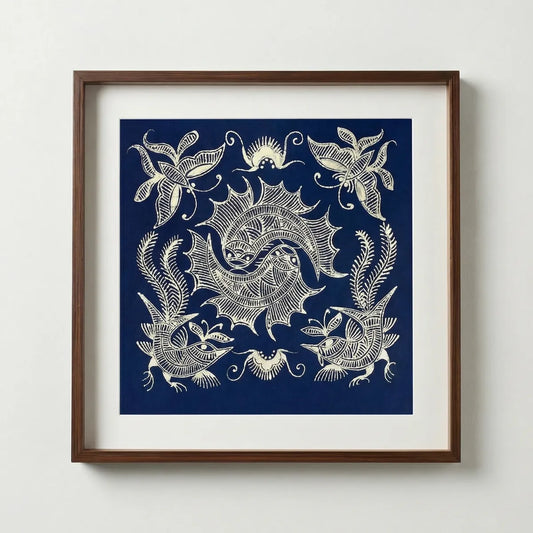
Le motif central est l’endroit où votre œil se pose généralement en premier. Il peut s'agir d'un oiseau, d'un poisson, d'une forme ressemblant à un papillon, d'une fleur, d'un cercle solaire ou d'un médaillon plus abstrait. Ne vous inquiétez pas de le nommer parfaitement dès le premier passage. Posez une question plus simple : qu'est-ce que cette conception me demande de regarder en premier ?
Dans de nombreuses pièces, le centre donne le ton. Un gros oiseau peut donner l’impression que le textile est ouvert et en mouvement. Un centre circulaire peut lui donner une impression d’équilibre et de cérémonial. Des poissons appariés peuvent rendre le design plus rythmé et continu.
Essayez ceci d'abord
Couvrez les bordures avec votre main et ne regardez que le milieu. Si la pièce semble toujours complète, le motif central constitue l’essentiel de la narration. Si le travail semble inachevé, les bordures et les marques répétées portent une plus grande partie du travail.

Regarde les frontières
Les bordures ne sont pas une décoration vide de sens. Dans le batik Miao, une bordure peut encadrer l’histoire, ralentir le regard ou répéter le rythme du motif central. Certaines bordures utilisent des triangles, des crochets, des vagues, des spirales ou de petites marques répétées. D’autres ressemblent davantage à un chemin textile autour de l’image principale.
Si le motif central est la phrase principale, la bordure est la ponctuation et le rythme. Il vous indique comment vous déplacer dans la pièce.
Remarquez les symboles répétés
La répétition est l’une des choses les plus faciles à manquer pour les débutants. Un poisson peut apparaître une fois comme motif principal, puis à nouveau sous des formes plus petites près du bord. Une spirale peut se répéter en arrière-plan. Une fleur peut apparaître à côté des oiseaux, puis revenir dans les coins.
Les symboles répétés ne remplissent pas la fonction. Ils créent du rythme et aident le textile à se sentir connecté. Lorsque vous remarquez une forme répétée, recherchez où elle change. La répétition faite à la main entraîne souvent de petits changements d’espacement, d’échelle et d’épaisseur de ligne.
Lire toute la composition
Une liste de symboles est utile, mais elle peut inciter les gens à lire de manière trop restrictive. Un motif de papillon peut indiquer des histoires d'origine. Le poisson peut suggérer une abondance ou une continuité. Les oiseaux peuvent suggérer un mouvement ou une protection. Mais une fois ces formes assemblées, le sens est façonné par l’ensemble du tissu.
Demandez si le textile est dense ou ouvert. Symétrique ou lâche. Calme ou énergique. Une lecture complète vient de ces relations, et non du fait de nommer un motif et de s'y arrêter.
Vérifiez les détails faits à la main
Après avoir compris la disposition, rapprochez-vous. Regardez les lignes blanches résistantes à la cire. Sont-ils légèrement variés ? Les courbes s’épaississent-elles et s’amincissent-elles de manière naturelle ? L'indigo a-t-il de la profondeur plutôt qu'un aspect imprimé à plat ?

Ces détails précis sont importants car ils montrent comment le textile a été fabriqué. Pour une liste de contrôle plus pratique, lisezcomment distinguer le batik Miao fait main du tissu imprimé. Pour les fines marques de craquelures qui apparaissent lorsque la cire se brise lors de la teinture, voirce que signifie l'effet de fissure de glace dans le batik Miao.
Ce que les débutants comprennent souvent mal
| Malentendu | Une meilleure façon de le lire |
|---|---|
| Chaque symbole a une signification fixe. | Les significations peuvent changer selon la région, le fabricant et les motifs environnants. |
| La bordure n'est qu'une décoration. | Les bordures organisent souvent le textile et guident le regard. |
| Une symétrie parfaite signifie un meilleur artisanat. | Le travail artisanal doit être contrôlé, mais de petites variations humaines sont normales. |
| Tout le batik bleu et blanc est fait à la main. | Le tissu imprimé peut copier le look, donc les détails en gros plan sont importants. |
Où aller ensuite
Si vous souhaitez un guide symbole par symbole, lisezModèles Miao Batik : symboles et significations. Pour le contexte culturel plus large, commencez parQu’est-ce que la culture Miaozu ?. Vous pouvez également parcourir les pièces finies dans notreCollection batik Miao.
FAQ
Dois-je connaître tous les symboles pour profiter du batik Miao ?
Non. Commencez par lire la composition : centre, bordures, répétition, dessin au trait et couleur. La signification du symbole peut venir après cela.
Est-ce la même chose que lire un tableau ?
Certaines pièces sont similaires, mais les textiles ont leur propre logique. Les bordures, la répétition, l’utilisation du tissu et les lignes de cire dessinées à la main comptent plus que dans une impression à plat.
Dois-je d’abord lire le guide des symboles ou ce guide visuel ?
Utilisez d’abord ce guide visuel si vous êtes nouveau. Utilisez le guide des symboles lorsque vous souhaitez comprendre des motifs spécifiques tels que le papillon, le poisson, l'oiseau, le soleil ou le tambour en bronze.
Découvrez des exemples de textiles indigo dessinés à la main dans leCollection Runystore Miao Batik.
Mots clés:
Précédent
Comment distinguer le batik Miao fait main du tissu imprimé
Suivant
Qu'est-ce que l'effet de fissure de glace dans Miao Batik ?