
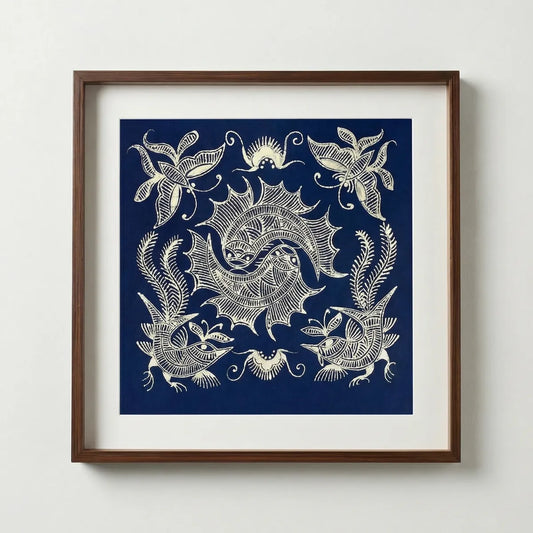
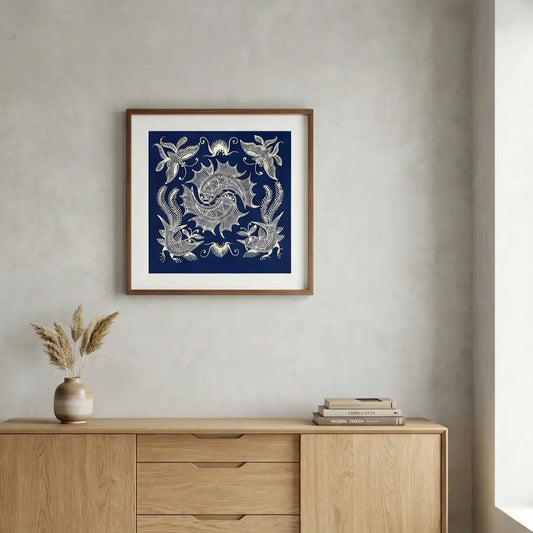

Comment distinguer le batik Miao fait main du tissu imprimé
Réponse rapide
Vous pouvez souvent distinguer le batik Miao fait main du tissu imprimé en vérifiant la variation de la ligne de cire, la profondeur de l'indigo, les craquelures naturelles, l'envers du tissu et si le motif se répète trop parfaitement.
Sections du guide
Si vous avez découvert le batik Miao grâce à une courte vidéo ou une photo de produit, la première question est généralement d'ordre pratique : est-ce vraiment fait à la main, ou s'agit-il simplement d'un tissu imprimé avec un motif d'aspect traditionnel ?
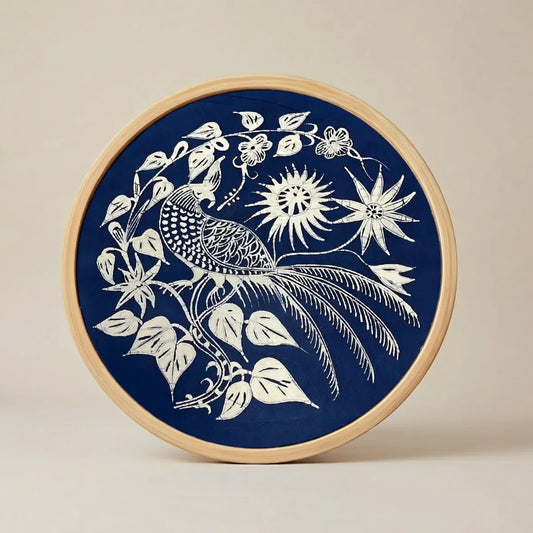
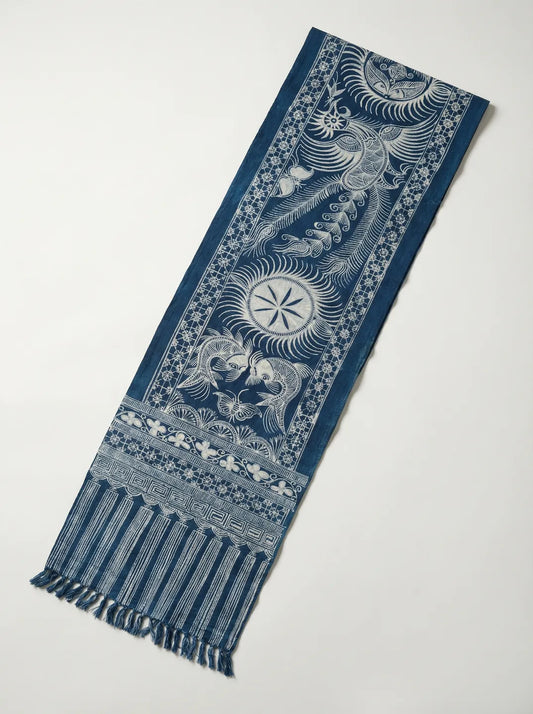
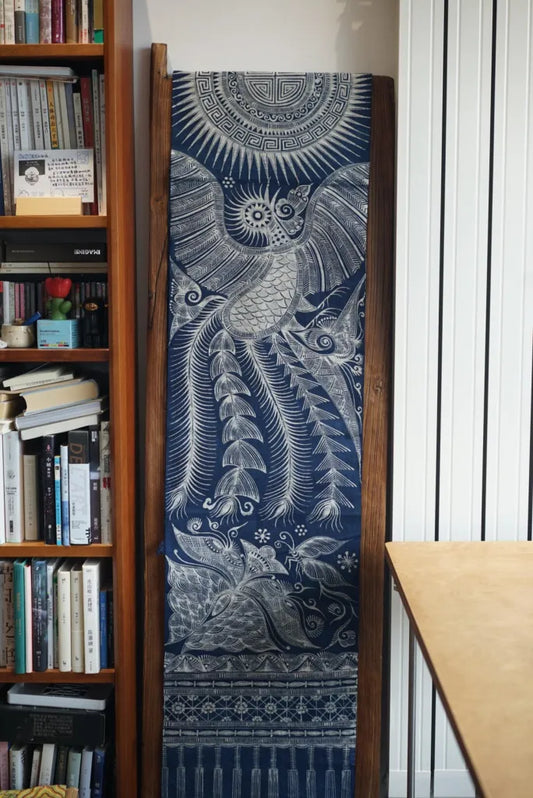
Le batik Miao fait à la main est fabriqué avec une teinture résistante à la cire. Le motif est dessiné à la cire, teint, puis la cire est retirée. Le tissu imprimé copie l'aspect de la surface. Les deux peuvent être bleus et blancs. Ils ne ressentent pas la même chose quand on regarde de près.

Réponse rapide :Le batik Miao fait à la main présente généralement de petits changements dans la largeur des lignes, une variation naturelle de la teinture, des marques de crépitement dues à la cire et un revers plus développé. Le tissu imprimé semble souvent plus plat, plus propre et plus identique d’une zone répétée à l’autre.
Commencez par le dessin au trait
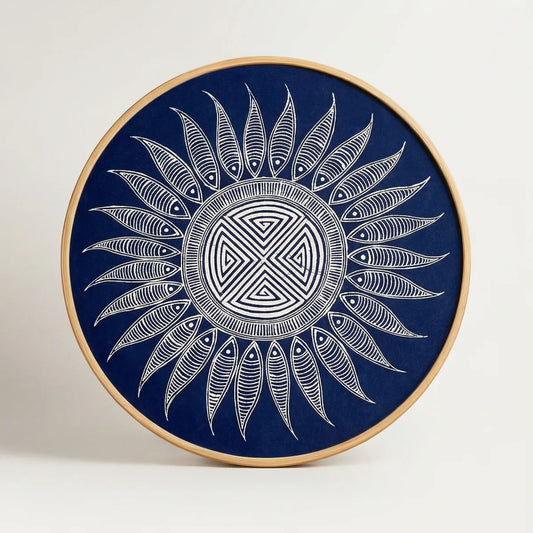
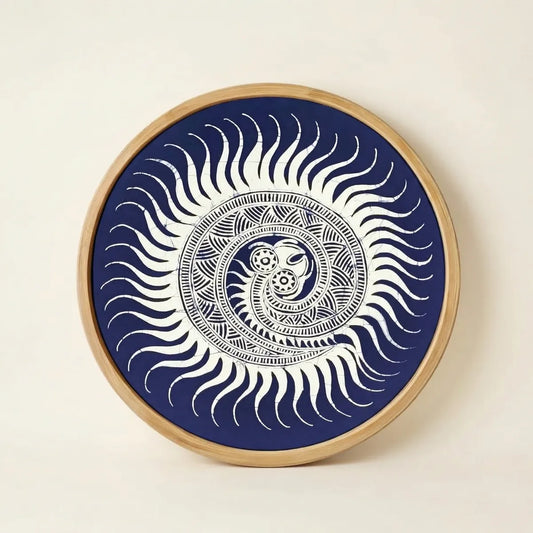
Regardez d'abord les lignes blanches. En batik fait main, le trait est tracé à la main avec de la cire chaude. Ce sera peut-être stable, mais ce ne sera pas parfaitement mécanique. Une courbe peut s'épaissir de quelques millimètres. Un point peut être légèrement décentré. Une bordure peut comporter de minuscules hésitations là où la main change de vitesse.
Ce n'est pas un défaut. C’est l’un des signes les plus simples indiquant qu’une personne a fabriqué la pièce. Une ligne imprimée a généralement un bord plus régulier et répète encore et encore la même texture.

Vérifiez les zones bleues, ainsi que le motif blanc
De nombreux acheteurs se concentrent sur le motif blanc et manquent le fond bleu. La teinture naturelle à l’indigo et à la cire laisse souvent de petits changements de tons. Certaines zones semblent plus profondes. Certaines zones semblent plus claires. À proximité de plis ou de fissures de cire, la teinture peut se glisser en fines lignes.
Sur une impression, le bleu peut paraître visuellement cohérent car la couleur constitue une image appliquée. Cela ne signifie pas automatiquement que le tissu est de mauvaise qualité, mais cela signifie que vous regardez un autre type d’objet.
Utilisez cette vérification en cinq points
- Variation de ligne :les lignes faites à la main changent généralement légèrement en largeur et en pression.
- Crépiter:la cire peut se briser pendant la teinture, laissant de fines marques irrégulières.
- Verso :le tissu teint montre souvent plus de couleur sur le dos que l'impression en surface.
- Motifs répétés :les motifs imprimés se répètent souvent trop parfaitement.
- Toucher et bord :Les pièces en coton ou en textile faites à la main peuvent sembler moins lisses que les tissus de décoration imprimés.

Batik fait main vs tissu imprimé
| Que faut-il inspecter | batik Miao fait à la main | Tissu imprimé |
|---|---|---|
| Lignes blanches | Légèrement inégal, dessiné à la main, avec de petits changements de pression. | Propre, répété et souvent identique dans toute la conception. |
| Fond bleu | Peut présenter une profondeur de teinture, de petits décalages et des traces de résistance à la cire. | Souvent plus plat et plus uniforme. |
| Envers du tissu | La couleur pénètre généralement dans le tissu. | Le verso peut paraître beaucoup plus clair ou moins détaillé. |
| Répétition du motif | Des motifs similaires peuvent encore varier. | Les répétitions peuvent sembler exactes. |
Pourquoi la différence est importante
Si vous ne voulez que le look, une impression peut être décorative. Si vous voulez le métier, la différence compte. Le batik Miao appartient à une tradition de résistance à la cire pratiquée dans des endroits tels que Danzhai, Anshun et Zhijin dans le Guizhou, selon les archives officielles du patrimoine culturel immatériel de Chine. La même source décrit le batik Miao comme un art textile pratique utilisé pour les vêtements, les couvre-lits, les sacs, les couvre-chefs et d'autres objets du quotidien.
Cette histoire explique pourquoi les pièces faites à la main ne doivent pas être jugées uniquement selon une symétrie parfaite. Les marques humaines font partie de l'œuvre.
Que demander avant d'acheter
Demandez si le motif est un batik résistant à la cire dessiné à la main ou un tissu imprimé de style batik. Demandez de quel matériau il est fait. Demandez un gros plan du dessin au trait et de l’envers du tissu. Un vendeur qui travaille avec de véritables pièces faites à la main devrait être en mesure de répondre à ces questions sans que la réponse paraisse mystérieuse.
Si vous êtes encore en train d'apprendre les bases, lisez notre guide principal pourCulture Miaozu et batik Miao. Pour les outils derrière le processus, consultez notre guide pourchoisir un couteau à cire batik Miao.
Source utile
Pour plus d’informations sur le statut patrimonial et la pratique régionale du batik Miao, voir lePage du projet de patrimoine culturel immatériel de Chine pour le batik Miao.
FAQ
Chaque marque irrégulière prouve-t-elle qu’une pièce en batik est fabriquée à la main ?
Recherchez plusieurs signes ensemble : variation de ligne, comportement de la teinture, couleur du verso et détails du motif non identiques.
Le batik Miao fait à la main peut-il toujours avoir l'air soigné ?
Oui. Les créateurs qualifiés peuvent tracer des lignes très contrôlées. Le problème n’est pas le désordre. Le fait est que le contrôle vient d’une main et non d’un fichier d’impression répété.
Le mot Miaozu doit-il apparaître sur ce genre de page ?
Cela peut apparaître naturellement car Miaozu fait référence au peuple Miao et à sa culture. Le mot-clé principal de cette page, cependant, est le batik Miao fait à la main.
Parcourez les pièces finies faites à la main dans notreCollection batik Miao.
| Test | Indice de batik fait à la main | Indice sur le tissu imprimé |
|---|---|---|
| Doubler | Petits changements dans l'écoulement de la cire | Bords répétés identiques |
| Couleur | Variation de profondeur indigo | Couleur de la surface plane |
| Face arrière | Le colorant peut transparaître | Le motif peut être plus faible |
| Description | Le processus est expliqué | Seuls les mots de style sont utilisés |
Questions fréquemment posées
Le tissu imprimé style batik est-il mauvais ?
Non. Cela peut être utile, mais cela doit être décrit honnêtement.
Le batik fait main a-t-il toujours des craquelures ?
Pas toujours, mais les craquelures naturelles de la cire sont un indice courant.
Quelle est la meilleure vérification rapide ?
Regardez les lignes en gros plan et le verso si des photos sont disponibles.
Mots clés:
Précédent
L'argent Miao vaut-il le coup ? Le guide pratique et honnête
Suivant
Comment lire un textile Miao Batik : guide visuel du débutant