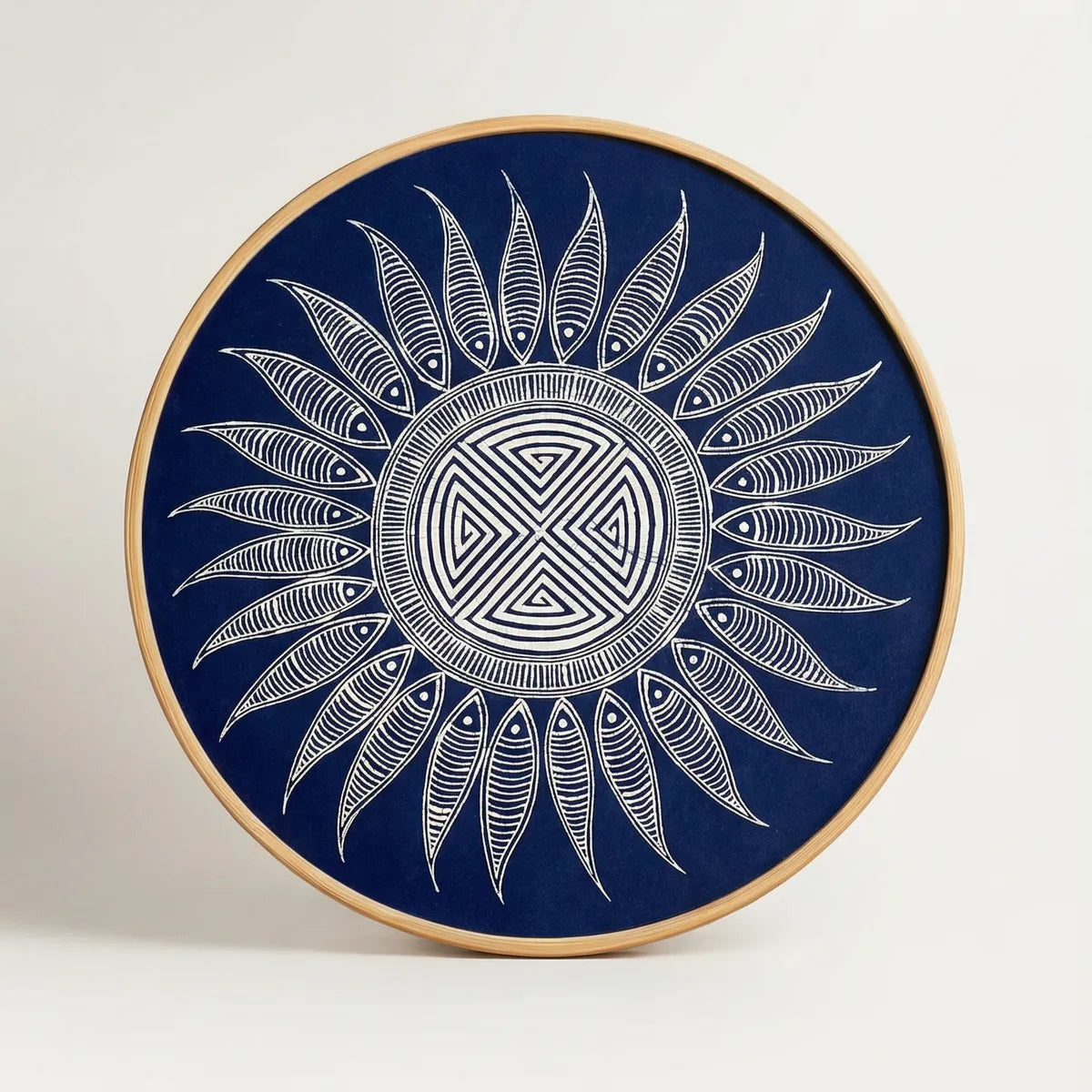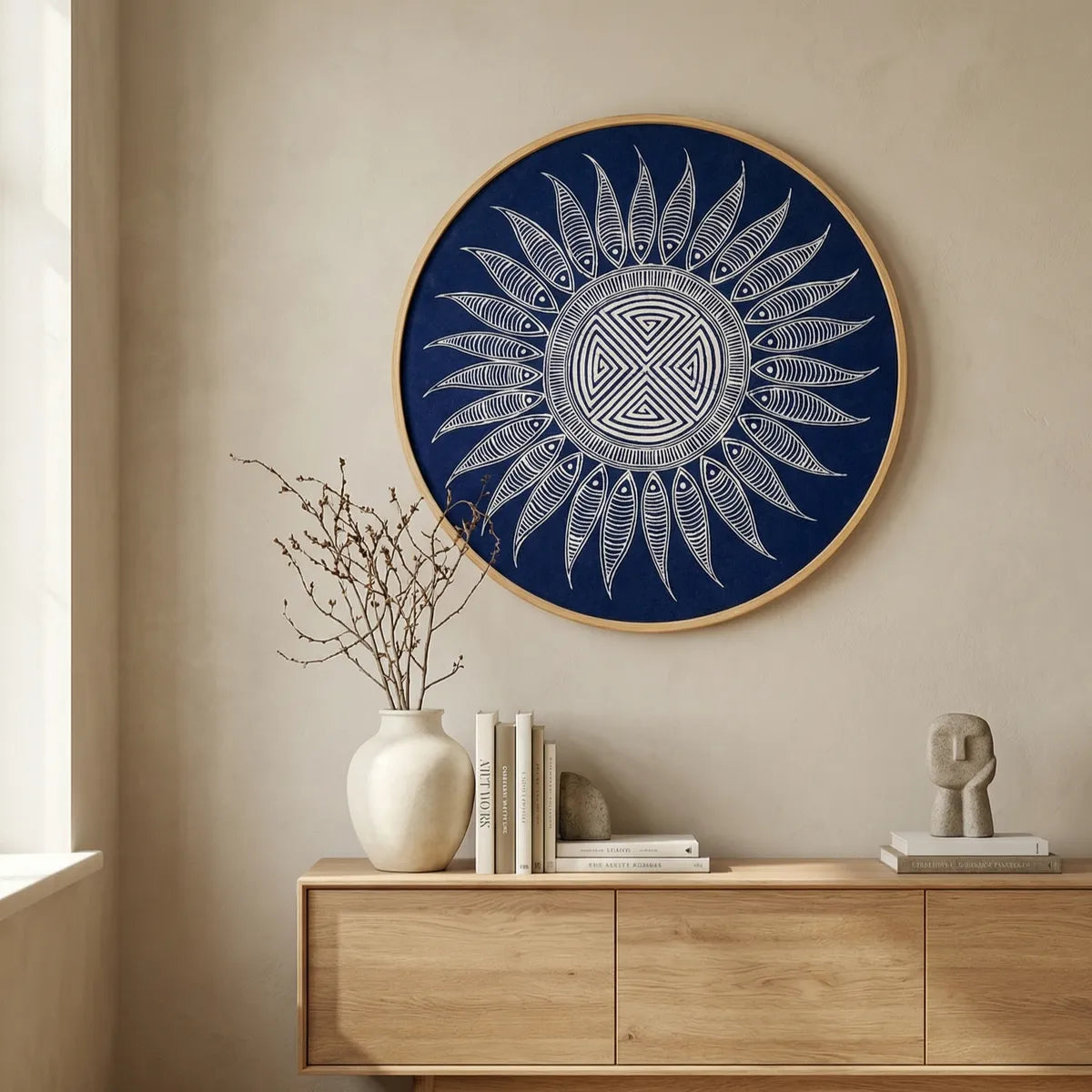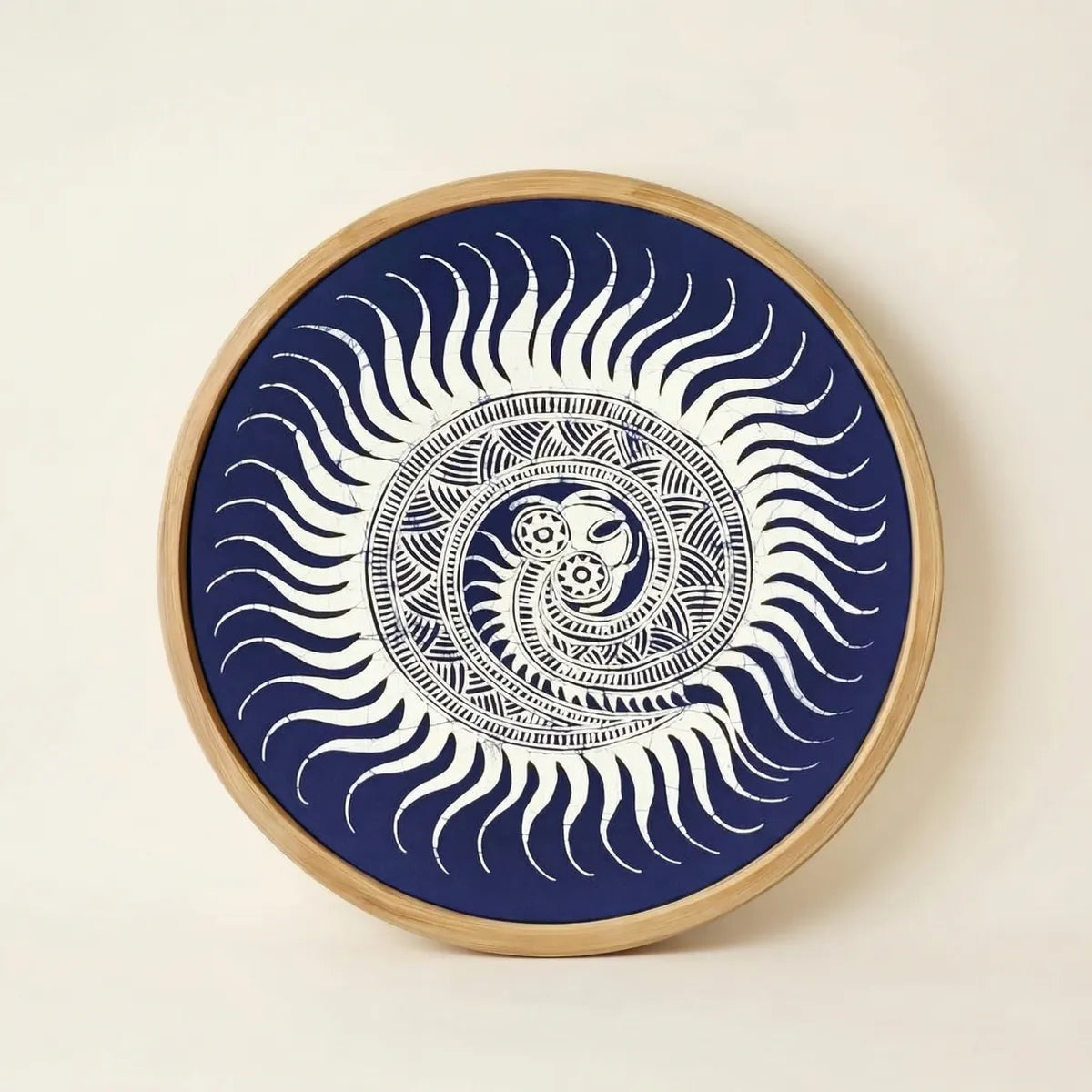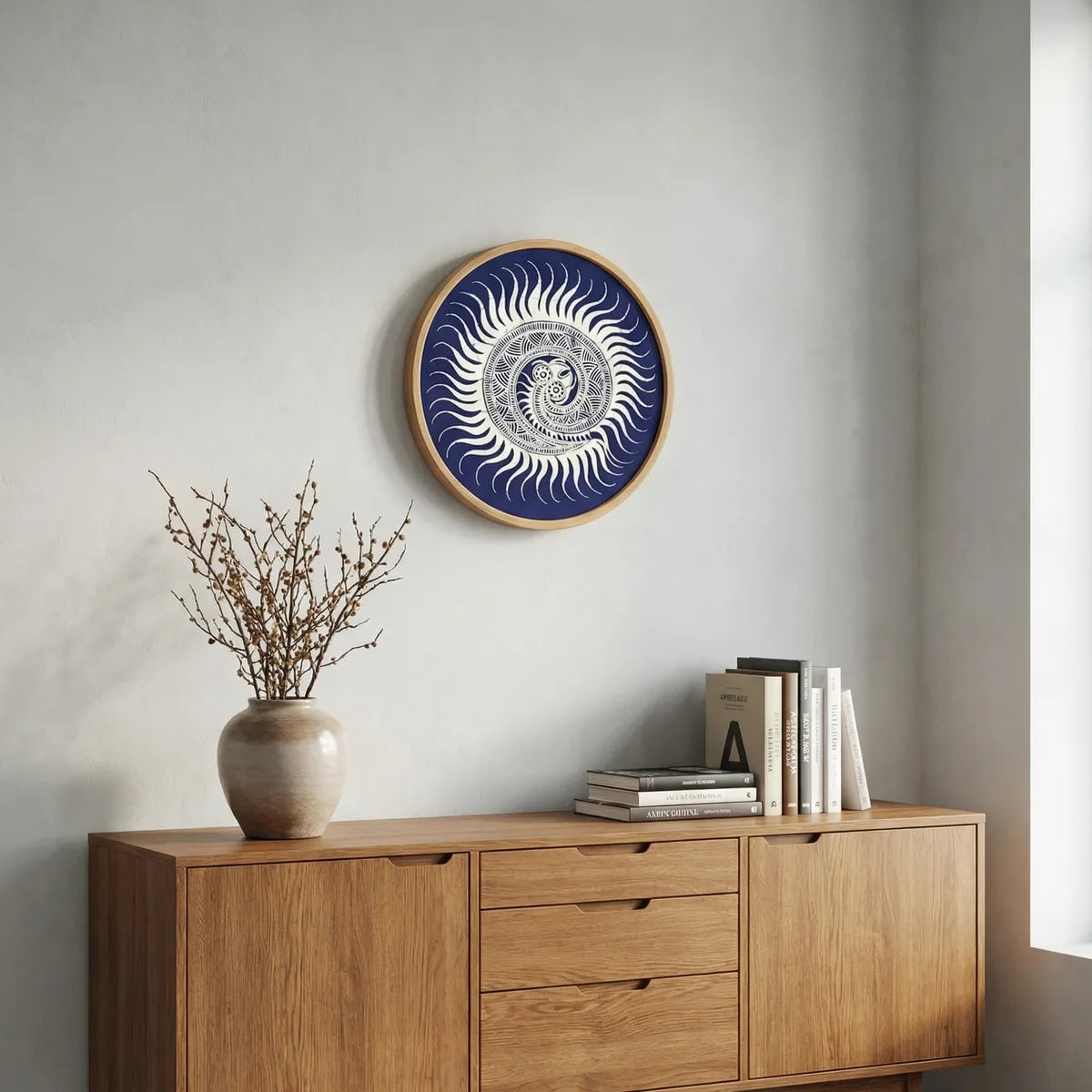

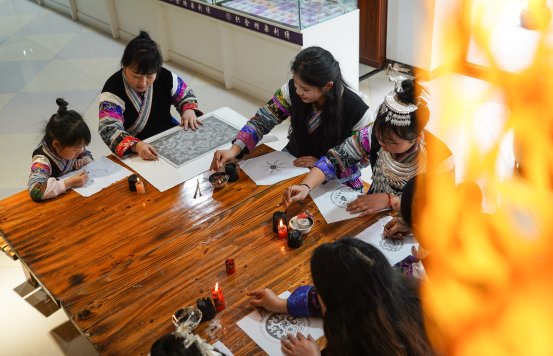
Dans un paisible village de montagne du sud-ouest de la Chine, la douce odeur de cire d'abeille fondue flotte dans l'air. Autour d'une longue table en bois, des jeunes filles sont assises aux côtés de leurs mères et grands-mères, trempant de minces couteaux métalliques dans de la cire chaude et traçant de délicates lignes sur du tissu blanc. Elles parlent, rient et se taisent parfois, concentrées sur chaque trait. La scène semble simple, mais chaque mouvement appartient à une tradition transmise de génération en génération.
C'est le monde du batik Miao – un artisanat de réserve à la cire dessiné à la main, à la fois art du quotidien et patrimoine vivant. Chez Runystore, de nombreuses pièces de notre collection sont créées dans des ateliers comme celui-ci.
Si vous êtes novice en matière de batik Miao, cet article vous guidera à travers son histoire, ses symboles, ses techniques et les personnes qui le maintiennent en vie aujourd'hui.
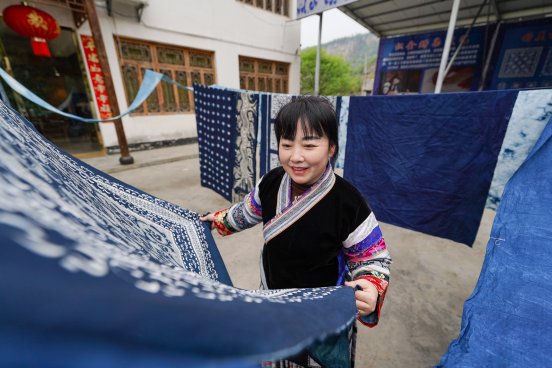
Qu'est-ce qui rend le batik Miao différent ?
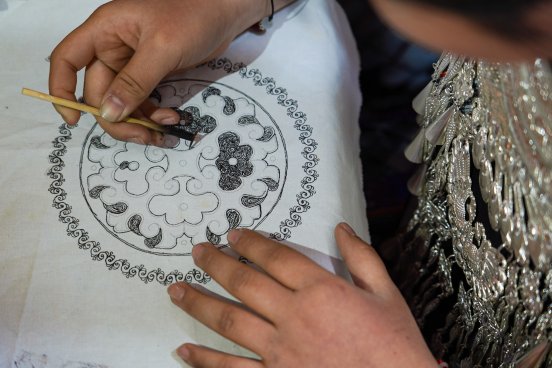
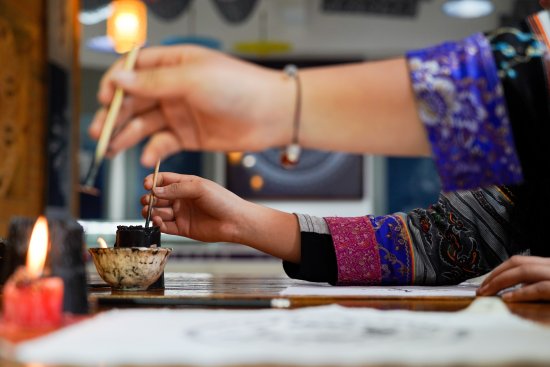
Le batik existe dans de nombreuses cultures, de l'Indonésie à l'Afrique de l'Ouest, mais le batik Miao possède son propre langage distinctif. Au lieu d'utiliser des pinceaux ou des stylos métalliques, les artisans Miao dessinent avec un couteau à cire – une petite lame métallique attachée à un manche en bambou. L'outil est plongé dans de la cire d'abeille chaude et guidé directement sur le tissu. Il n'y a pas de pochoirs ni de contours pré-dessinés. Chaque courbe et chaque petit point est réalisé à main levée, de mémoire.
Les motifs eux-mêmes sont pleins de sens. Vous y verrez souvent :
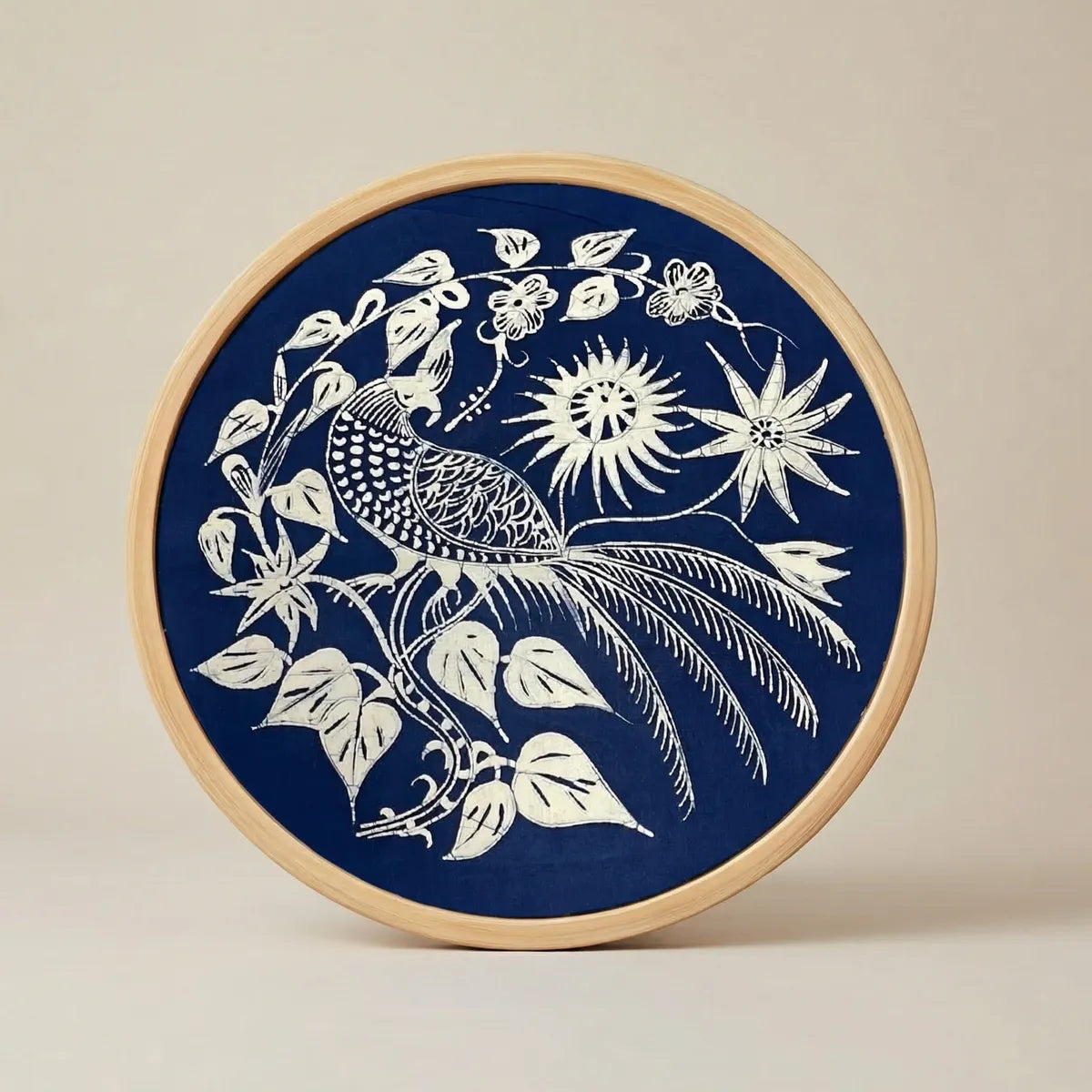
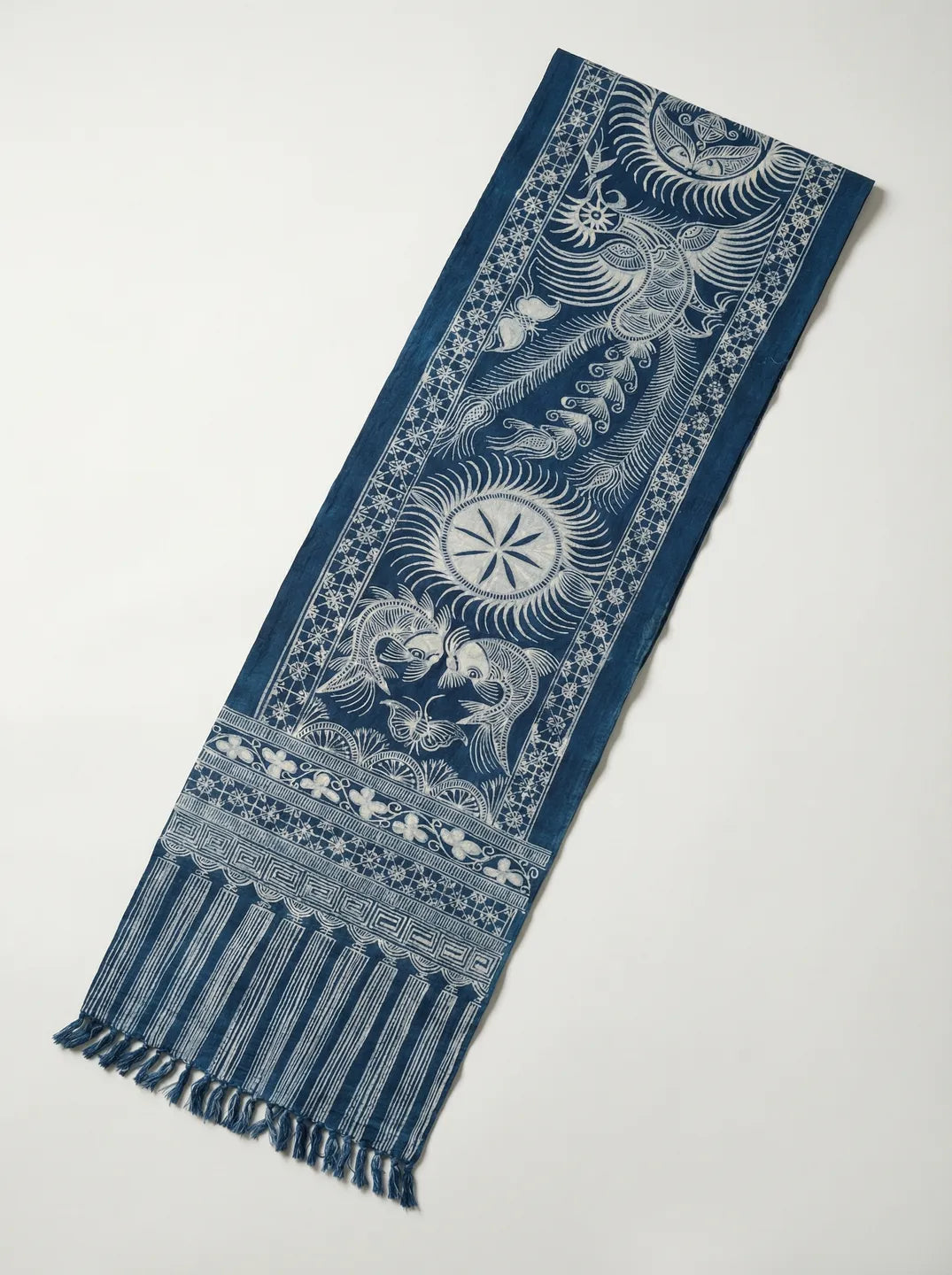
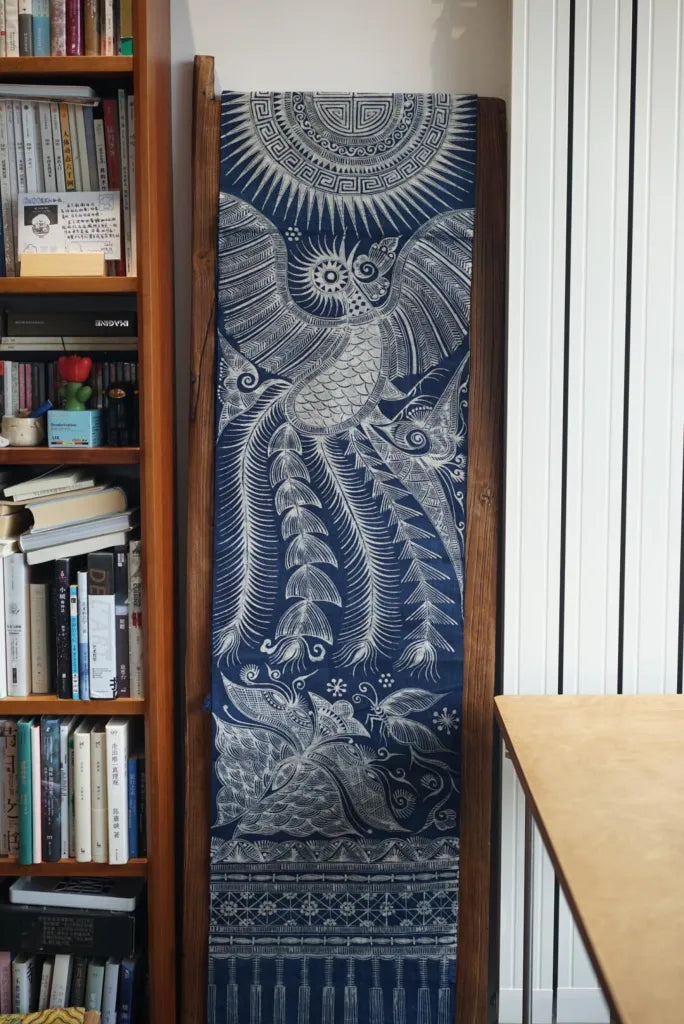
- Motifs solaires – symboles de vie, de chaleur et de renouveau.
- Poissons et oiseaux – harmonie entre l'homme et la nature.
- Papillons – échos du récit de la création Miao.
- Spirales et lignes ondulées – montagnes, rivières et l'écoulement du temps.
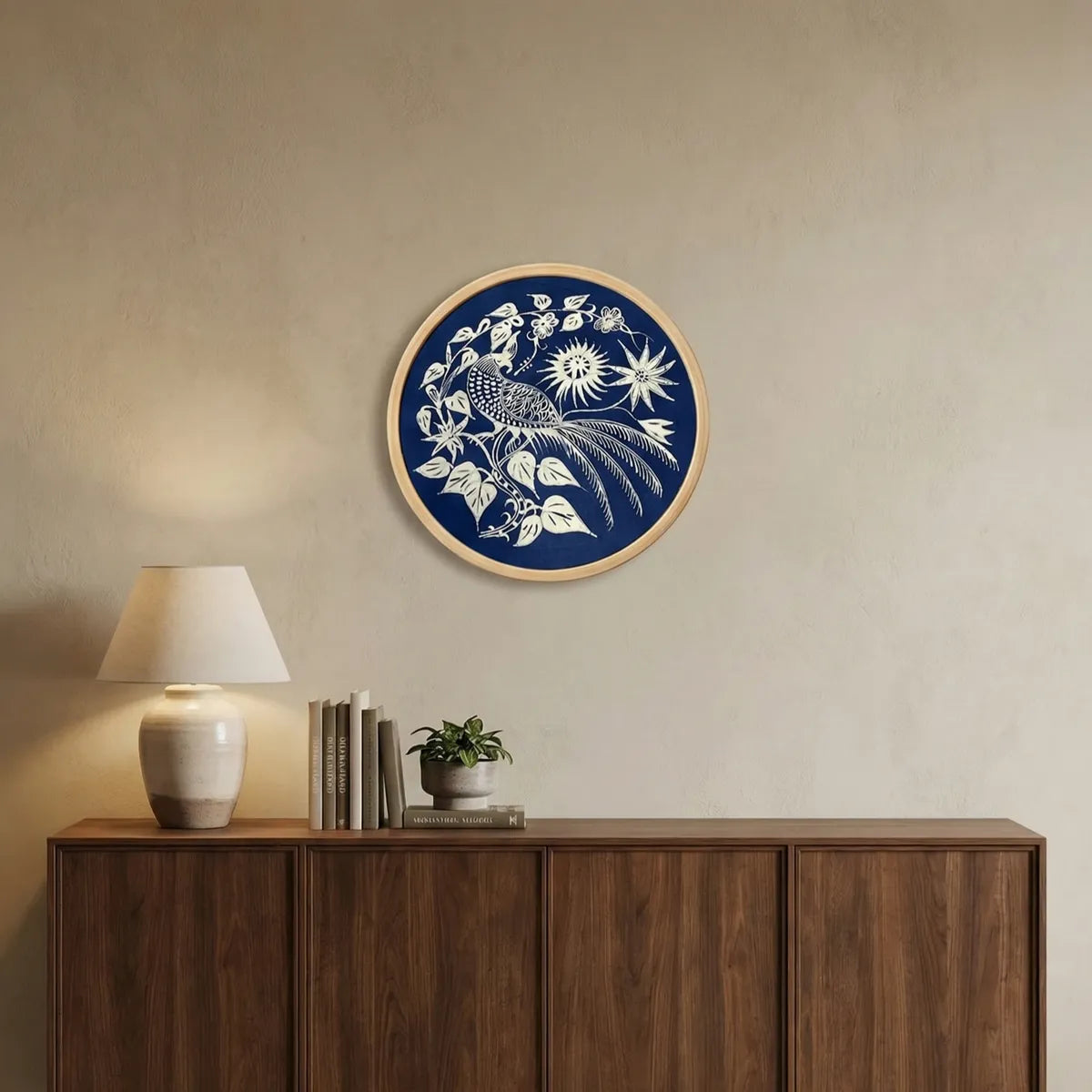
Beaucoup de ces motifs apparaissent également dans nos tentures murales en batik Miao, soigneusement encadrées pour les intérieurs modernes tout en conservant leur signification traditionnelle.
Un artisanat enraciné dans des générations de femmes
Dans de nombreuses communautés Miao, les jeunes filles commencent à apprendre le batik dès l'âge de cinq ou six ans. Leurs premières leçons sont simples : comment tenir le couteau, comment faire fondre la cire uniformément, comment garder leurs mains stables. Elles s'assoient à côté de femmes plus âgées – mères, tantes et grands-mères – et apprennent en observant, en écoutant et en essayant lentement par elles-mêmes.
L'une des artisanes avec lesquelles nous travaillons, que nous appellerons Cai Qun, est déjà la quatrième génération de sa famille à pratiquer cet artisanat. Elle a grandi en regardant sa grand-mère se pencher sur un morceau de tissu tard le soir, traçant des lignes de cire à la lumière d'une lampe à huile. Aujourd'hui, elle est assise dans la même position, guidant les jeunes filles de son village à travers leurs premiers motifs.
Pour ces familles, le batik est plus qu'une compétence. C'est un moyen de rester connectées à leurs ancêtres et aux montagnes et rivières qui entourent leurs villages. Si vous souhaitez approfondir le contexte culturel du peuple Miao, vous pouvez lire notre histoire « La beauté de la Chine que vous n'avez jamais vue : Un voyage immersif dans la culture Miao. »
Le couteau à cire : cœur de la technique
Le couteau à cire peut paraître simple, mais il exige des années de pratique. L'artisan chauffe la lame, la trempe dans la cire d'abeille et dessine d'un mouvement fluide. Une fois qu'une ligne est tracée, elle ne peut pas être effacée. La précision est primordiale, tout comme le rythme – la vitesse de la main, la température de la cire, et même la respiration de l'artisan.
C'est la même technique qui est utilisée pour créer de nombreuses pièces de notre collection de batik Miao, des petits accessoires aux grandes œuvres murales.
Du tissu blanc à l'indigo profond
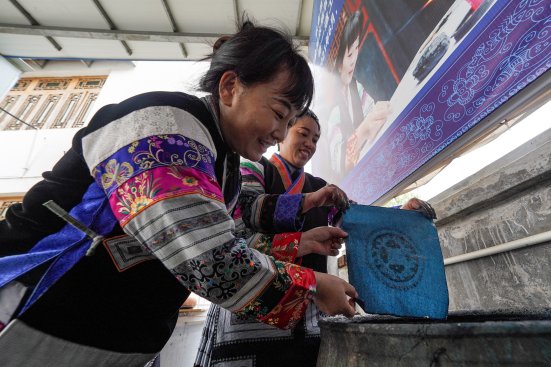
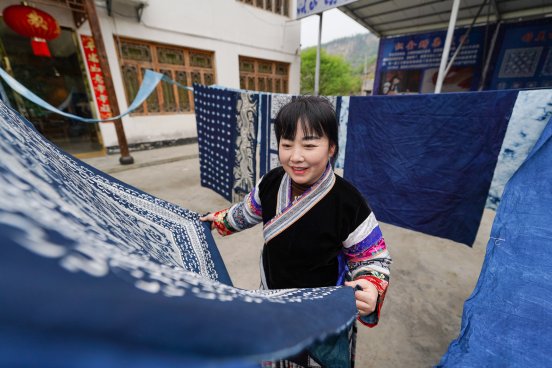
Une fois le motif dessiné, le tissu est plongé dans une cuve d'indigo. Couche après couche, la couleur s'intensifie, passant du bleu pâle à une nuance riche, presque nocturne. La cire protège les zones couvertes, et une fois retirée, le tissu blanc d'origine apparaît en contraste saisissant avec le fond bleu.
Observer le processus donne un peu l'impression de voir une photographie se développer lentement. Des motifs invisibles dans la cire se détachent soudain – soleils, poissons, papillons et lignes tourbillonnantes, tous resplendissant sur l'indigo.
Si vous êtes curieux des outils utilisés dans ce processus, nous l'expliquons plus en détail dans notre article « Qu'est-ce qu'un outil de batik Miao ? »
Maintenir l'histoire vivante dans la vie quotidienne
Pour le peuple Miao, le batik n'est pas réservé aux musées ou aux occasions spéciales. Il est présent dans la vie quotidienne : dans les vêtements, les costumes de fête, les porte-bébés et les rideaux suspendus aux portes. Les tentures murales et les textiles de table sont souvent offerts en cadeau pour marquer des moments importants de la vie.
Chez Runystore, nous avons travaillé avec des artisans pour introduire certains de ces textiles dans les foyers modernes. Nos œuvres murales en batik Miao sont encadrées et prêtes à être accrochées, tandis que les accessoires et les petits textiles vous permettent de profiter de cet artisanat au quotidien.
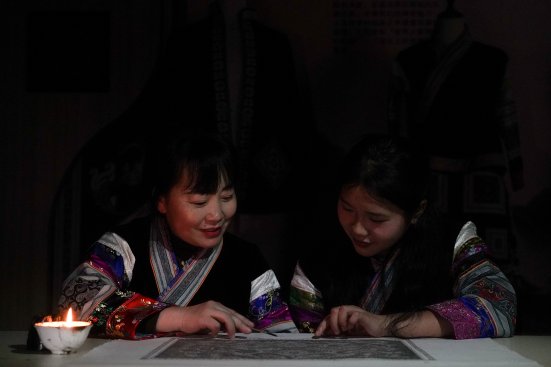
Le chemin d'un atelier nocturne paisible à une pièce finie dans votre maison est long, mais c'est là une partie du charme : chaque article porte le temps, le soin et les histoires des personnes qui l'ont fabriqué. Si vous aimez les idées de décoration, vous pourriez également apprécier notre guide « Rituel du thé et art textile : Décorez votre espace avec un chemin de table en batik Miao. »
Le Batik dans un monde en mutation
Comme de nombreux artisanats traditionnels, le batik Miao a fait face à de véritables défis. Pendant un temps, de nombreux jeunes ont quitté leurs villages pour travailler dans les grandes villes, et il y avait moins de mains désireuses d'apprendre les mouvements lents et patients qu'exige cet art. Certaines familles ont même cessé de pratiquer le batik.
Ces dernières années, cependant, l'intérêt pour les objets durables, faits à la main et ancrés dans la culture a de nouveau grandi. Des gens du monde entier commencent à rechercher des articles qui racontent une histoire et soutiennent de véritables communautés.
Pour des artisans comme Cai Qun, cela a ouvert de nouvelles portes. Elle anime maintenant des ateliers, collabore avec des designers et crée des pièces qui témoignent à la fois des traditions locales et des publics mondiaux. Certaines de ses œuvres se présentent sous forme de grandes tentures murales ; d'autres sont transformées en foulards, coussins ou textiles encadrés pour des intérieurs modernes.
Pour découvrir comment le batik peut égayer et réchauffer une maison, jetez un œil à notre article « Illuminez votre intérieur avec le batik Miao : Décoration culturelle unique. »
Comment Runystore travaille avec les artisans Miao
Runystore a été créé avec une promesse simple : partager la beauté des artisanats Miao avec le monde tout en soutenant les personnes qui maintiennent ces traditions vivantes. Nous travaillons directement avec des artisans de Guizhou et de Xiangxi, dont beaucoup sont des femmes âgées avec des décennies d'expérience. Un nombre significatif a plus de 55 ans, et pour certaines, le batik est leur principale source de revenus.
En achetant dans notre collection de batik Miao, vous aidez à :
- Préserver un artisanat menacé de disparition.
- Assurer un revenu équitable aux artisans ruraux et à leurs familles.
- Encourager les jeunes générations à continuer d'apprendre la technique.
- Réduire la dépendance à la décoration produite en masse et à la mode rapide.
Vous pouvez en savoir plus sur notre histoire et nos valeurs sur notre page À propos de nous.
Lecture associée : Construisez votre voyage dans le batik Miao
Si c'est votre première rencontre avec le batik Miao, voici quelques histoires supplémentaires à explorer. Ensemble, elles forment une petite « bibliothèque du batik » qui approfondit les différentes facettes de cet artisanat :
- Batik Miao : Un artisanat chinois intemporel
- Intégrer les textiles ethniques dans une maison moderne
- Rituel du thé et art textile : Décorez votre espace avec un chemin de table en batik Miao
- Illuminez votre intérieur avec le batik Miao : Décoration culturelle unique
- Qu'est-ce qu'un outil de batik Miao ?
Faire entrer un morceau de cette histoire chez vous
Le batik Miao n'est pas seulement quelque chose à lire dans un livre ou à voir dans un musée. Il est fait pour être touché, porté et vécu. Que vous choisissiez une tenture murale encadrée, un chemin de table ou un petit accessoire, chaque pièce porte le travail silencieux de l'artisan qui l'a fabriquée – sa patience, ses souvenirs et ses espoirs pour l'avenir.
Si cet artisanat vous attire, nous vous invitons à explorer notre collection de batik Miao et notre sélection de décoration murale. Nous espérons que vous trouverez quelque chose qui résonne avec votre espace et votre histoire.