The short answer
Choose a framed print when you want crisp graphic sharpness, uniform edges, glass protection, and an effortless way to build a symmetrical gallery wall. Choose textile wall art when your space feels too stark or echoey and needs tactile organic texture, artisanal warmth, zero glass glare, and a rich surface that shifts softly as natural daylight changes throughout the day.
When decorating a blank wall in a living room, bedroom, or entryway, the default impulse is often to buy another mass-produced framed poster or stretched canvas print. Yet in rooms with hard surfaces—such as hardwood floors, clean drywall, modern metal fixtures, and glass windows—standard prints can sometimes feel visually flat, cold, and repetitive.
Incorporating fabric art—whether a framed indigo batik textile, a woven wall hanging, or a hand-embroidered panel—introduces tactile dimension and authentic craftsmanship that paper prints simply cannot replicate. This guide compares both formats across texture, lighting, acoustic warmth, and interior placement to help you select the ideal focal piece for your home.
Textile wall art vs. Framed prints vs. Stretched canvas
| Dimension | Textile Wall Art (e.g. Batik, Weaving) | Framed Paper Prints | Stretched Canvas Prints |
|---|---|---|---|
| Surface Texture | Three-dimensional organic cotton/linen fibers, natural wax crackle, visible weave | Completely flat paper surface, often behind reflective glass or acrylic glazing | Printed canvas weave with uniform mechanical texture; no organic fiber depth |
| Light & Reflection | Zero glare; absorbs and diffuses light softly from any angle or window direction | Susceptible to harsh reflections and glare under direct sunlight or overhead lamps | Low glare, but printed inks reflect synthetic sheen under angled directional light |
| Acoustic Quality | Naturally dampens sound reverberation and echo in open-plan rooms | Rigid glass and backing board reflect sound waves like a hard wall | Neutral acoustic impact; lightweight hollow structure |
| Handmade Character | Every hand-drawn wax line, dye bath, and indigo gradient is unique (1-of-1) | Exact digital reproduction replicated thousands of times | Digital giclée print stretched over standard pine wood bars |
| Best Interior Setting | Living rooms, entryways, bedrooms needing organic warmth and tactile depth | Modern minimalist hallways, grid gallery walls, high-humidity powder rooms | Casual rental spaces, commercial offices, budget temporary decor |
Why textile wall art transforms a modern room
1. Softening hard architectural angles
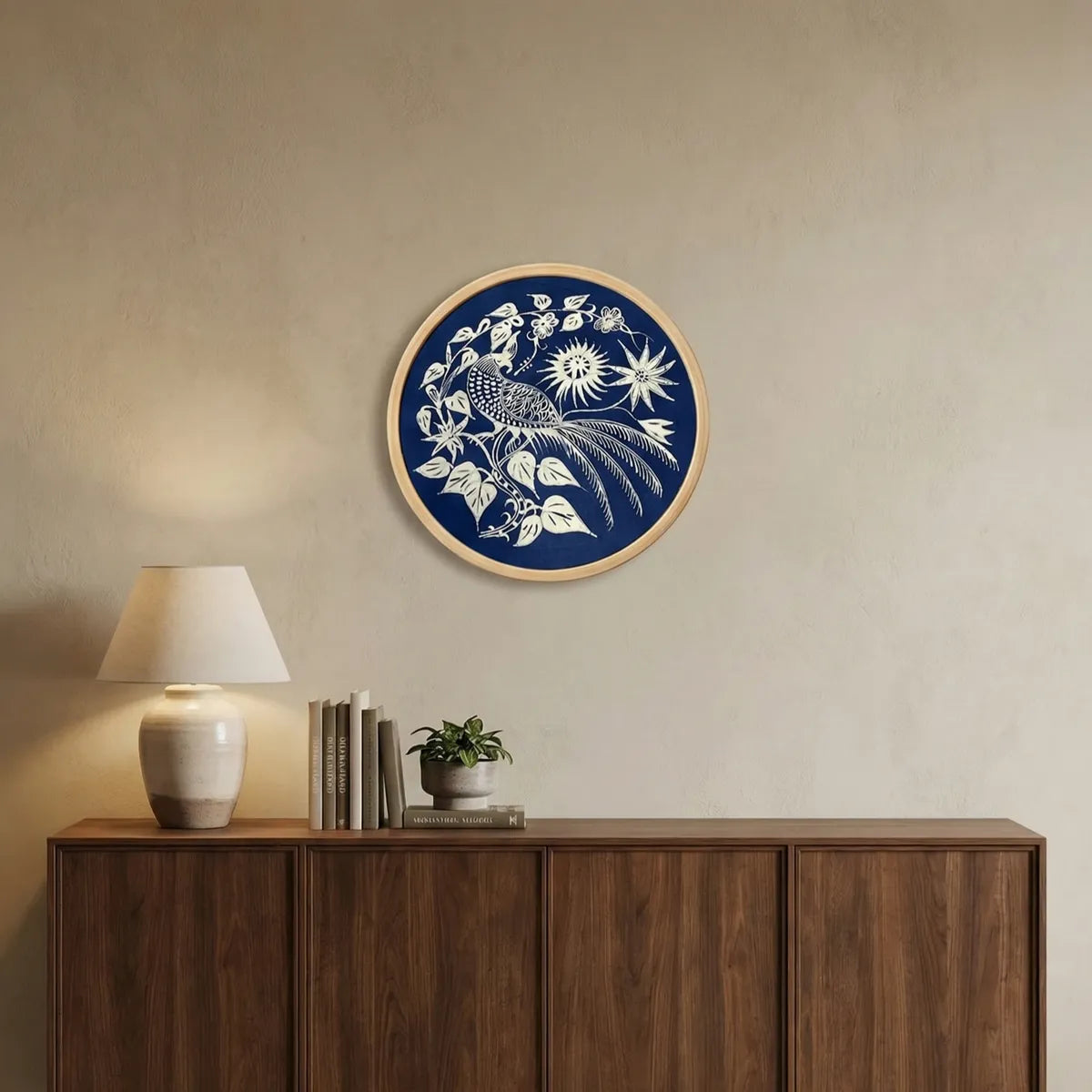
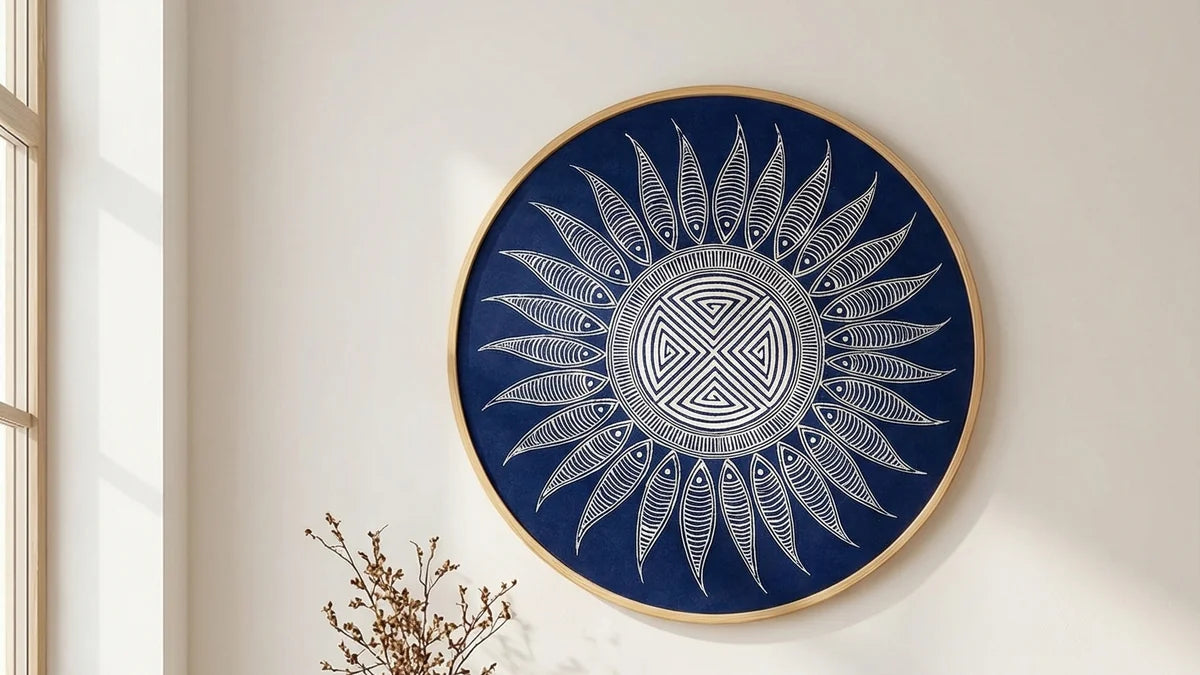
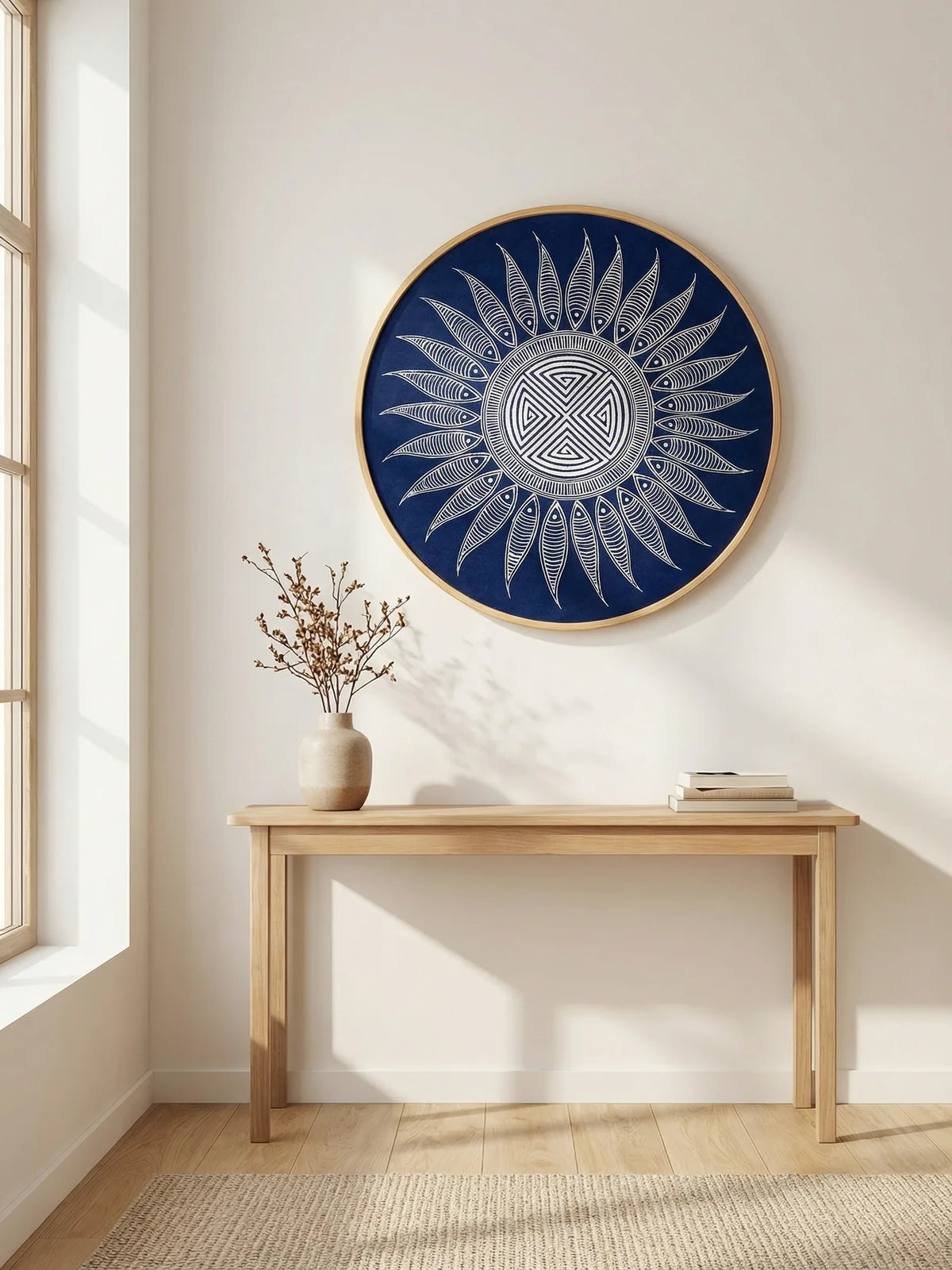
Contemporary interior architecture is dominated by crisp 90-degree angles: rectangular sofas, square coffee tables, metal light fixtures, and flat drywall. A handcrafted textile piece—especially a circular framed medallion or a fluid hanging cloth—breaks up rigid geometric lines and introduces natural softness.
2. Acoustic warmth and room comfort
One of the most overlooked benefits of fabric art is acoustic performance. Hard paper prints framed in glass act as sound reflectors. By contrast, thick woven cotton, linen, and layered textiles absorb ambient sound waves, noticeably reducing flutter echo in rooms with high ceilings or hard flooring.
3. Organic color depth under shifting daylight
Unlike commercial inks that remain static under artificial lighting, textiles dyed with plant-based indigo or botanical pigments possess multidimensional color depth. As morning light transitions into evening lamp warmth, the subtle wax crackle and deep indigo blue reveal evolving textures.
When a framed print is the better choice
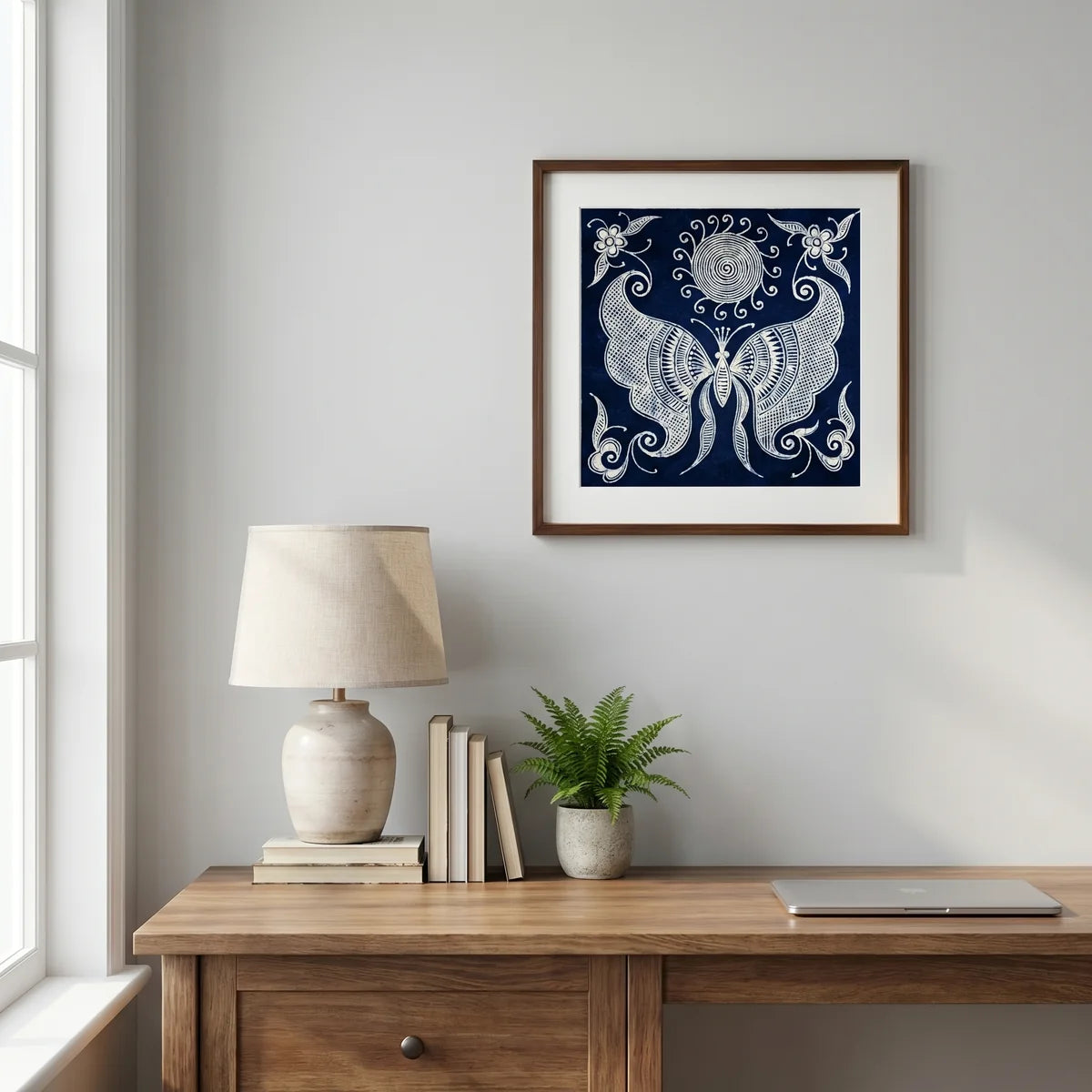
While textile art excels in organic texture and character, traditional framed paper prints remain the superior option in specific scenarios:
- Photographic and Fine Typography Art: When the artwork depends on hyper-fine linework, high-resolution photography, or crisp typography, paper printing delivers precision that fiber cannot match.
- Symmetrical Gallery Wall Grids: If you are assembling a grid of 6 to 9 identical matching frames, paper prints offer uniform sizing and easy alignment.
- Moisture-Prone Environments: In high-humidity bathrooms or poorly ventilated kitchens, framed prints sealed behind glass offer better protection against steam than exposed raw fabric.
Featured handmade textile wall art pieces
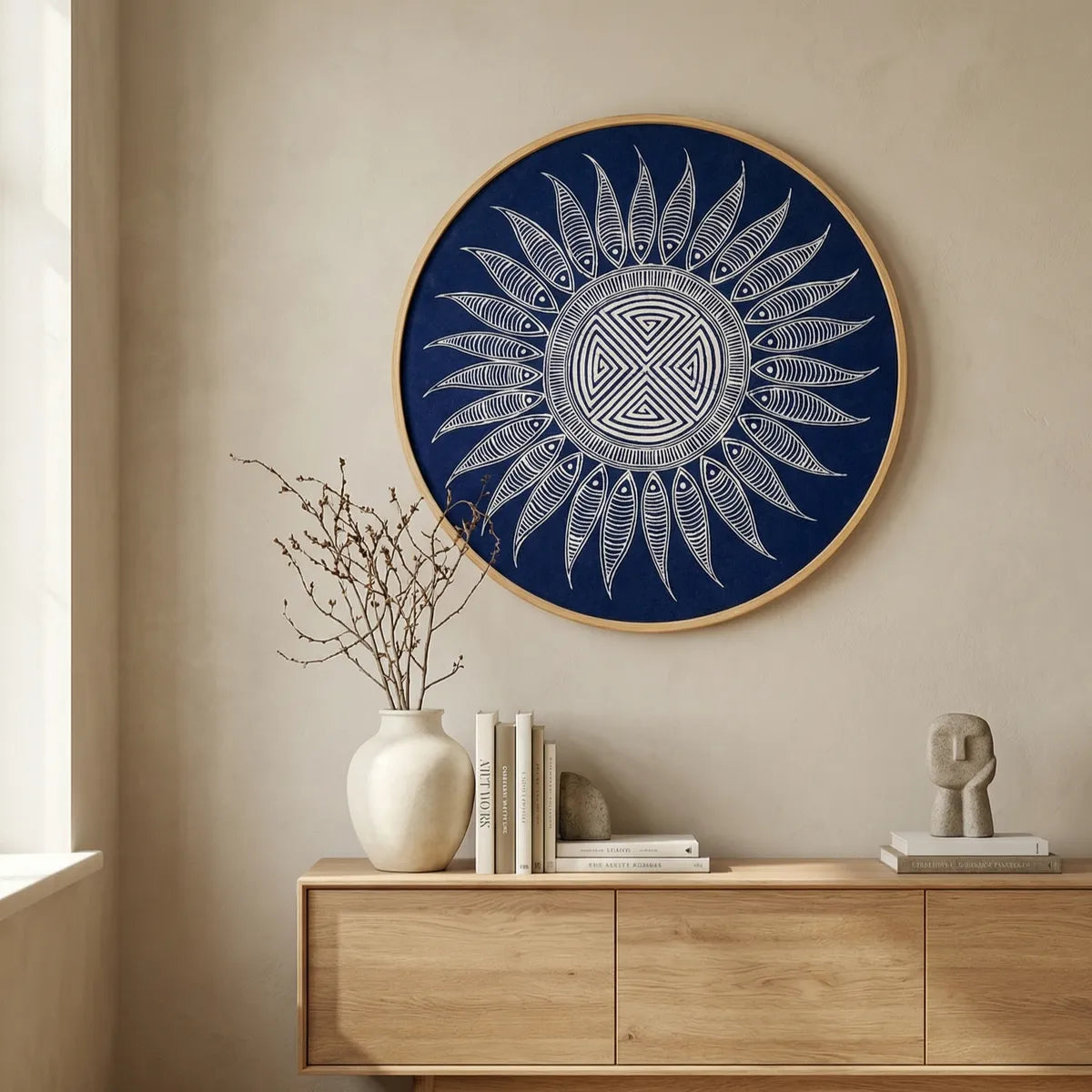
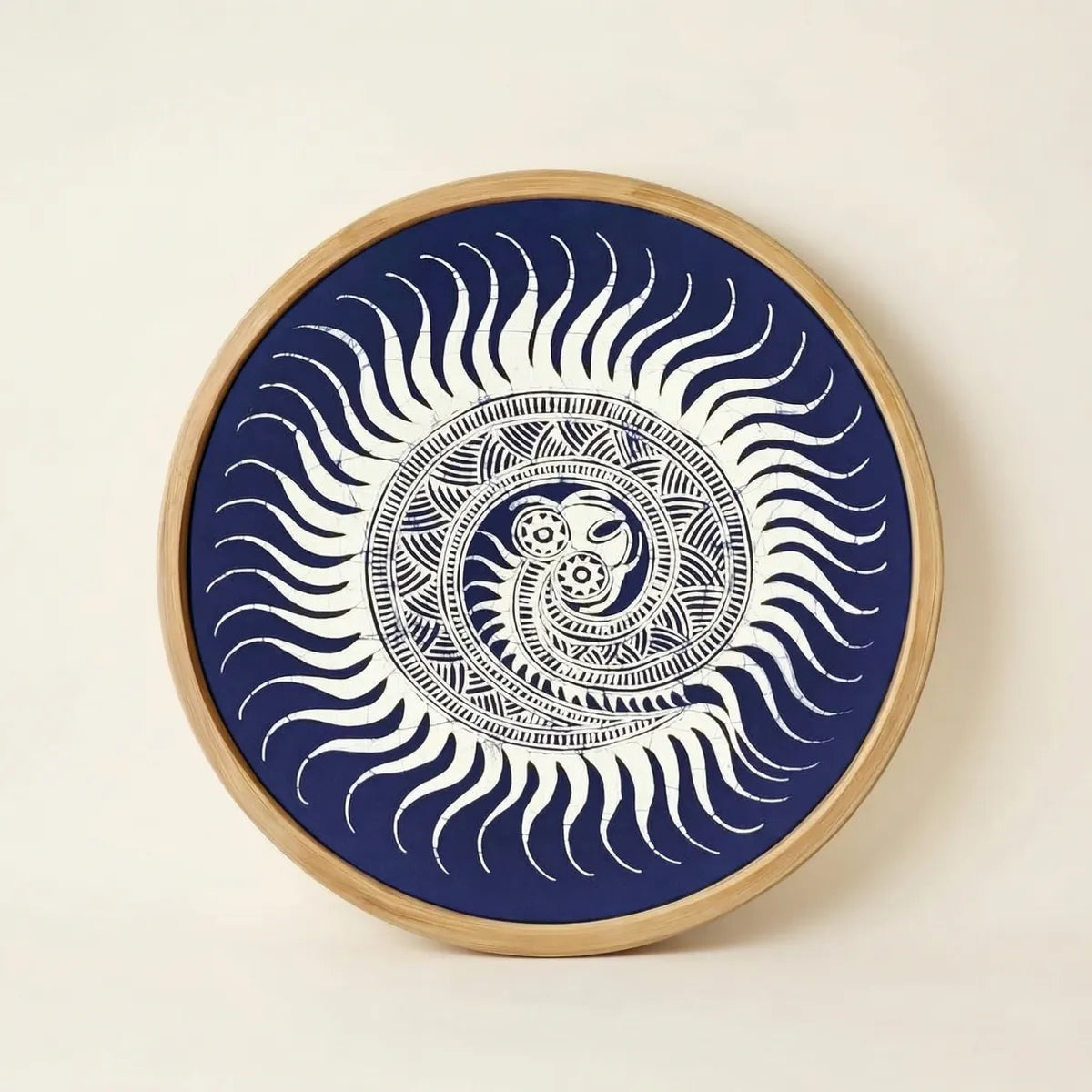
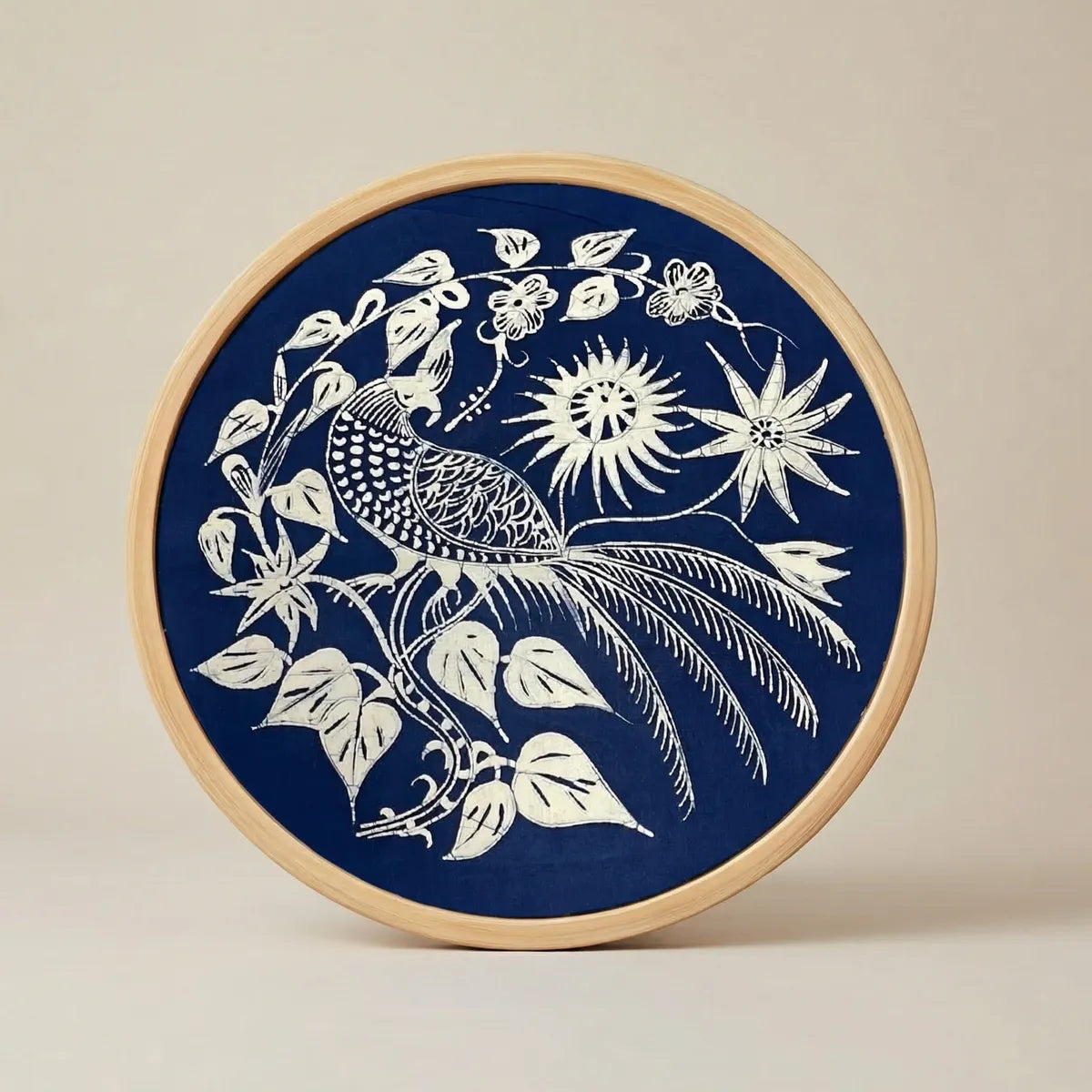
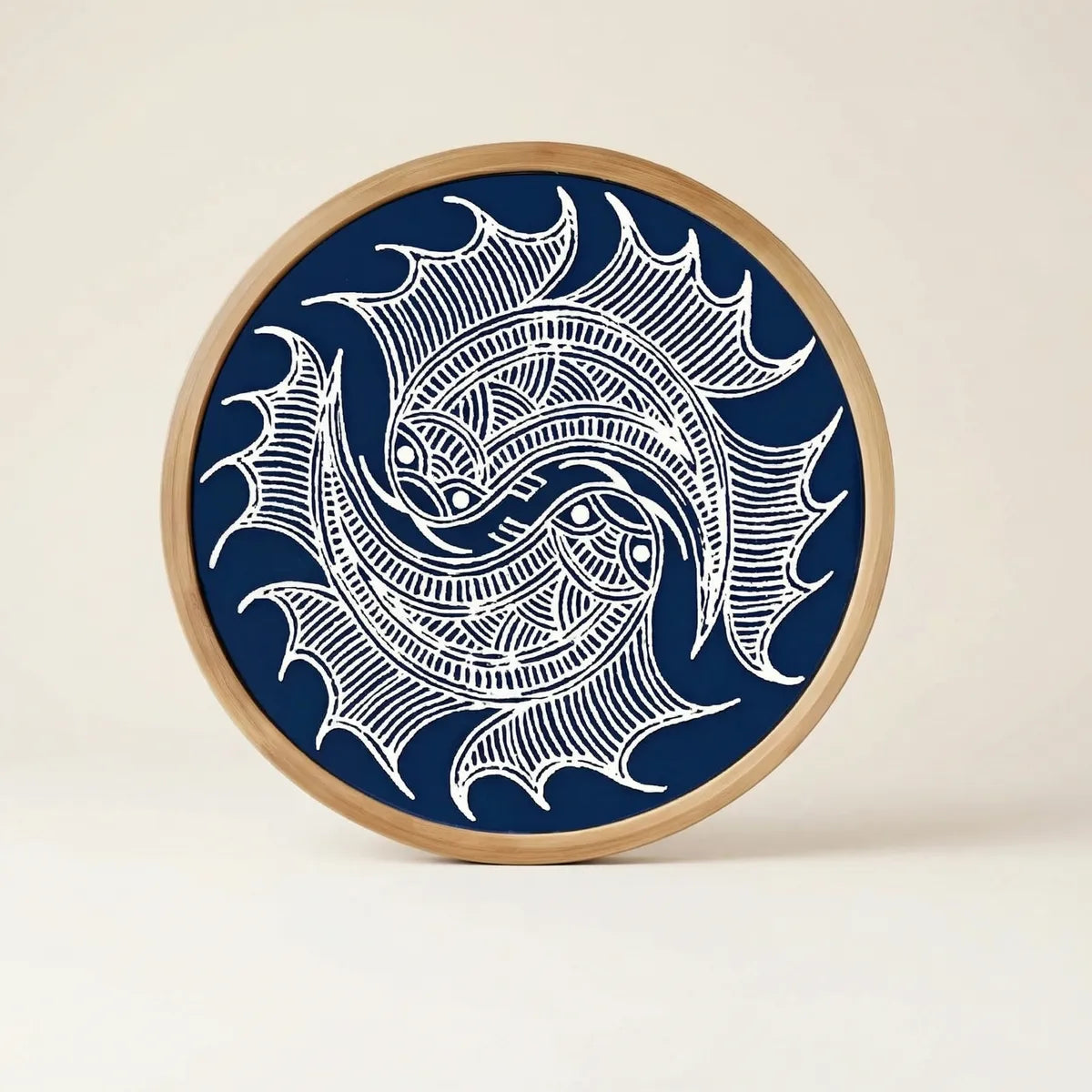
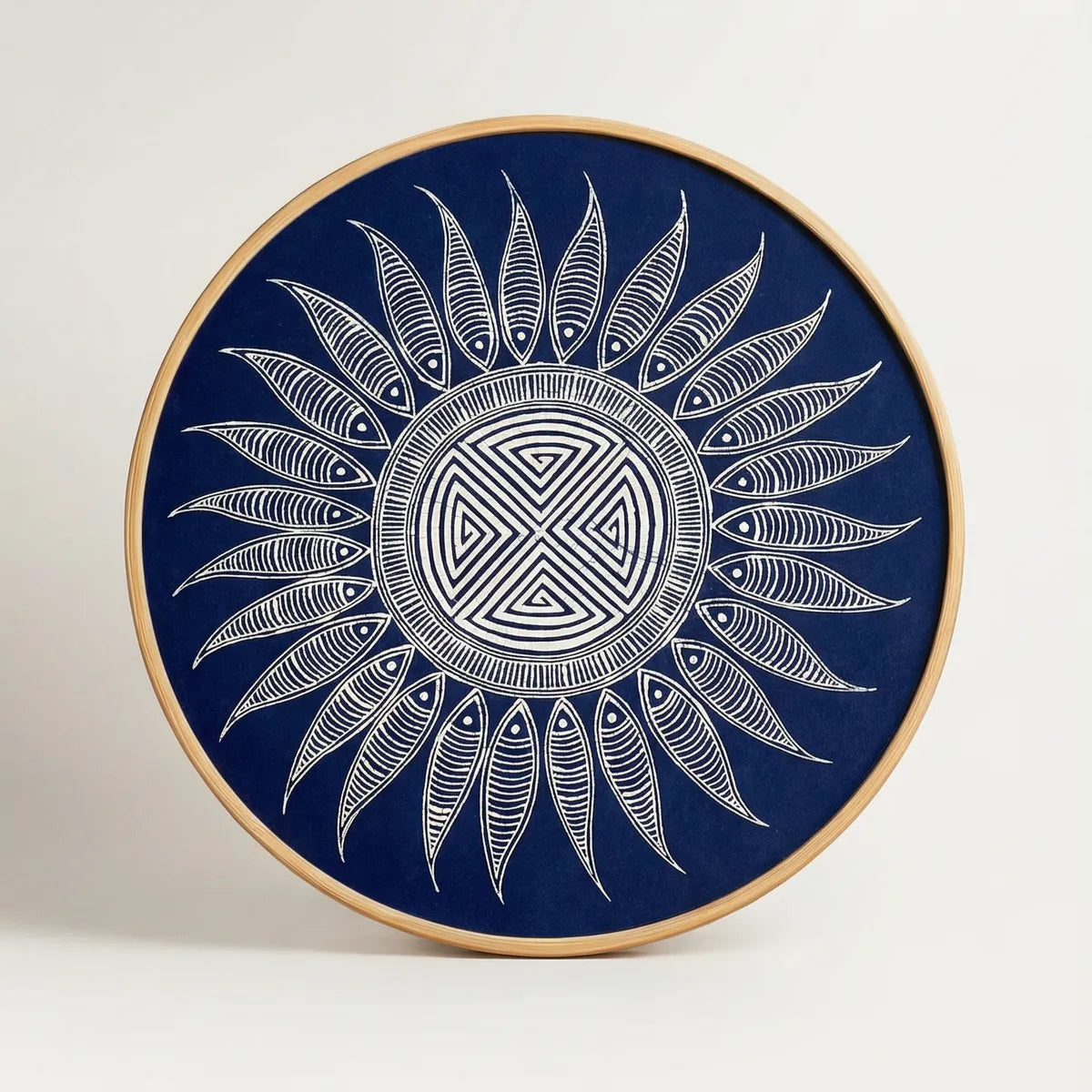
If you want to bring the warmth of authentic hand-dyed fiber into your space, explore our curated Miao Batik Wall Art Collection, crafted using centuries-old wax-resist techniques on pure cotton:
Handcrafted Textile Wall Art Highlights
How to hang and display textile wall art
Displaying textile art is versatile and adaptable to different aesthetic preferences:
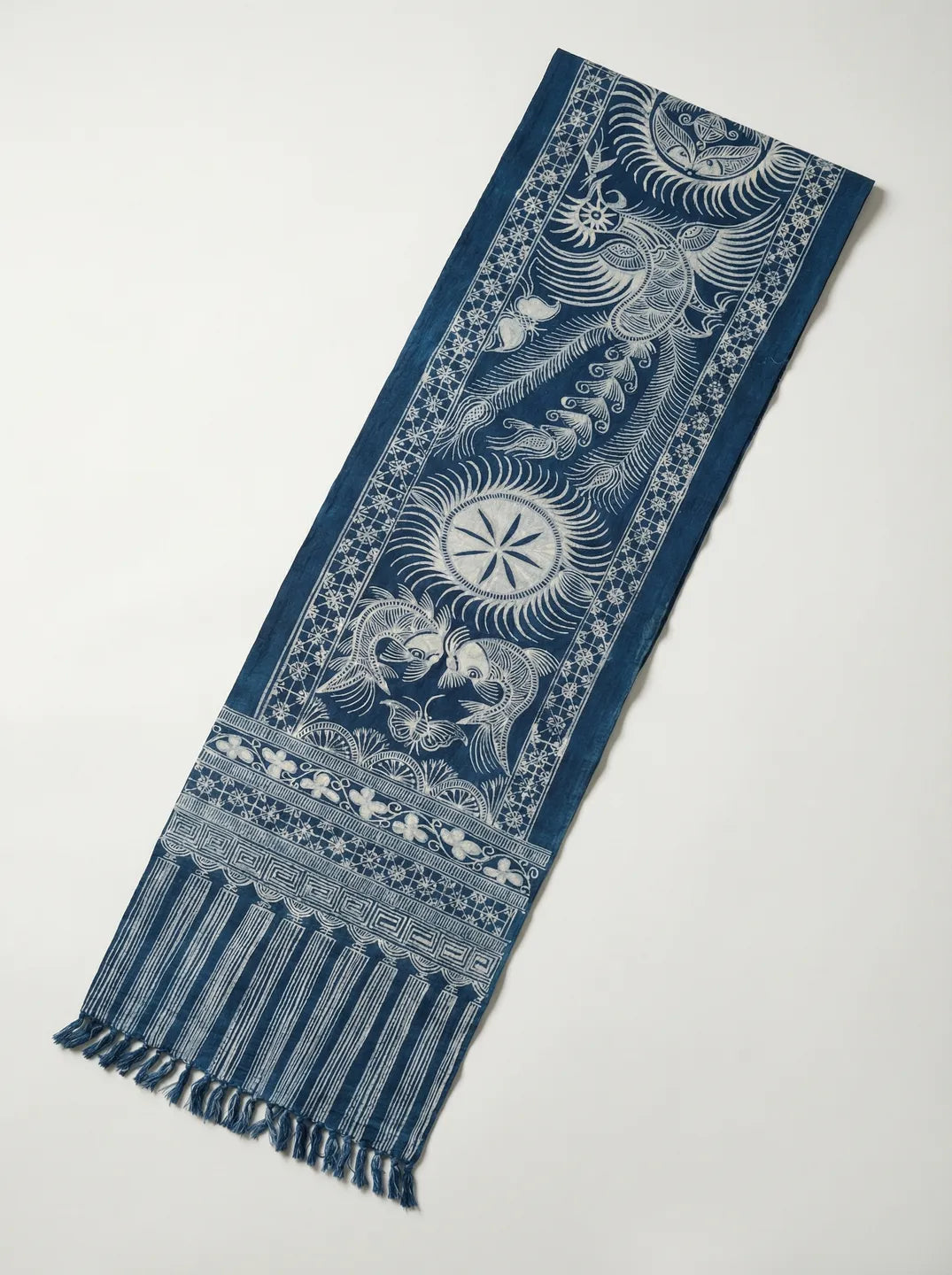
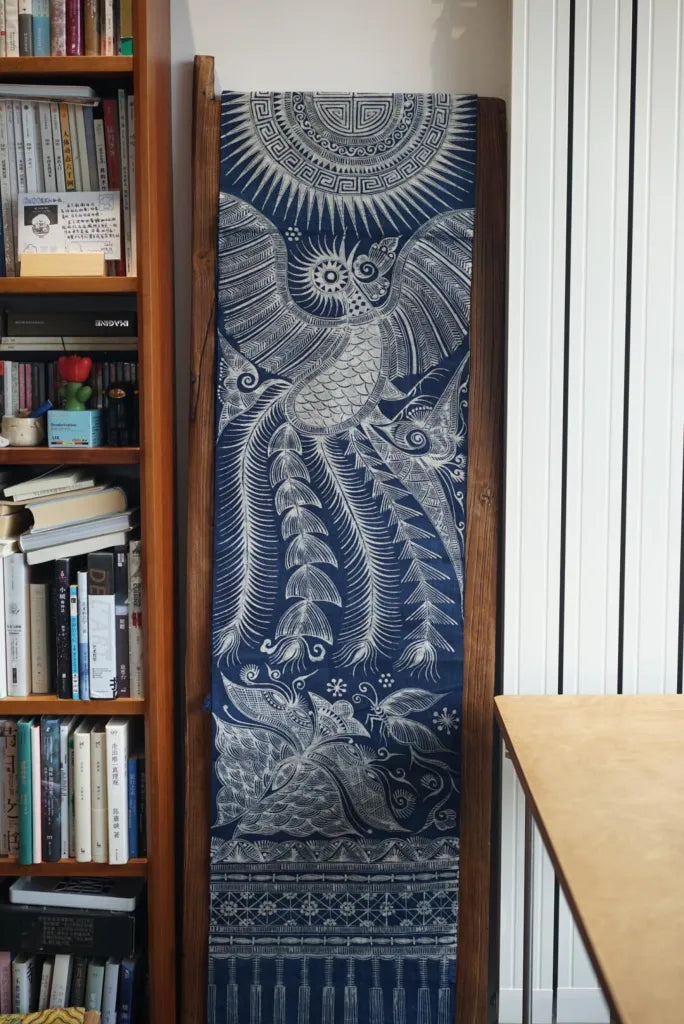
- Solid Wood Hanging Rods: Using a wooden hanging rod allows the fabric to hang freely, emphasizing its natural drape and textile movement.
- Shadowbox or Floating Frames: Mounting the cloth behind glass in a deep shadowbox frame protects delicate antique fibers from dust while showcasing raw frayed edges.
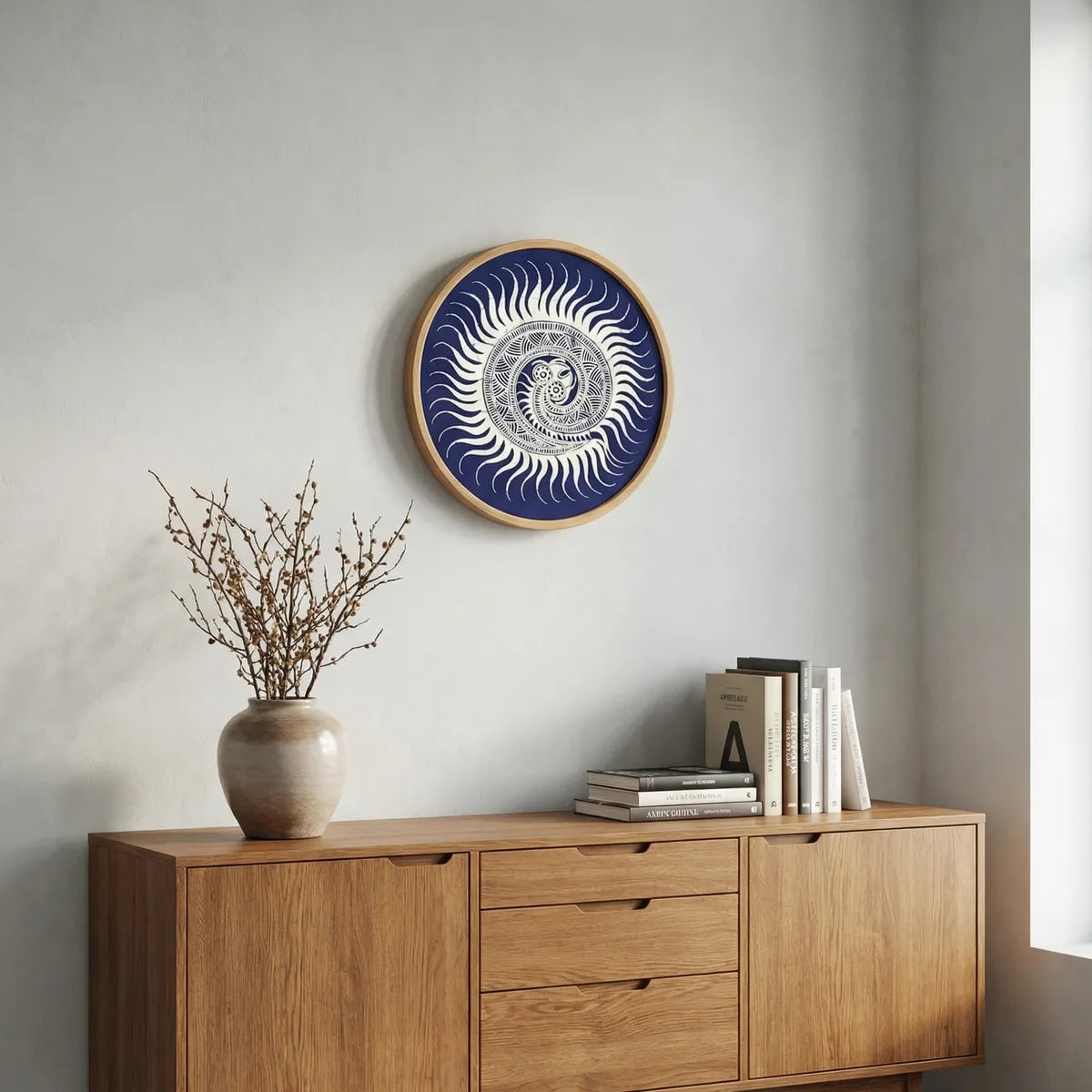
- Circular Wood Embroidery Hoops: Framing round batik medallions within circular solid oak hoops creates a modern Scandinavian or Japandi aesthetic.
Care & longevity tips
- Avoid Direct Harsh Sunlight: Like all fine natural dyes, prolonged exposure to intense UV rays can gradually soften indigo hues. Hang in bright indirect light.
- Dusting: Lightly dust with a soft lint roller or clean dry brush every few months.
- Zero Chemical Cleaners: Never spray glass cleaner or household detergents directly on fabric surfaces.
Frequently asked questions
Does textile wall art collect dust easily?
Textiles hung in normal living spaces accumulate very little dust. A gentle sweep with a handheld lint roller or soft vacuum brush attachment once a season keeps the fabric fresh.
Can textile wall art be framed like a regular picture?
Yes. Many collectors mount batik pieces in custom wooden frames or acrylic shadowboxes. A mat board border gives the piece a museum-grade presentation.
What size textile wall art should I choose for above a sofa?
As a general interior design rule, your wall art should span approximately two-thirds to three-quarters the total width of your sofa or console table to achieve visual balance.