
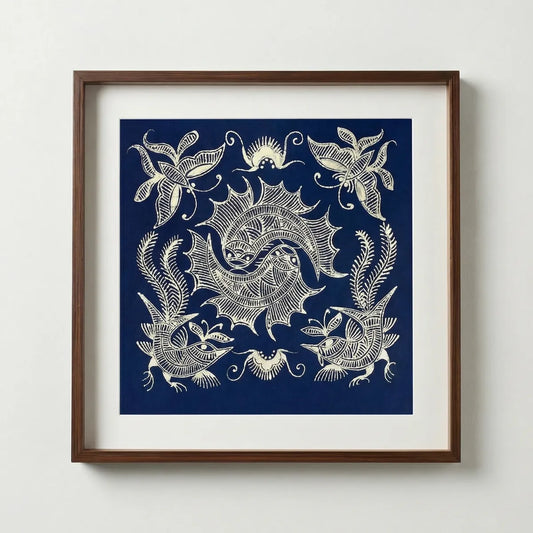

Miao Batik: El irrepetible azul índigo
respuesta rapida
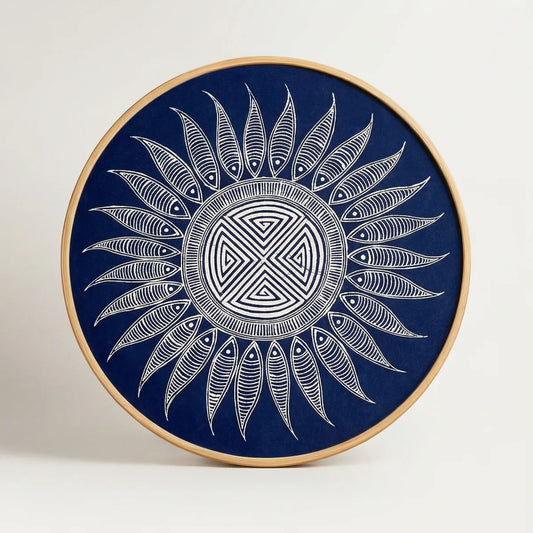
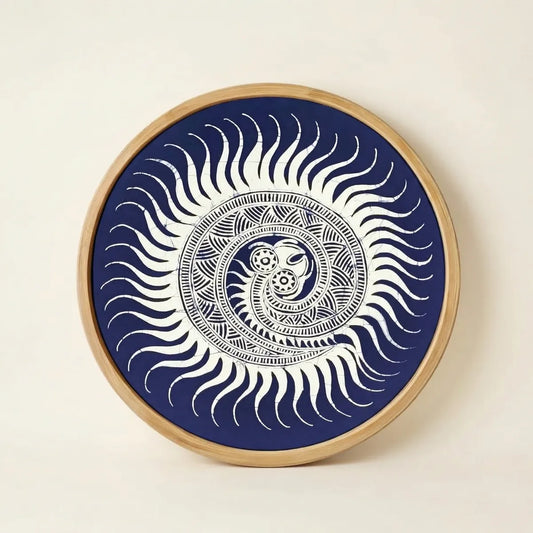
Miao batik parece irrepetible porque cada parte del proceso cambia a mano: la línea de cera, la textura de la tela, el baño de índigo, el tiempo de secado y las pequeñas marcas de crujido. Incluso cuando dos piezas usan el mismo motivo, la profundidad del azul y el patrón blanco no serán perfectamente idénticos.

Secciones de guía
Por qué el azul nunca es exactamente igual
El tinte índigo es sensible al tiempo, la temperatura, la tela y la fuerza del baño de tinte. Una pieza sumergida una vez puede verse de color azul suave. Una pieza sumergida varias veces puede volverse más profunda y oscura. La cera también cambia el aspecto final porque pequeñas grietas permiten que el tinte entre en áreas que debían permanecer pálidas.
Es por eso que el Miao batik hecho a mano no debe verse perfectamente plano. La variación natural, las pequeñas roturas en la cera y la profundidad desigual del azul son signos de un verdadero proceso de teñido resistente.
Cómo el dibujo con cera da forma al patrón

Antes de teñir, el artesano aplica cera derretida sobre la tela con una herramienta de batik. La cera protege las zonas cubiertas del índigo. El patrón blanco final depende de la presión de la mano, la velocidad de la línea y cómo se enfría la cera sobre la tela.
Una tela estampada puede repetir la misma marca una y otra vez. Una línea de cera hecha a mano suele desplazarse ligeramente. Esos pequeños cambios hacen que el tejido se sienta vivo.
Qué buscar en la tela índigo hecha a mano
Busque variación de líneas, profundidad de tinte visible, crujido natural y un patrón que no se sienta repetido mecánicamente. Compruebe también el reverso. En el teñido real, el color a menudo penetra la tela en lugar de quedarse solo en la superficie.
Si el azul es plano, el patrón es demasiado perfecto o cada marca se repite con el mismo borde, es posible que la pieza se imprima en lugar de teñirse a mano.
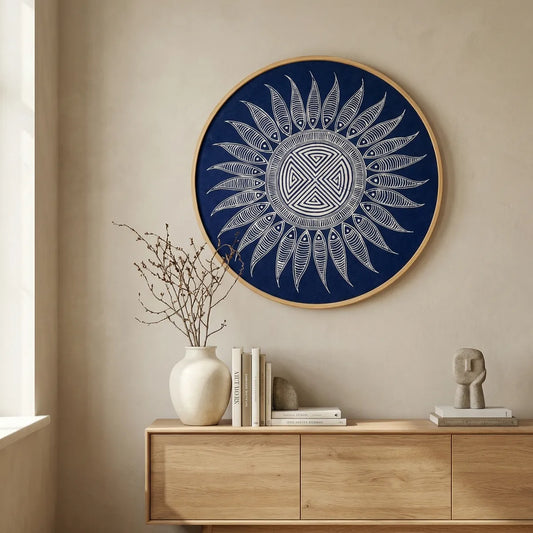
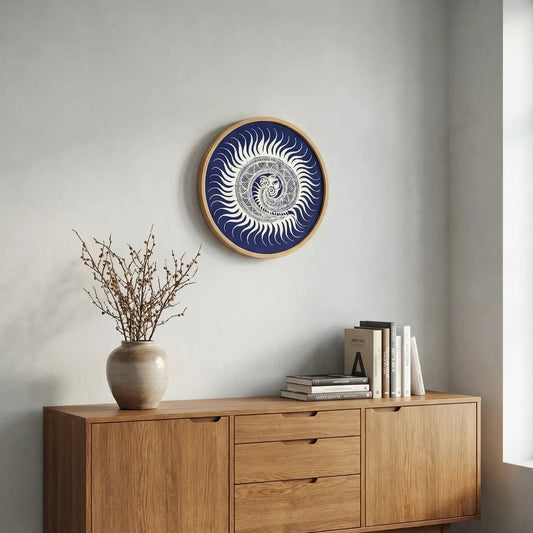
Cómo usar batik azul en casa.
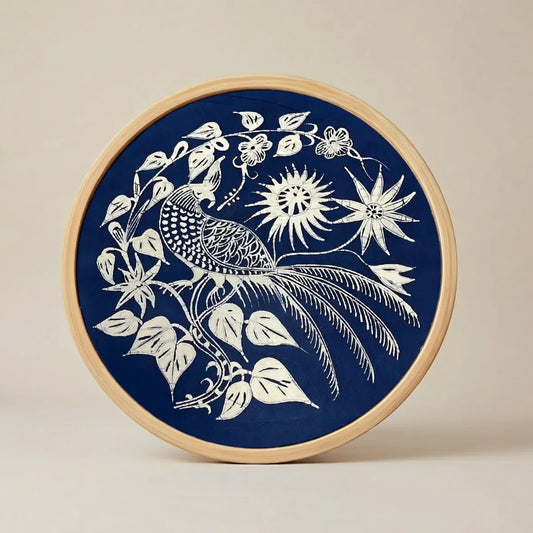
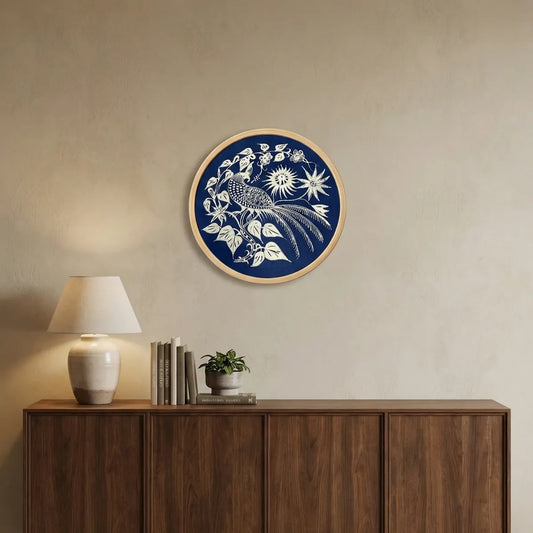
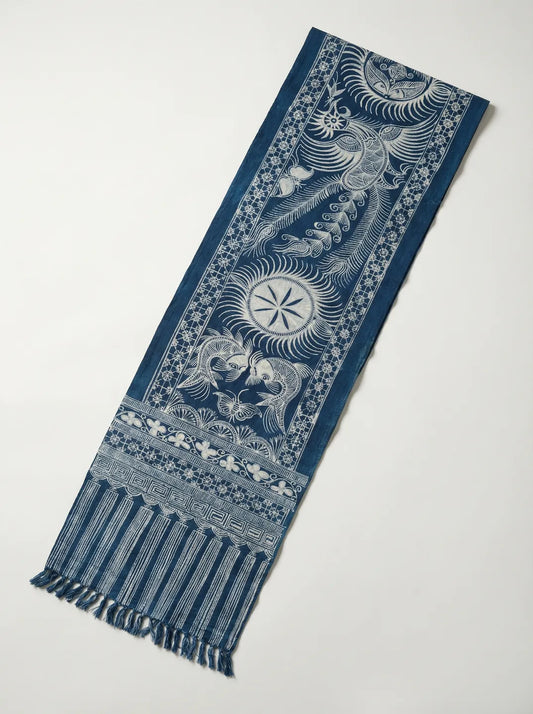
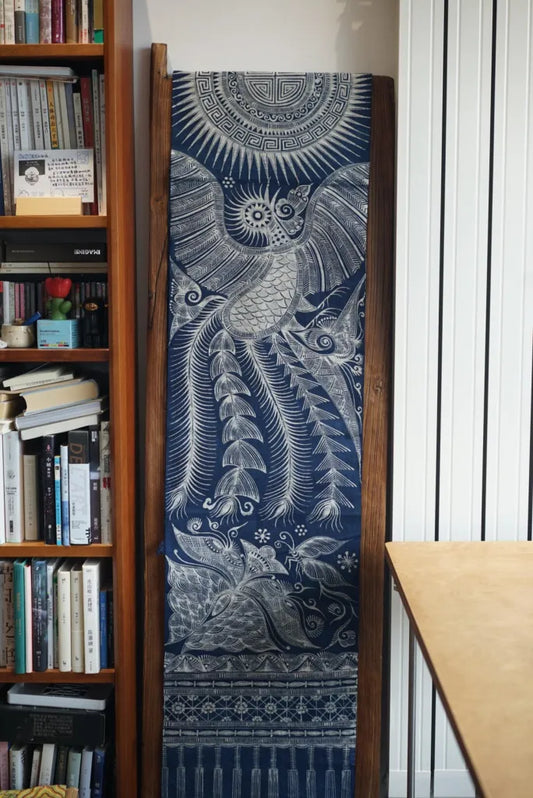
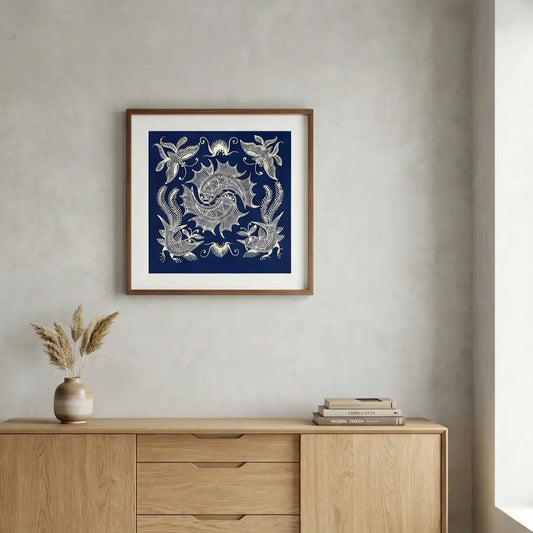
Miao batik funciona bien como arte de pared, camino de mesa, tela enmarcada o acento suave. La paleta de índigo y blanco combina fácilmente con madera, lino, cerámica, piedra y colores de paredes tranquilos.
Utilice primero una pieza fuerte. Deje que la línea hecha a mano y el color índigo hagan el trabajo en lugar de rodearlo con demasiados patrones competitivos.
Miao Batik, es la artesanía popular tradicional de impresión y teñido de textiles de China, el nombre antiguo de val de cera y val retorcido (teñido anudado), val gris (impresión calada), val clip (teñido con clip) y conocidas como las cuatro técnicas de impresión principales de China.
Ya en las dinastías Qin y Han, el pueblo Miao dominaba la técnica del batik, que alcanzó su apogeo en la dinastía Song. Las niñas Miao aprendieron batik desde que eran jóvenes y tomaron el mundo en sus ojos, lo colorearon, lo imaginaron y crearon un mundo mítico, maravilloso y de ensueño. El batik es el lenguaje de las niñas Miao, y también sus palabras, por lo que los estudiosos lo consideran "el libro de historia del cuerpo".
Cada año alrededor de noviembre, entre las heladas y el comienzo del invierno, las niñas Hmong van a las montañas a recolectar bluegrass. Después de 3 o 4 días de remojo en el recipiente de teñido, el agua original se vuelve azul verdosa y la magia del bluegrass hace efecto. Las sabias chicas Miao añaden cal al agua índigo y ajustan el color controlando la proporción de cal.
Para los patrones de batik en Guizhou, los artesanos usan cuchillos de cera sumergidos en una solución de cera derretida para dibujar directamente sobre la tela. Después de dibujar varios patrones en la tela y luego sumergirla en índigo, la tela se tiñe mediante los pasos de fijación del color, desparafinado, lavado y secado para que la tela presente una variedad de patrones de flores blancas sobre un fondo azul o flores azules sobre un fondo blanco.
Los patrones de batik, por otro lado, varían de una región a otra en muchos estilos y formas diferentes, y todos ellos tienen un alto valor estético, sin importar si son delicados o ásperos, suaves o duros. Entonces, para apreciar el batik, es necesario comparar obras de batik de diferentes orígenes para sentir el encanto artístico único del batik.
Este tipo de improvisación desde lo más profundo del alma, acumulada en la vida y la herencia, es vívida, flexible e irrepetible.
Para aquellos interesados en aprender más sobre el patrimonio cultural intangible Miao - Miao batik, consulte este detallado [Historia de Google Arts & Culture]
| Característica | batik Miao hecho a mano | Tela estampada estilo batik |
|---|---|---|
| color azul | Puede variar según la tela. | Generalmente plano y uniforme. |
| Calidad de línea | Pequeños cambios en el flujo de cera. | Bordes impresos repetidos. |
| Crepitar | Roturas naturales de cera y tinte. | A menudo se copia como patrón de superficie. |
| Valor | Proviene del proceso y del trabajo manual. | Proviene principalmente de la imagen del diseño. |
Una forma sencilla de incorporar un textil índigo a un espacio es descubrir nuestro arte mural de batik Miao y nuestro camino de mesa de batik hecho a mano.
Preguntas frecuentes
¿Por qué el batik Miao suele ser azul y blanco?
El azul proviene del tinte índigo, mientras que las zonas blancas se protegen con cera antes de teñirlas.
¿Es la variación un defecto?
No. Las pequeñas diferencias en las líneas, el color y el crujido son normales en el batik hecho a mano.
¿Pueden dos piezas hechas a mano verse iguales?
Pueden compartir un motivo, pero las líneas de cera y la profundidad del tinte seguirán variando.
Etiquetas: