
Quick reference
Choose wall art that spans roughly two-thirds to three-quarters of the furniture width below it. Hang the center at about 145 to 152 cm (57 to 60 in) from the floor, and leave 15 to 25 cm (6 to 10 in) between the bottom of the frame and the top of the furniture. Open walls can hold a single large piece or a tight pair; narrow hallways and office corners usually work better with a medium square or round format.
Picking wall art size comes down to how the piece relates to the furniture and wall around it. A frame that looks balanced above a three-seat sofa will overwhelm a narrow console, while a small square piece on a wide living room wall quickly gets lost. Before looking at motifs or frames, measure the wall and the furniture that sits beneath it.
Start with furniture width and eye-level height
When art hangs above a sofa, headboard, or sideboard, your eye reads the two together. Aim for a frame width (or total group width) that covers about two-thirds to three-quarters of that furniture. Matching the exact width of the furniture makes the wall feel stiff, and going smaller than half the width leaves too much empty plaster on either side.
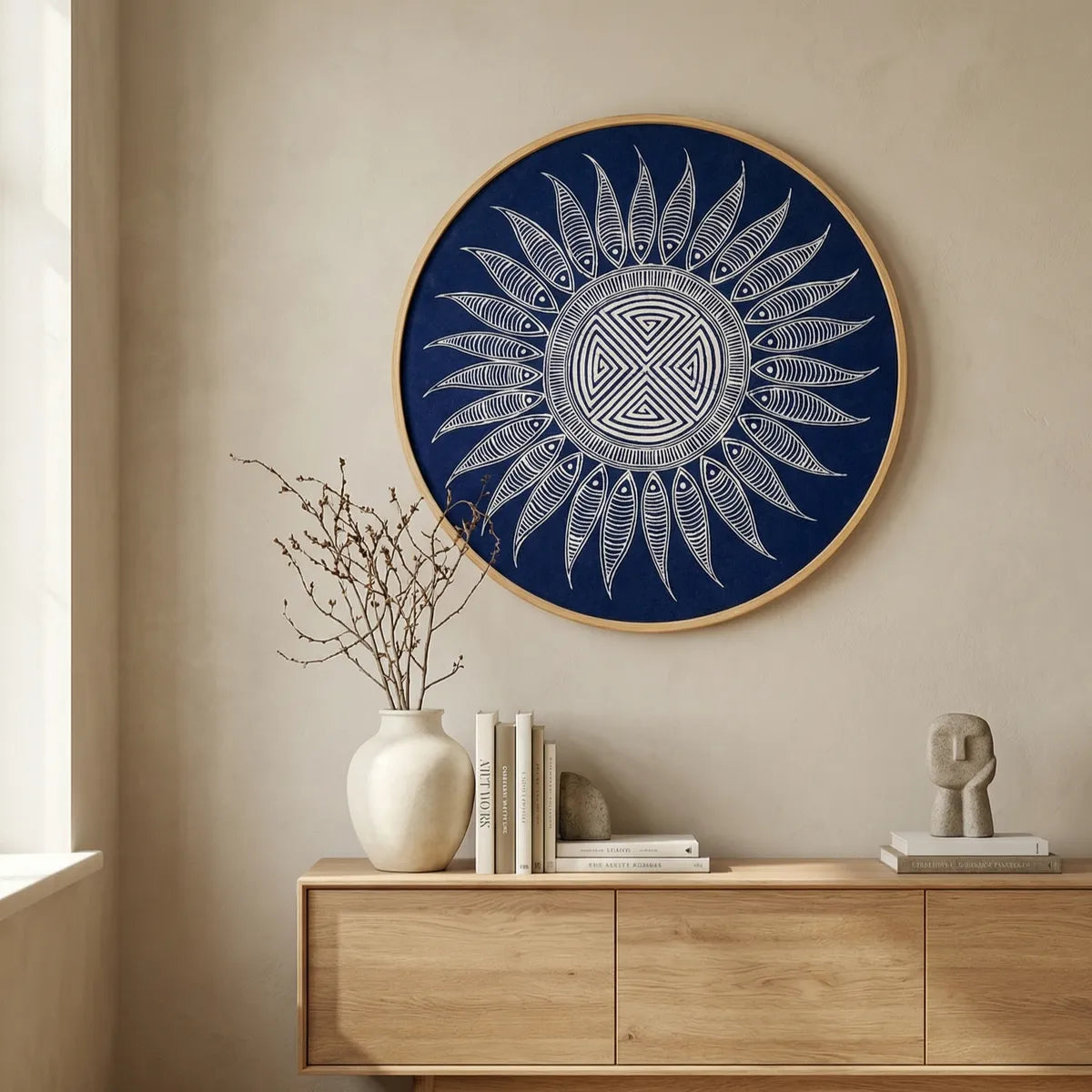
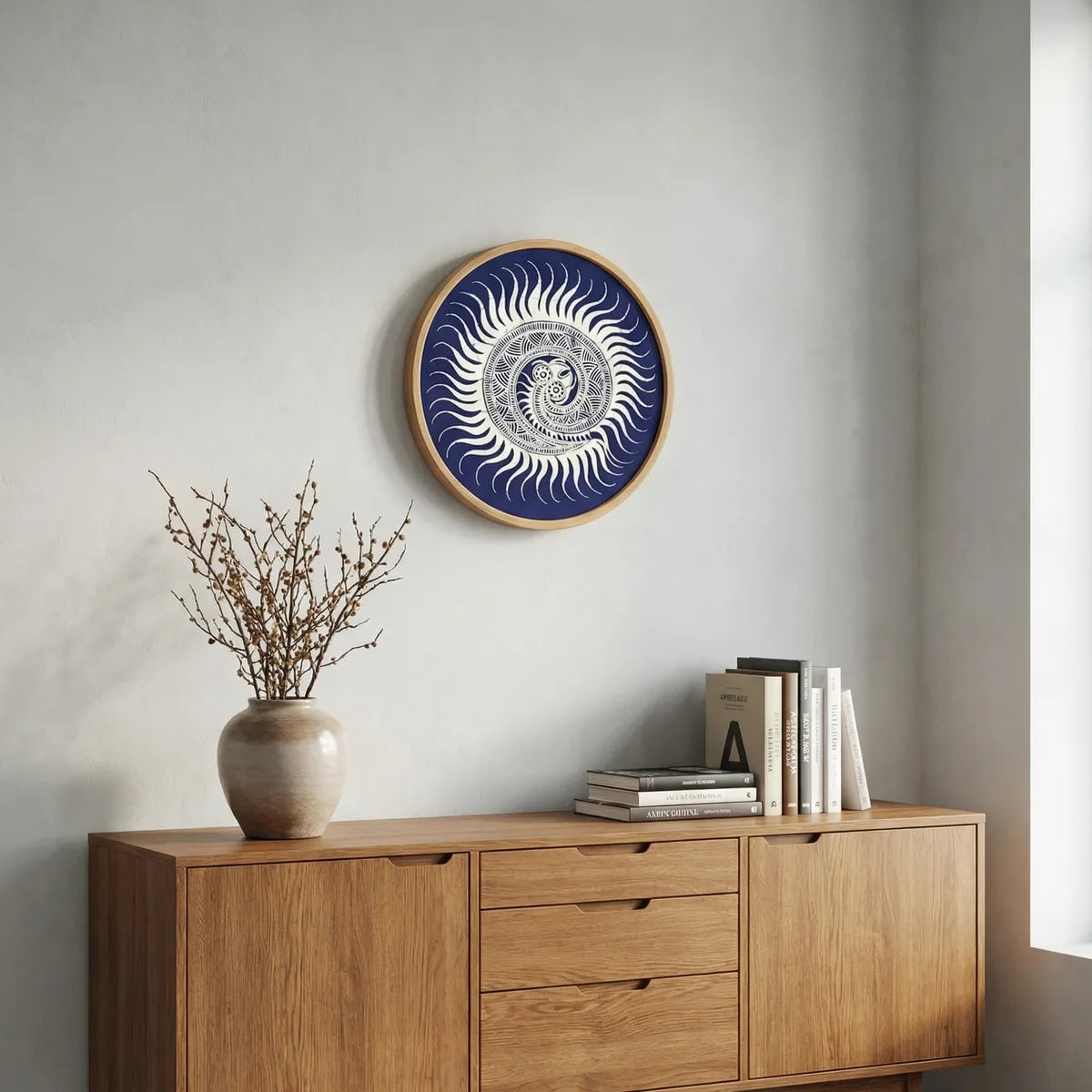
For vertical placement, hanging the center of the artwork around 145 to 152 cm (57 to 60 in) from the floor keeps it at comfortable standing eye level. Above furniture, leave 15 to 25 cm (6 to 10 in) between the top of the sofa back, console, or headboard and the bottom edge of the frame. Standard interior design benchmarks use these same measurements across living and dining spaces.
In narrow walkways, check physical clearance too. A hallway frame should sit flat against the wall with its bottom edge well above shoulder height so coats and bags never brush it.
| Room | Target art width | Hanging height | Formats that fit well |
|---|---|---|---|
| Living room above a sofa | Two-thirds to three-quarters of the sofa width | Center about 145 to 152 cm from the floor, 15 to 25 cm above the sofa back | One wide rectangular piece, a large square, or a side-by-side pair |
| Dining room | About two-thirds of the table or sideboard width | Center around 145 to 150 cm so it reads well from the table | A horizontal piece above a sideboard, or two matched squares |
| Bedroom above the bed | Two-thirds of the headboard width | 15 to 25 cm above the headboard | One calm horizontal piece or a balanced pair |
| Entryway | Half to two-thirds of the visible wall section | Center near 145 to 152 cm | A 40 to 60 cm square or round piece that reads immediately from the door |
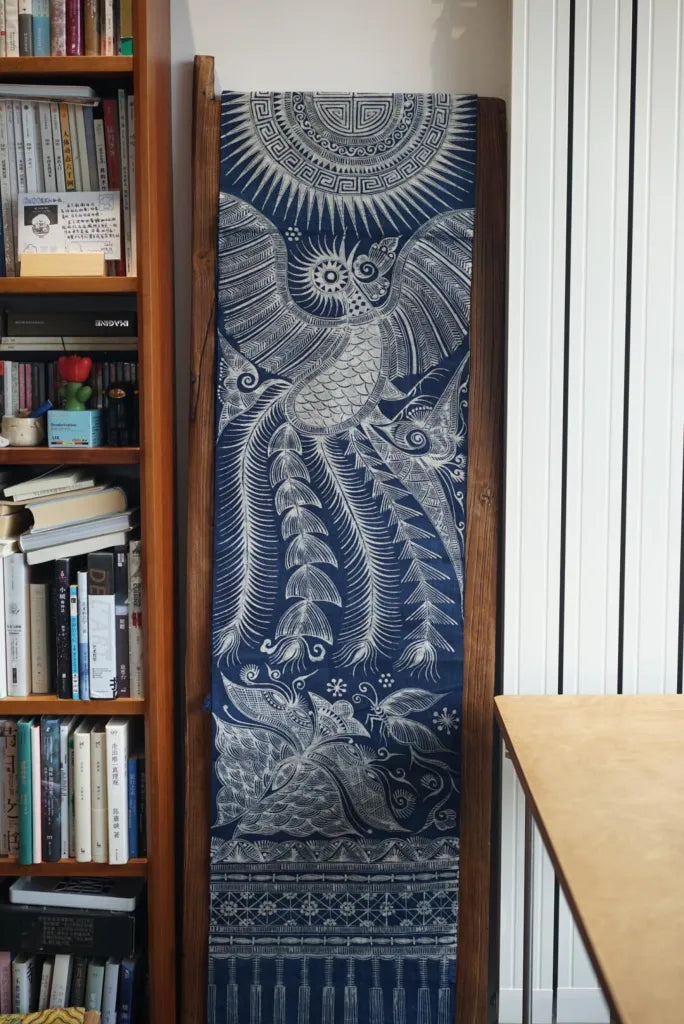
| Hallway | Narrow formats or a short row | Center around 150 cm, clear of the walking path | Small squares in a row or a medium vertical textile |
| Home office | Half to two-thirds of the desk width | Above the desk or offset beside the monitor | A 40 or 50 cm square that sits calmly in the background |
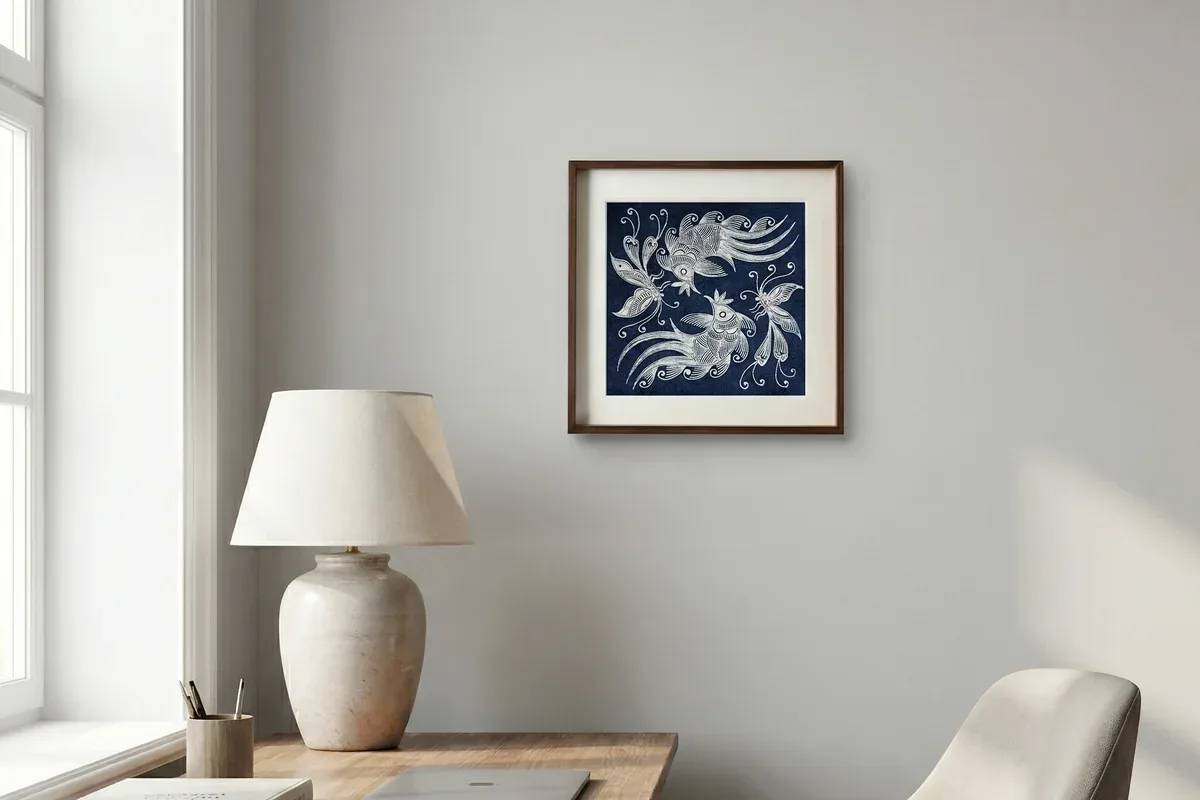
Living room: sizing for the main wall
Above a standard three-seat sofa (usually 200 to 230 cm wide), a single piece or two-frame pairing that spans 90 to 140 cm (35 to 55 in) anchors the seating area. If the art hangs on an open wall with no furniture below it, leave at least 30 to 45 cm (12 to 18 in) of blank wall on both sides so the frame has room to breathe.
When hanging two or three frames together, measure the whole group as a single rectangle. Keep 5 to 8 cm (2 to 3 in) between the frames so the eye reads them as one connected arrangement across the room.
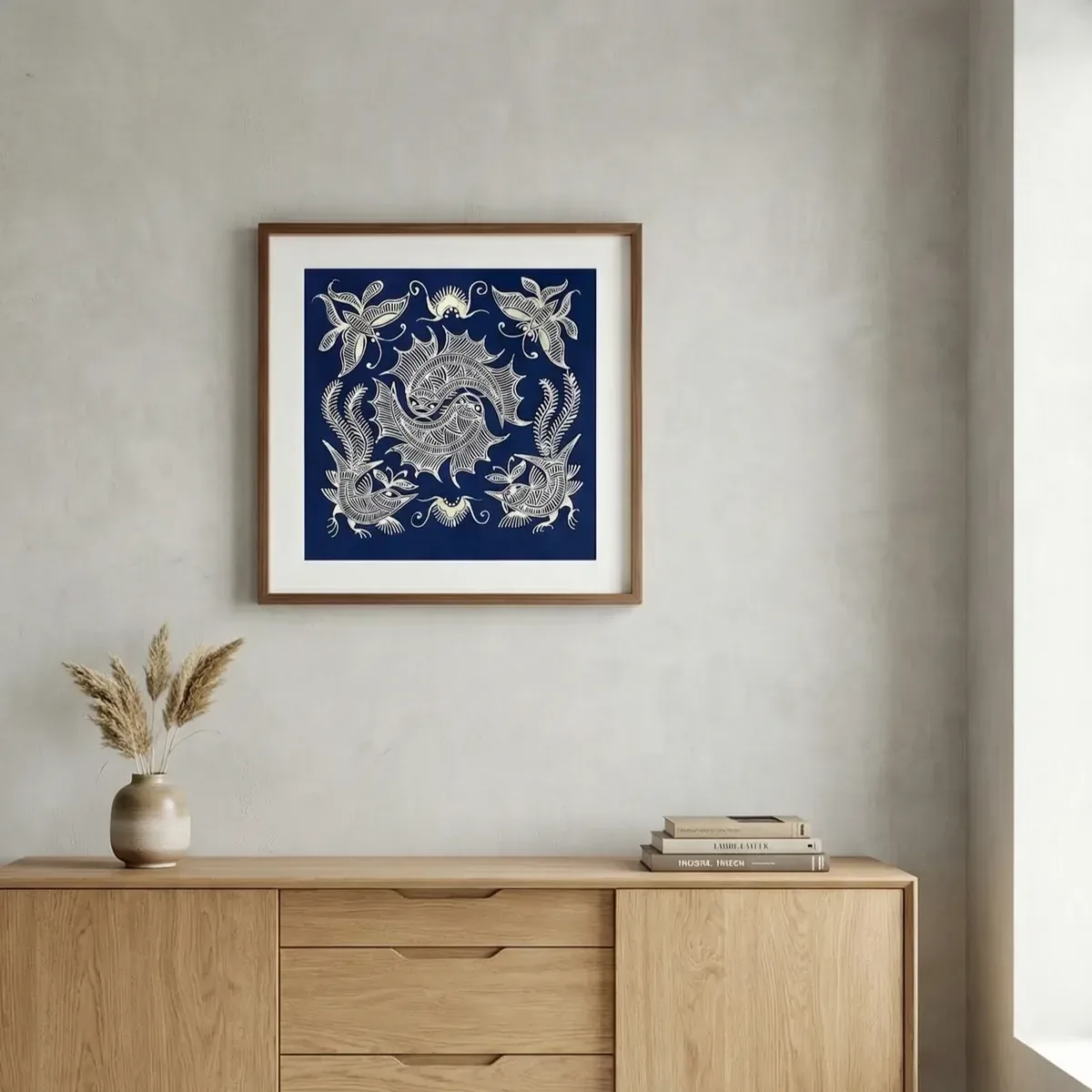
Dining room and entryway: seated vs passing views
In a dining room, you spend most of your time looking at the wall from a chair. Hanging a piece slightly lower above a buffet or sideboard (closer to 145 cm at the center) keeps it connected to the table level. A single rectangular piece or two medium squares side by side echo the long line of a dining table.
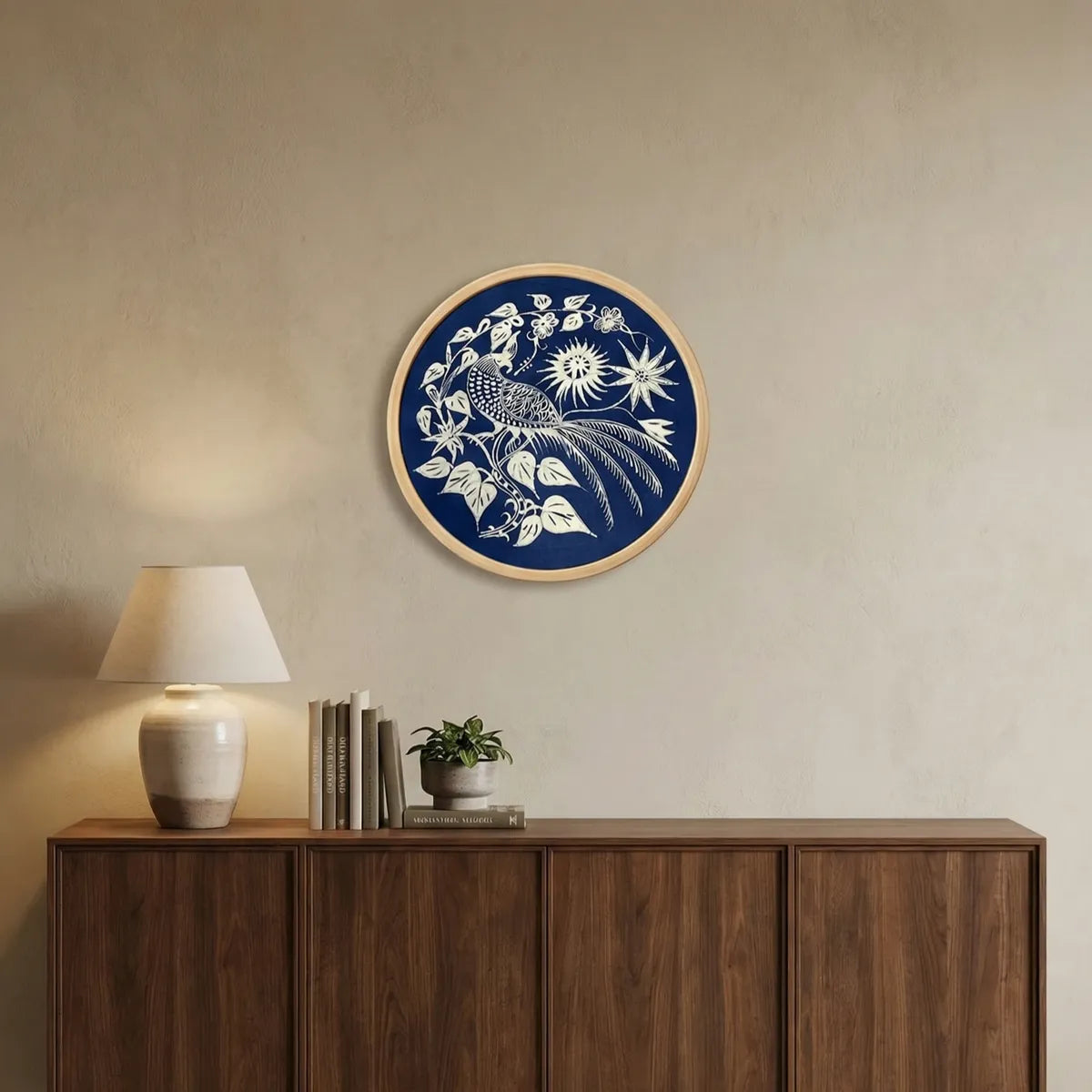
An entryway works differently because people pass through it in seconds. A single round or square piece between 40 and 60 cm (16 and 24 in) gives a small entry wall a clear focal point right by the door. Round frames are especially helpful in tight foyers filled with rectangular doors, mirrors, and shoe cabinets.
Bedroom and home office: quieter proportions
Above a bed, the headboard sets your outer boundary. A single piece or pair spanning roughly two-thirds of the headboard width fills the wall comfortably. Leave at least 15 to 20 cm (6 to 8 in) above the top of the headboard so stacked pillows or someone sitting up to read will not lean against the frame.
In a home office, the wall shares space with monitors and shelving. A 40 × 40 cm or 50 × 50 cm square hung beside the desk or behind your chair brings texture into the room and sits cleanly inside a video-call frame.
How cloth and glass change perceived size
Two artworks with identical outer measurements can carry very different visual weight. Framed prints under glass reflect lamps and windows, giving the wall a crisp, graphic boundary. Dyed cotton and woven textiles absorb light, softening the edge of the piece and bringing visible weave into the room.
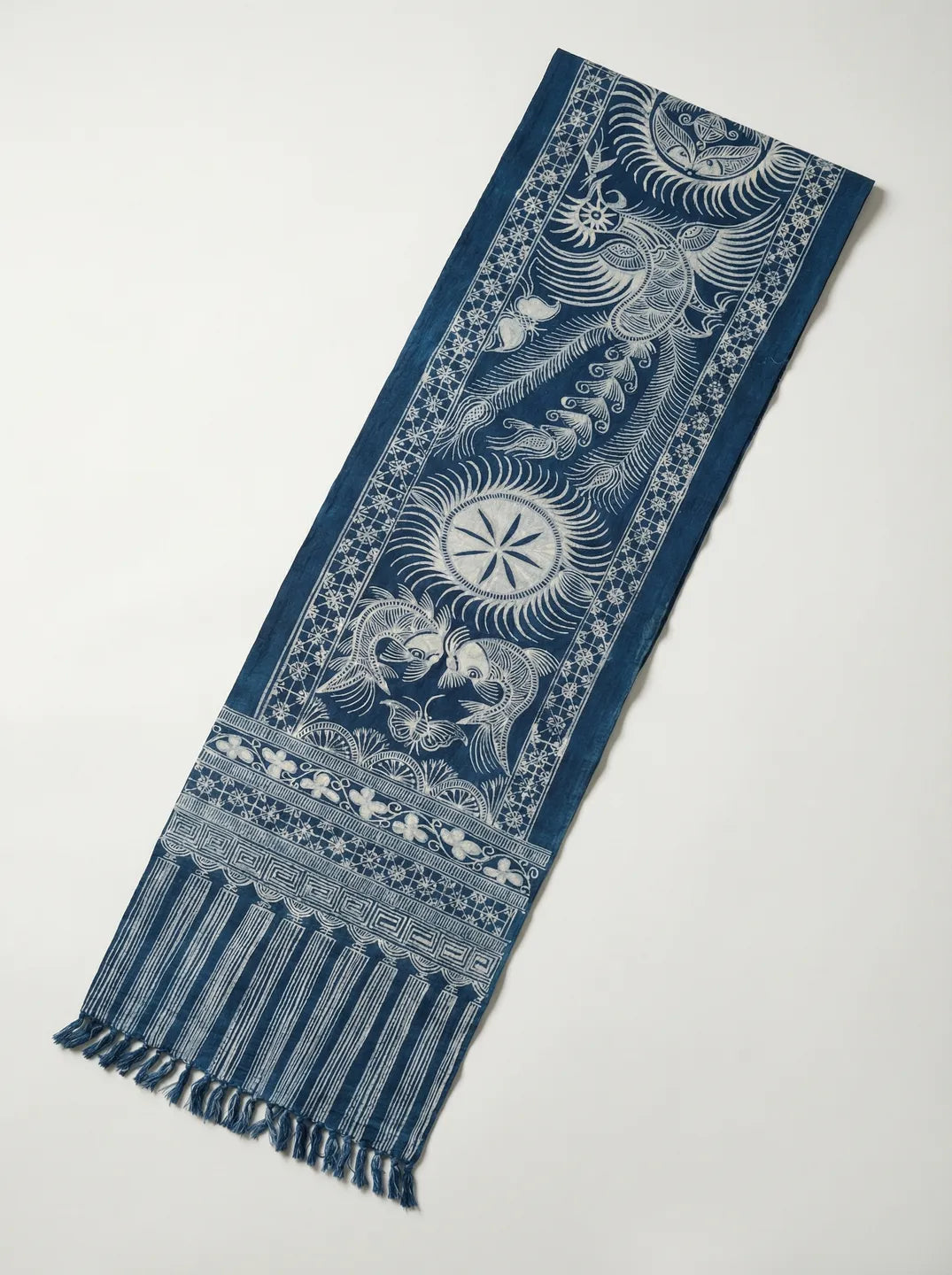
Because cloth does not glare, a larger indigo textile (such as 60 × 80 cm) can hang in a bright living room without dominating the space. In closer quarters like a hallway, stairwell, or study, hand-drawn wax lines and natural indigo variations give you fine detail to notice up close. Historic collections such as the Victoria and Albert Museum's textile holdings show how dyed and patterned cloths have long worked on walls at architectural scale.
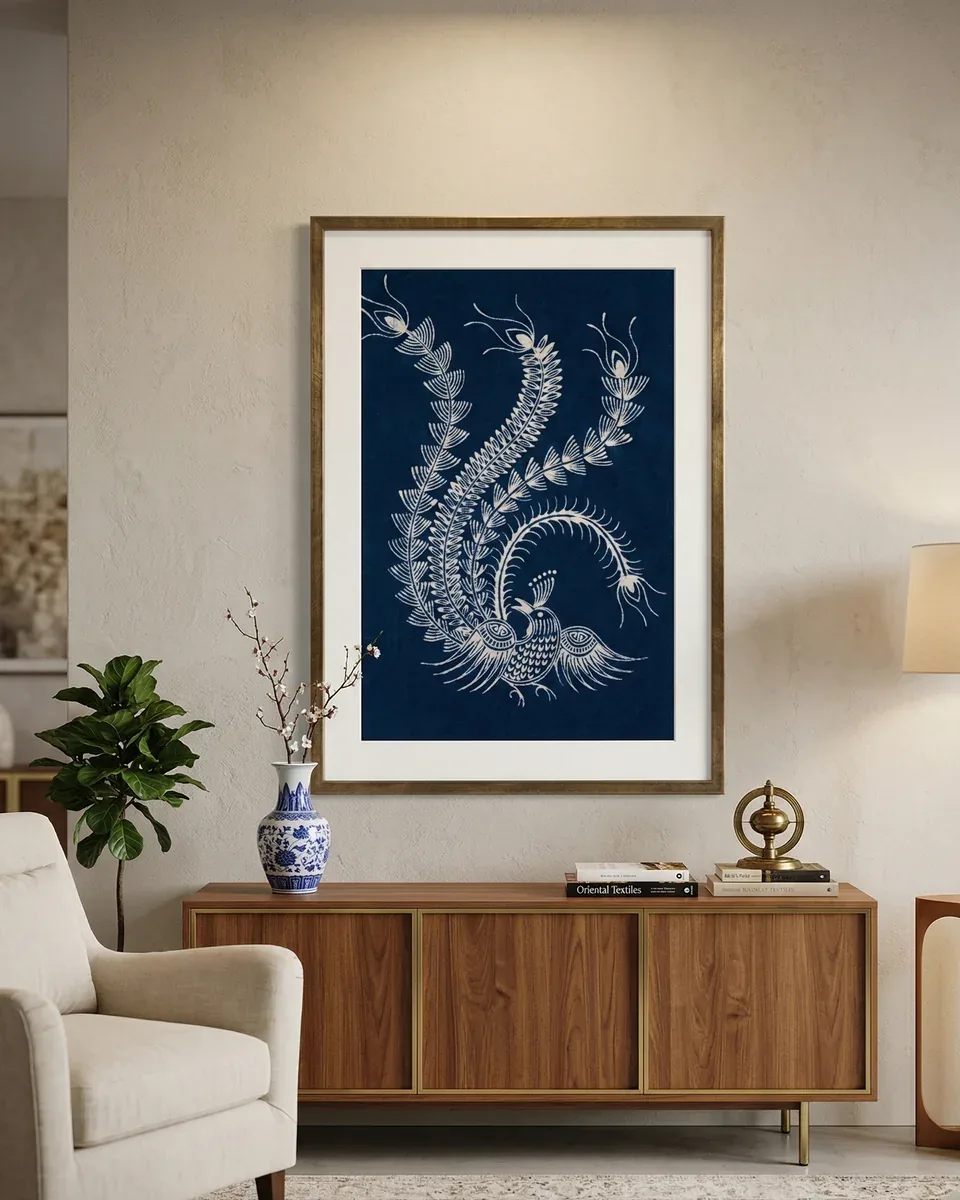
Matching our batik wall art formats to your wall
We make our Miao batik wall art in three core formats so you can match an exact measurement to your furniture width. Every piece is drawn by hand in hot beeswax on cloth and dyed in indigo in Guizhou:
- Square formats (40 × 40 cm / 15.7 × 15.7 in and 50 × 50 cm / 19.7 × 19.7 in): Available unframed or in solid wood frames. One square fits an entryway, study, or narrow wall; a pair hung 6 cm apart spans 86 to 106 cm, fitting neatly above a console or queen bed.
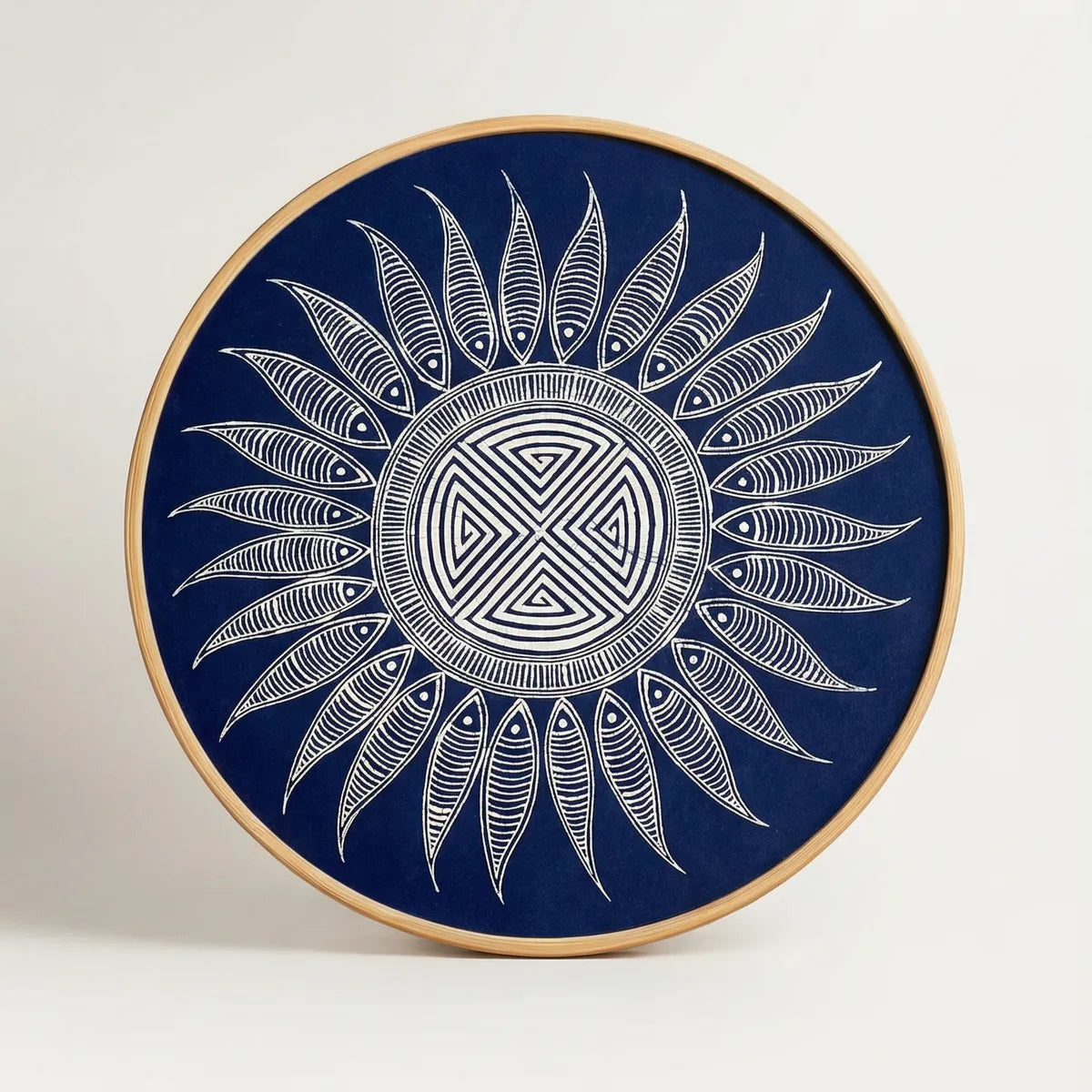
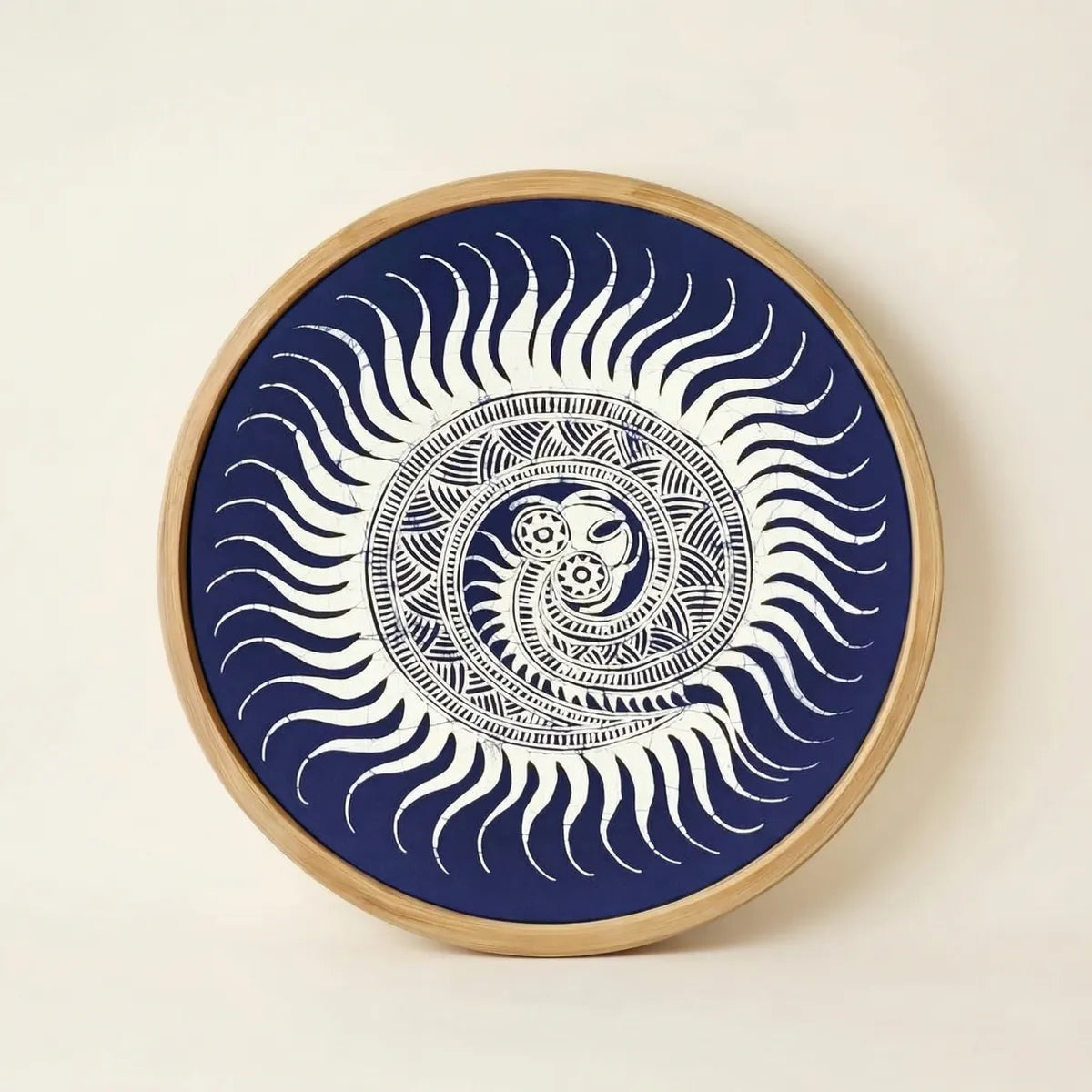
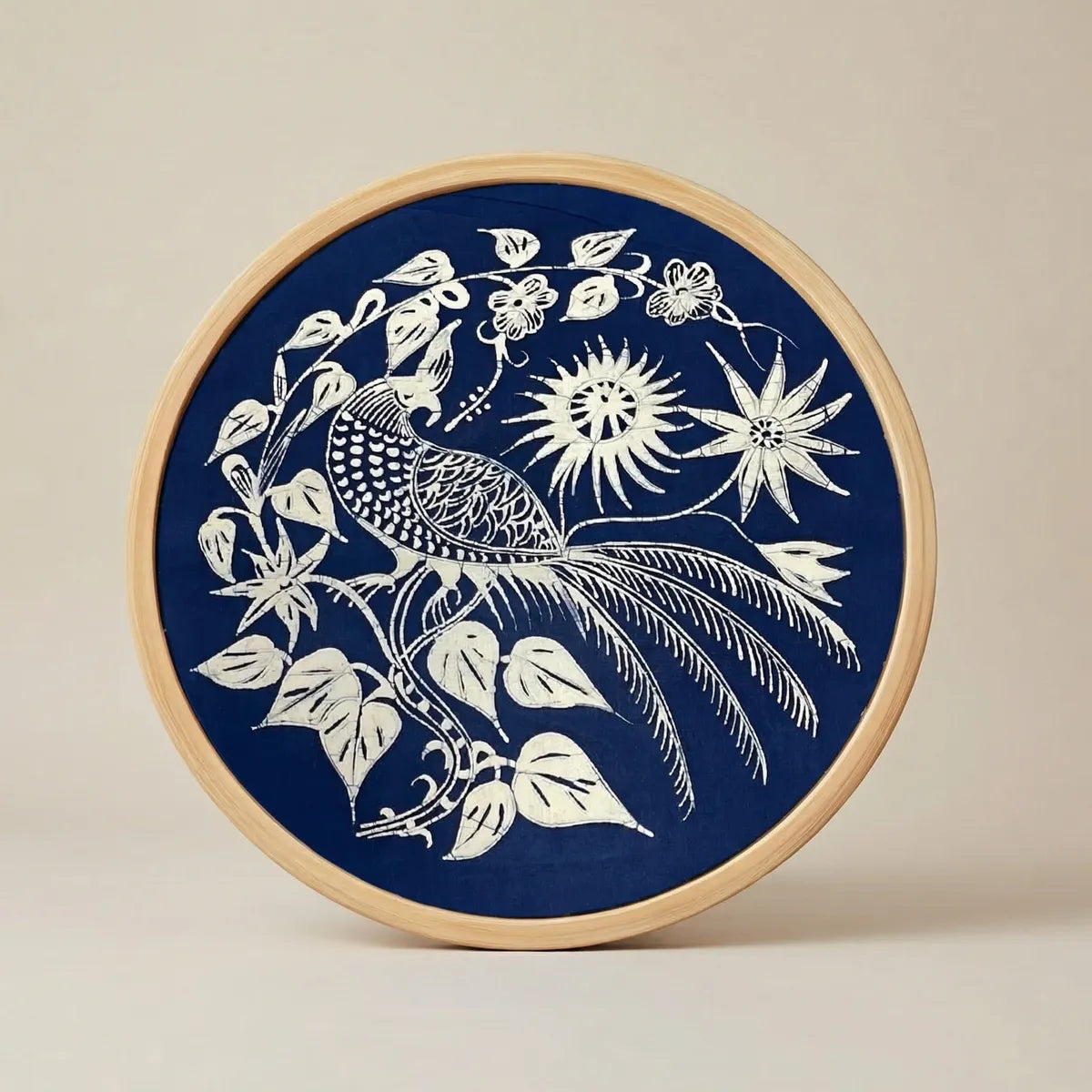
- Round format (60 cm / 23.6 in diameter): Available unframed or in a circular solid wood frame. Suits an entry wall, reading corner, or above a compact sideboard where a round edge softens rectangular furniture.
- Rectangular format (60 × 80 cm / 23.6 × 31.5 in): Available framed or unframed, suited to wider walls above a sofa, dining buffet, or fireplace mantel.
| Format | Dimensions | Where it fits best | Price range |
|---|---|---|---|
| Square Miao batik wall art | 40 × 40 cm or 50 × 50 cm | Entryway, office, bedroom, or a two-piece pair above a console | $79 to $169 |
| Round batik wall hanging | 60 cm (23.6 in) diameter | Entry wall, reading nook, or centered above a small cabinet | $129 to $199 |
| Rectangular batik wall art | 60 × 80 cm (23.6 × 31.5 in) | Living room sofa wall, dining sideboard, or tall vertical wall | $149 |
If you are weighing fabric against paper and glass for a bright room, our guide to textile wall art vs framed prints compares glare, acoustic softness, and framing options.
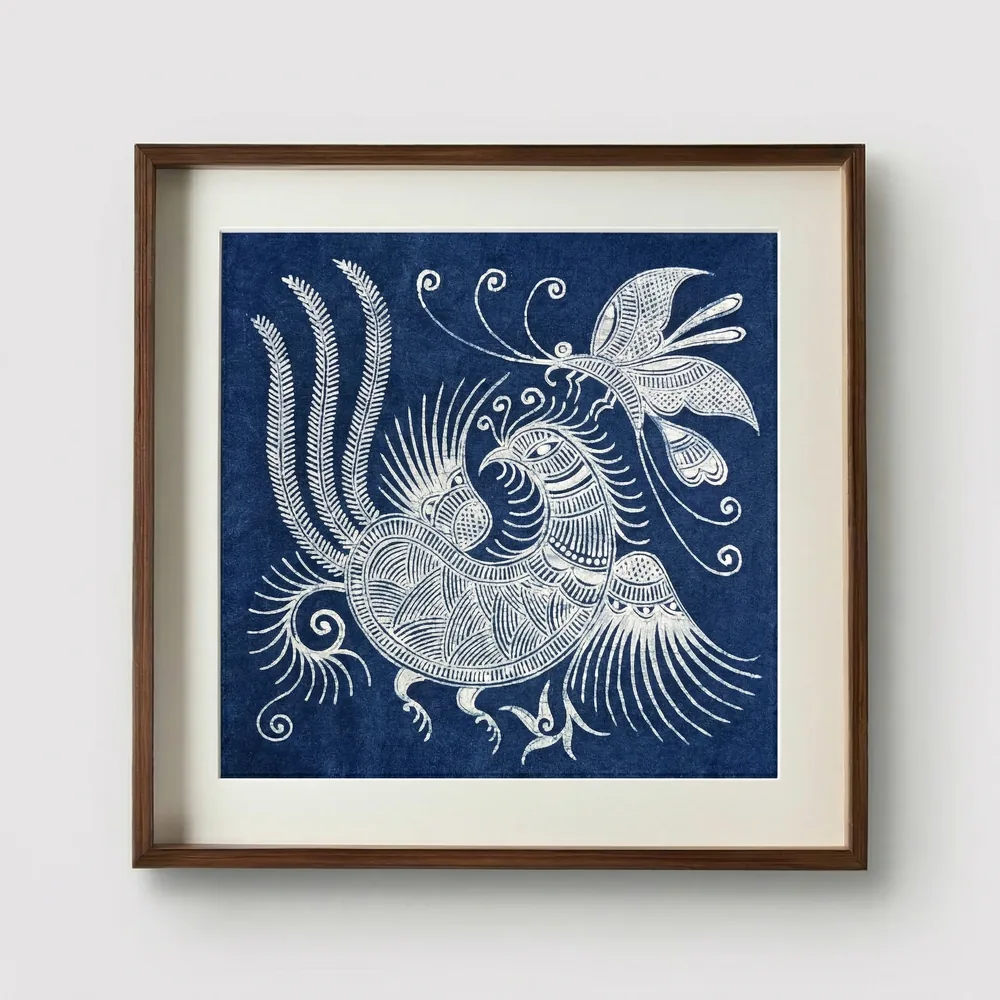
Square Miao batik wall art
40 × 40 cm or 50 × 50 cm, offered in walnut frame, natural wood frame, or unframed cloth for custom mounting.
From $79 unframed
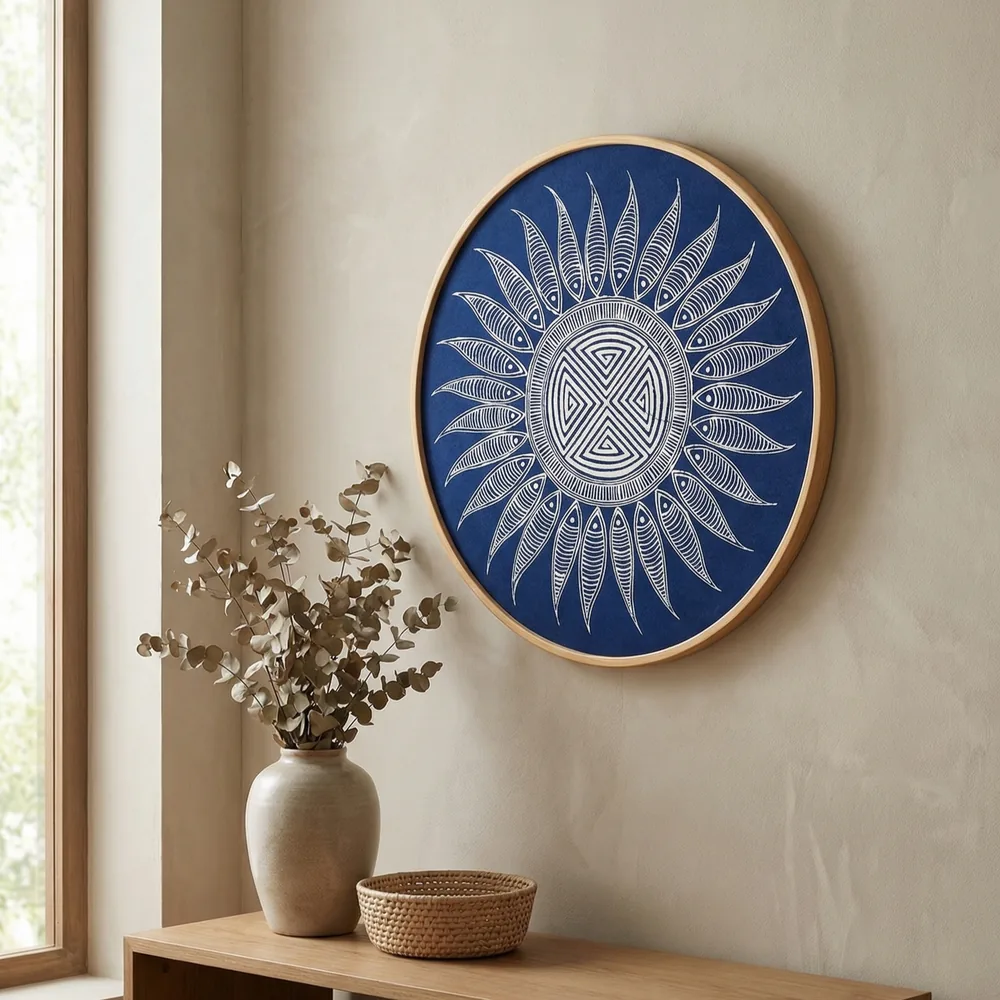
Round batik wall hanging (23.6 in)
60 cm diameter hand-drawn indigo batik, available unframed or mounted in a circular wood frame.
From $129 unframed
A quick tape test before ordering
Mark the four corners of the size you are considering on your wall with painter's tape, then step back to the doorway or sofa. Seeing the outline in place takes two minutes and immediately confirms whether a 40 cm square, a 60 cm circle, or a 60 × 80 cm rectangle fits the furniture below it.