

The short answer
Choose a table runner when you want to keep most of the tabletop visible and add a defined line of color or pattern through the center. Choose a tablecloth when you want to cover the whole surface or create a more unified background. Use both when a plain tablecloth needs a narrower decorative layer. A runner can frame serving pieces and add textile detail, but it does not replace the full surface coverage of a tablecloth.
The difference sounds simple until you picture the table in daily use. A tablecloth changes the entire surface. A runner changes one section of it. That affects how much wood or stone remains visible, where plates and serving dishes sit, and how much textile you need to clean after a meal.
Neither option is automatically more formal or more practical. The better choice depends on the table, the occasion, and what you want the textile to do.
Table runner, tablecloth, or both?
| Option | What it changes | Often works best for |
|---|---|---|
| Table runner | Adds a central band of color and leaves most of the table visible | Everyday dining, tea settings, consoles, wooden tables, and a lighter textile layer |
| Tablecloth | Covers the full tabletop and creates one continuous background | Complete surface coverage, a uniform setting, or tables you prefer not to leave exposed |
| Runner over a tablecloth | Adds contrast, pattern, or texture over a plain base | Dinners, celebrations, seasonal settings, and occasions that need a stronger focal line |
| Bare table | Keeps the material and shape of the table fully visible | Simple daily use or tables that already have enough visual interest |
Choose a table runner when you want to see the table
A runner is a good fit when the tabletop itself belongs in the room. Wood grain, stone, glass, or a sculptural table base can remain visible instead of disappearing under fabric. The runner gives cups, a vase, serving bowls, or candles a visual center without covering every place setting.
This works especially well for everyday dining. You can leave the runner in place between meals, then add only the objects you need. On a tea table or console, a runner can hold a small group of objects together so they do not look scattered across a long surface.

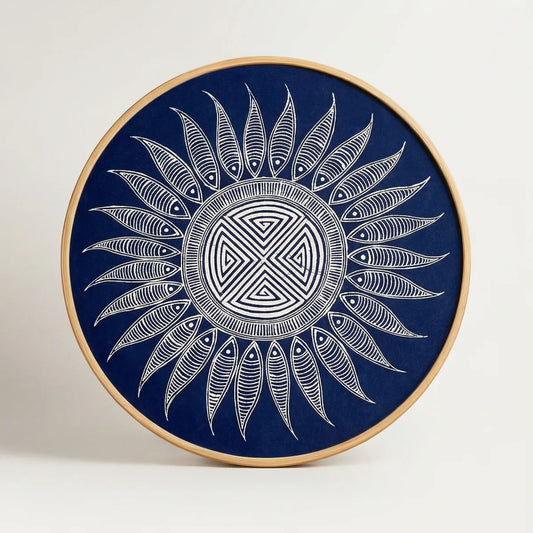
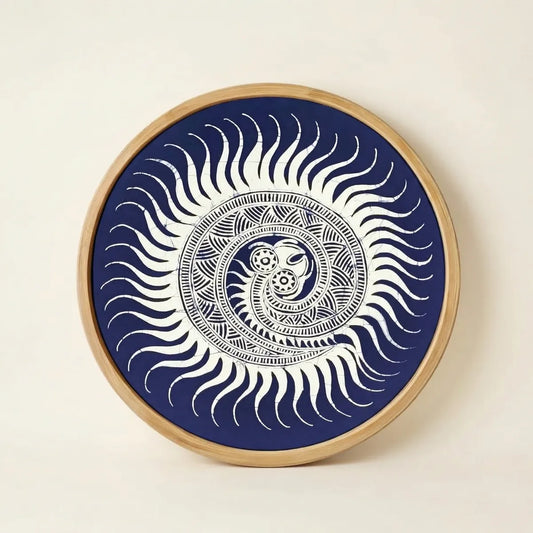
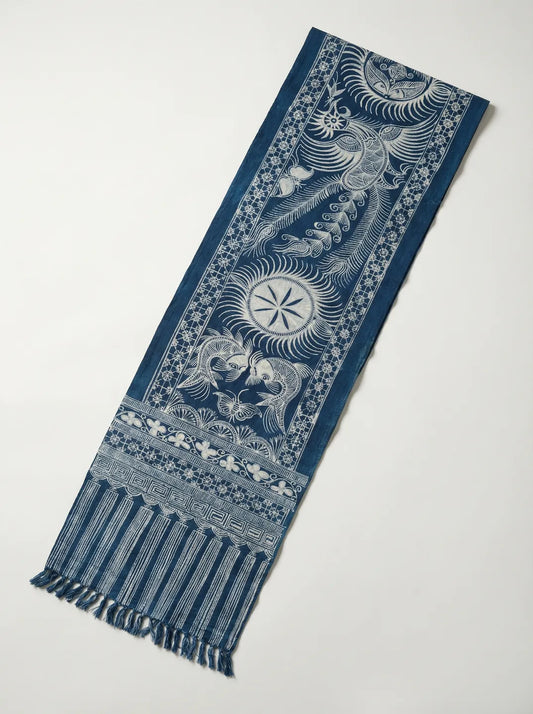
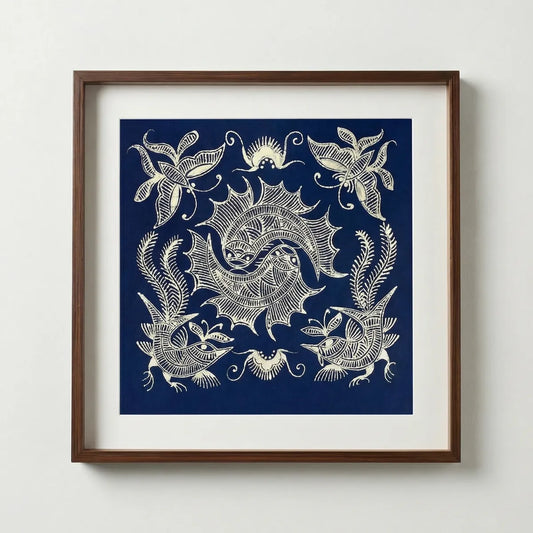
Runystore's Miao batik table runner is 40 cm (15.7 in) wide. Its indigo and white pattern has enough presence to work as the main textile on a bare table, so the surrounding dishes and decorations can stay simple.
Choose a tablecloth when full coverage matters
A tablecloth is the clearer choice when you want one continuous surface from edge to edge. It can hide a tabletop you do not want to feature, create a uniform background for mismatched tables, or establish a base color before plates and serving pieces are added.
Full coverage can also be useful when the whole table needs a removable textile layer. The fabric, care instructions, and any separate pads or trivets still determine what the tablecloth can handle. A cloth should not be assumed to protect against every spill, scratch, or hot dish simply because it covers more area.
What a runner does not cover
A runner covers and decorates only the area beneath it. Plates, glasses, and serving dishes placed outside that strip remain on the bare table. If surface protection is the main concern, use appropriate placemats, coasters, trivets, or a tablecloth suited to the table and the meal.
Use a runner over a plain tablecloth for contrast
You do not have to choose only one. A runner can sit over a tablecloth when you want the tablecloth to provide the background and the runner to carry the stronger pattern. This is often easier than combining several patterned textiles around the same setting.
With an indigo batik runner, a quiet solid-color tablecloth usually gives the wax-resist drawing enough space. Warm white, natural linen, soft gray, or another restrained color can act as the base. The runner then becomes the line that connects the centerpieces and serving pieces along the table.
Check the combined thickness before placing plates or glasses across an edge. If the runner sits under a place setting, make sure the transition between layers does not make the dishes unstable. A runner can also stay entirely within the center of a wide table so individual settings remain on the tablecloth alone.
Let daily use decide how much fabric you want
A table used for breakfast, homework, and evening meals has different needs from a table prepared for occasional guests. A runner is quick to remove or move aside when the center of the table is needed. A tablecloth involves more fabric, but it gives the whole setting one consistent surface.
Think about what happens after the meal. If only the runner is on the table, crumbs and spills may reach the exposed surface. If a tablecloth covers everything, the entire cloth may need attention even when only one corner is marked. Families, pets, children, long hanging edges, and the frequency of washing can all change which option feels easier.
For a table that stays mostly decorative, you can choose by appearance first. For a table used several times a day, choose the arrangement you can clear, clean, and reset without turning every meal into a styling project.
Let pattern change the balance of the setting
A tablecloth fills most of the visible surface, so its color has a strong effect on the room even before the table is set. A runner occupies less space, but a detailed pattern can still become the focal point because it travels through the center.
If the runner carries a large indigo and white motif, keep the other textile layer quiet. If the tablecloth already has a strong print, a second patterned strip may make plates, cups, and serving dishes harder to see as a group. There is no rule against combining patterns, but it helps to decide which textile should lead.

Once you have chosen a runner instead of a tablecloth, use the table runner size guide for measurements, standard lengths, and overhang examples. Keeping that calculation separate makes this choice simpler: first decide how much of the table you want to cover, then measure.
A runner can work beyond the dining table
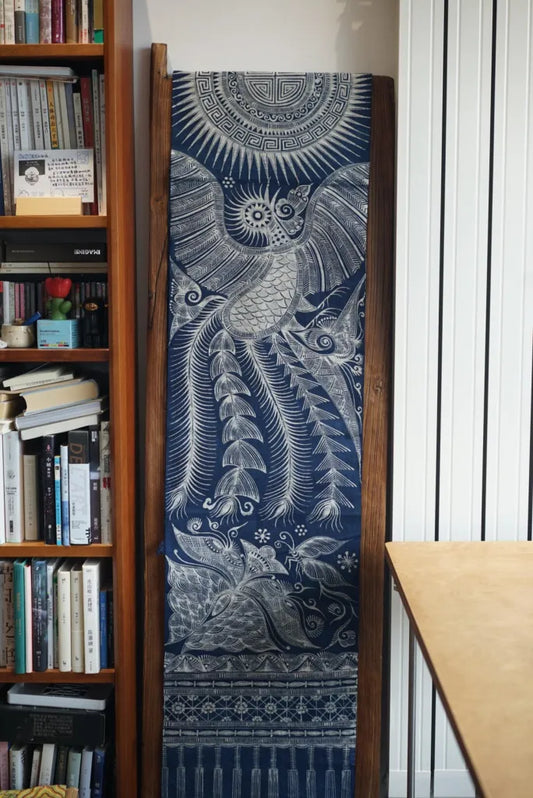
A tablecloth normally belongs to the table it was sized for. A runner is easier to move between surfaces. It can sit along a console or sideboard, cross a tea table, lie at the end of a bed, or hang vertically as a narrow textile display.
This flexibility can matter when you want one handmade textile to change roles over time. A wooden hanging rod is available separately for a simple vertical display. If the runner returns to the table later, follow the care guidance for the textile before placing dishes on it again.
Choose based on the table you already have
- Choose a runner if you want the tabletop to remain visible.
- Choose a tablecloth if you want complete visual coverage.
- Layer a runner over a plain tablecloth when you want a stronger center line.
- Use placemats, coasters, or trivets where individual dishes need a separate layer.
- Keep a runner shorter if long hanging ends would get in the way.
- Choose an overhang when you want the full textile and fringe to become part of the setting.
- Measure before ordering, especially when the runner will move between multiple surfaces.
For washing, drying, and storage, follow the indigo batik care guide. Care depends on the finished textile, so do not apply tablecloth instructions automatically to a handmade batik runner.
Tags: