

What Size Table Runner Do I Need? A Practical Length Guide
The short answer
Measure the length of your table, then decide what you want the ends of the runner to do. For a traditional drape, add 12 to 24 inches (30 to 60 cm) to the table length. If you want the runner to stay on top, choose one that is shorter than the table and center it.
Most sizing mistakes happen before anyone looks at a chart. A runner is chosen by length alone, then arrives with more fabric at the ends than expected, or barely reaches across the tabletop. The measurements matter, but the first decision is visual: should the runner hang over the edge, or sit entirely on the table?
Once that is clear, choosing a size is fairly simple. A tape measure, the table dimensions, and a quick check of the place settings will tell you more than a generic rule ever could.
Choose the finish before the length
For a runner with overhang
This is the familiar dining-table arrangement. The runner travels down the center and drops over both ends. About 6 to 12 inches (15 to 30 cm) per end is a sensible starting point. It is also the range used in Spoonflower's table runner guidance, although there is no need to force every table into the same proportion.
Table length + twice your preferred drop = runner length
A 60-inch table with a 9-inch drop at each end needs a runner close to 78 inches long.
A deeper drop feels more formal and lets the tassels become part of the room. A shorter drop is easier around chairs and busy dining spaces. If children or pets can reach the ends, keeping more of the textile on the tabletop is usually the calmer option.
For a runner that stays on the tabletop
Tea tables, coffee tables and consoles often look better with the fabric contained within the surface. There is no extra calculation here. Pick a runner shorter than the table, place it in the center, and leave a similar amount of visible wood at both ends.

Match the table to a standard runner length
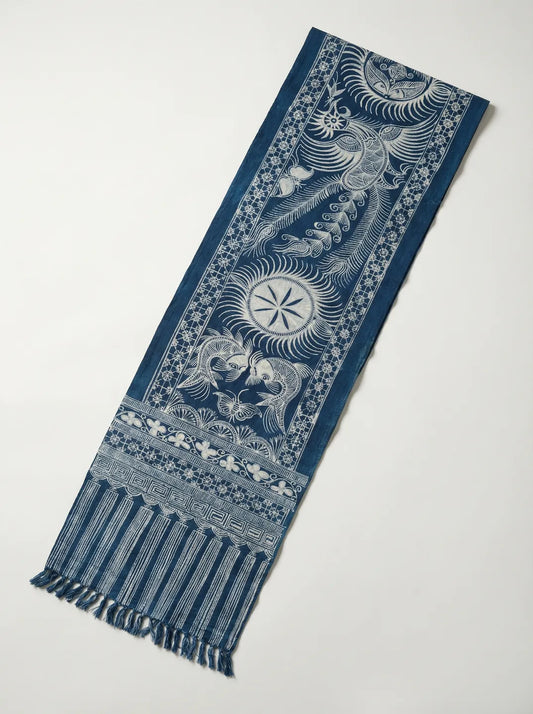
Runystore's handmade batik runners are 15.7 inches (40 cm) wide and available in four standard lengths. The suggested table lengths below leave roughly 6 to 12 inches of fabric at each end.
| Runner size | Suggested table length | Often suits |
|---|---|---|
| 15.7 x 66.9 in 40 x 170 cm |
43 to 55 in 110 to 140 cm |
Tea table, compact dining table, console |
| 15.7 x 74.8 in 40 x 190 cm |
51 to 63 in 130 to 160 cm |
Four-seat dining table, sideboard |
| 15.7 x 98.4 in 40 x 250 cm |
75 to 87 in 190 to 220 cm |
Six-seat dining table, long console |
| 15.7 x 106.3 in 40 x 270 cm |
83 to 94 in 210 to 240 cm |
Large dining table, long sideboard |
If your measurement lands between two sizes, do not automatically round up. Choose the longer size when you want the ends and fringe to be prominent. Choose the shorter one when the table is used every day and you would rather keep the drop modest. A custom length makes sense when neither result feels balanced.
Check the width with the objects you actually use
Length gets most of the attention, but width determines whether a runner is comfortable to live with. A 40 cm runner creates a substantial band through the center of the table. On a broad dining table, that still leaves plenty of wood at either side. On a narrow tea table, it may cover most of the surface.
Mark 40 cm across your table with a tape measure or two pieces of paper. Then set down a dinner plate, teapot or serving dish. This small test catches the practical problems that measurements on a product page cannot show. If the objects sit comfortably without rocking on the textile edge, the width is likely right.

Let the table shape change the plan
- Rectangular tableMeasure along the longest side and place the runner down the center. This is the most straightforward arrangement for an even drop.
- Square tableRun the textile through the center, or measure from corner to corner for a diagonal placement. A shorter runner under a vase or tea set can feel less formal.
- Round tableMeasure straight across the center. Check the chair positions before choosing a long drop, especially on a small table.
- Console or sideboardA runner slightly shorter than the furniture usually keeps drawers, doors and handles clear while framing the objects above it.
Leave room for the handmade pattern
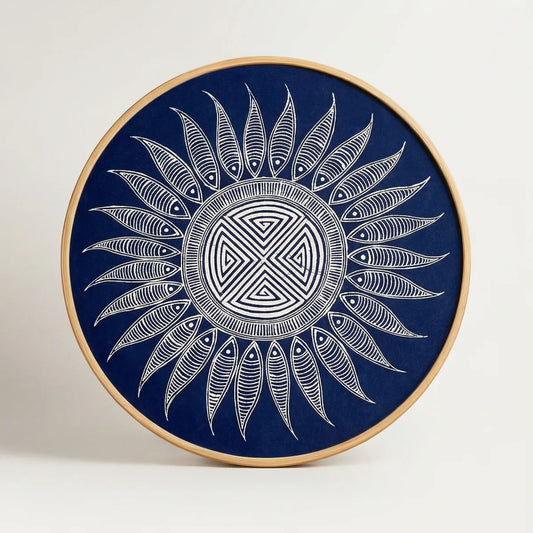
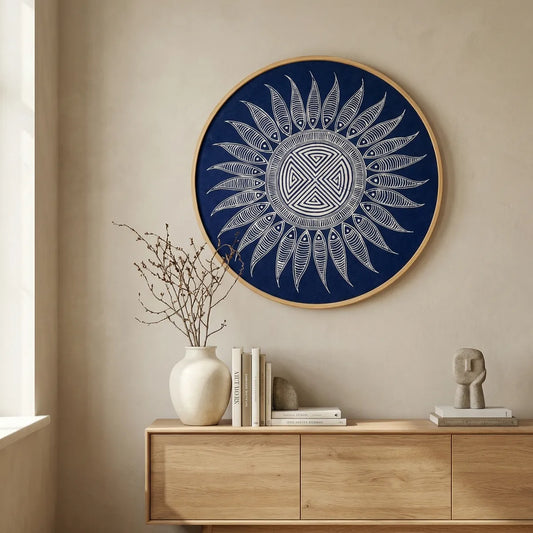
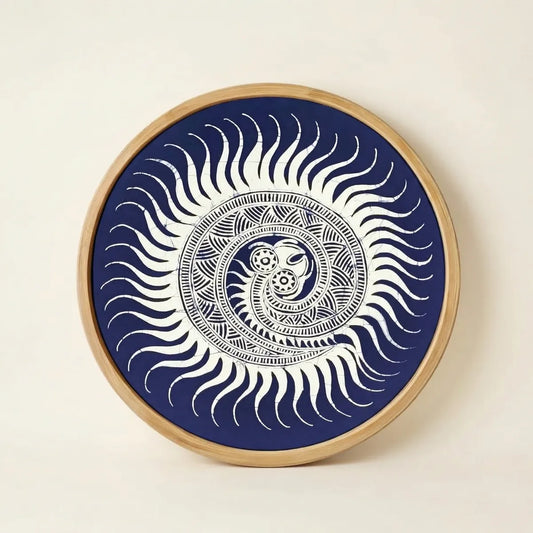
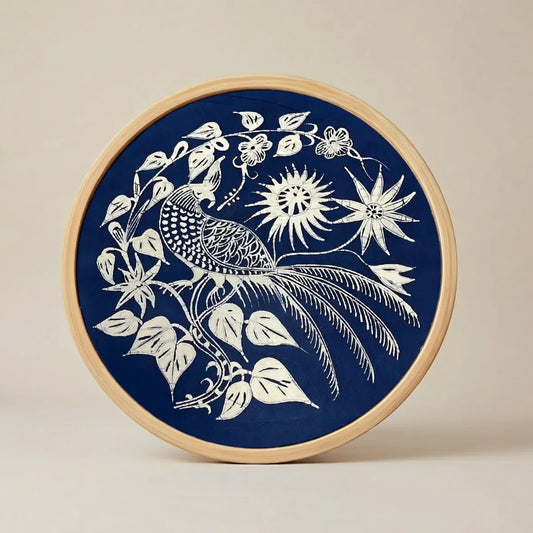
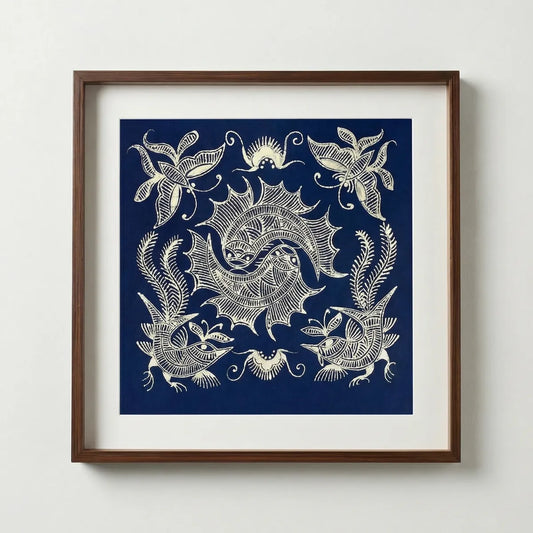
A handmade batik runner is not a strip cut from a repeating factory print. The wax lines, indigo tone and placement of the motifs vary from piece to piece. A long overhang may move a part of the design below the tabletop, while a shorter placement keeps more of the drawing in view.
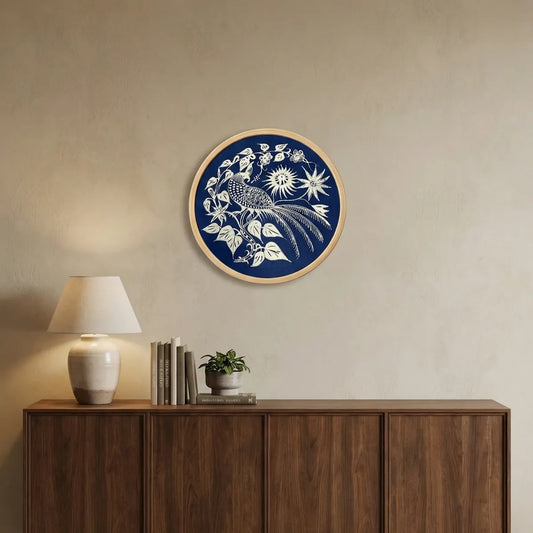
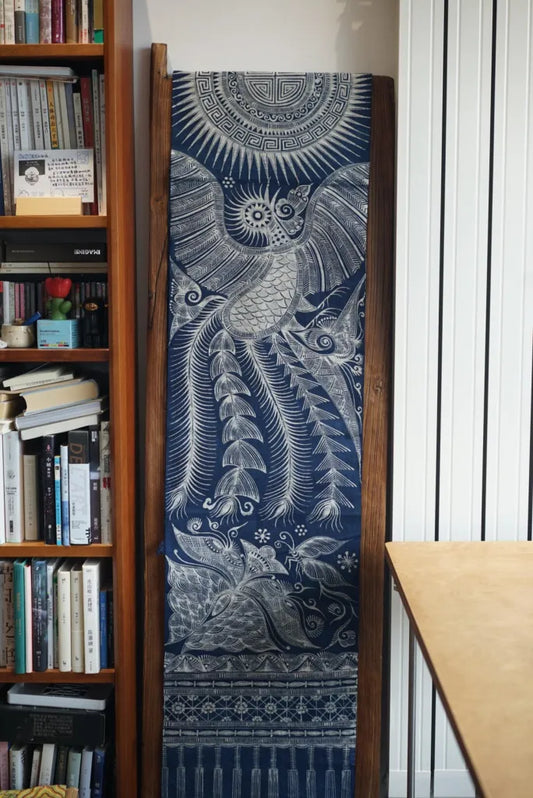
Look at the product photographs as well as the measurements. If there is a motif you especially want to see, picture where it will fall once the runner is draped. The same textile can also live on a sideboard, at the foot of a bed or as a narrow wall hanging, so the most useful length may not be tied to one table forever.
Ready to compare sizes?
See the available lengths, current patterns and custom-size option on the Miao Batik Table Runner page. If you already know the size and want help placing it, our table runner styling guide has quieter ideas for dining tables, tea settings and other corners of the home.
Tags:
Previous
Miao Jewelry: A Practical Guide to Earrings, Bracelets, Rings, and Necklaces
Next
How to Wash and Care for Indigo Batik Textiles