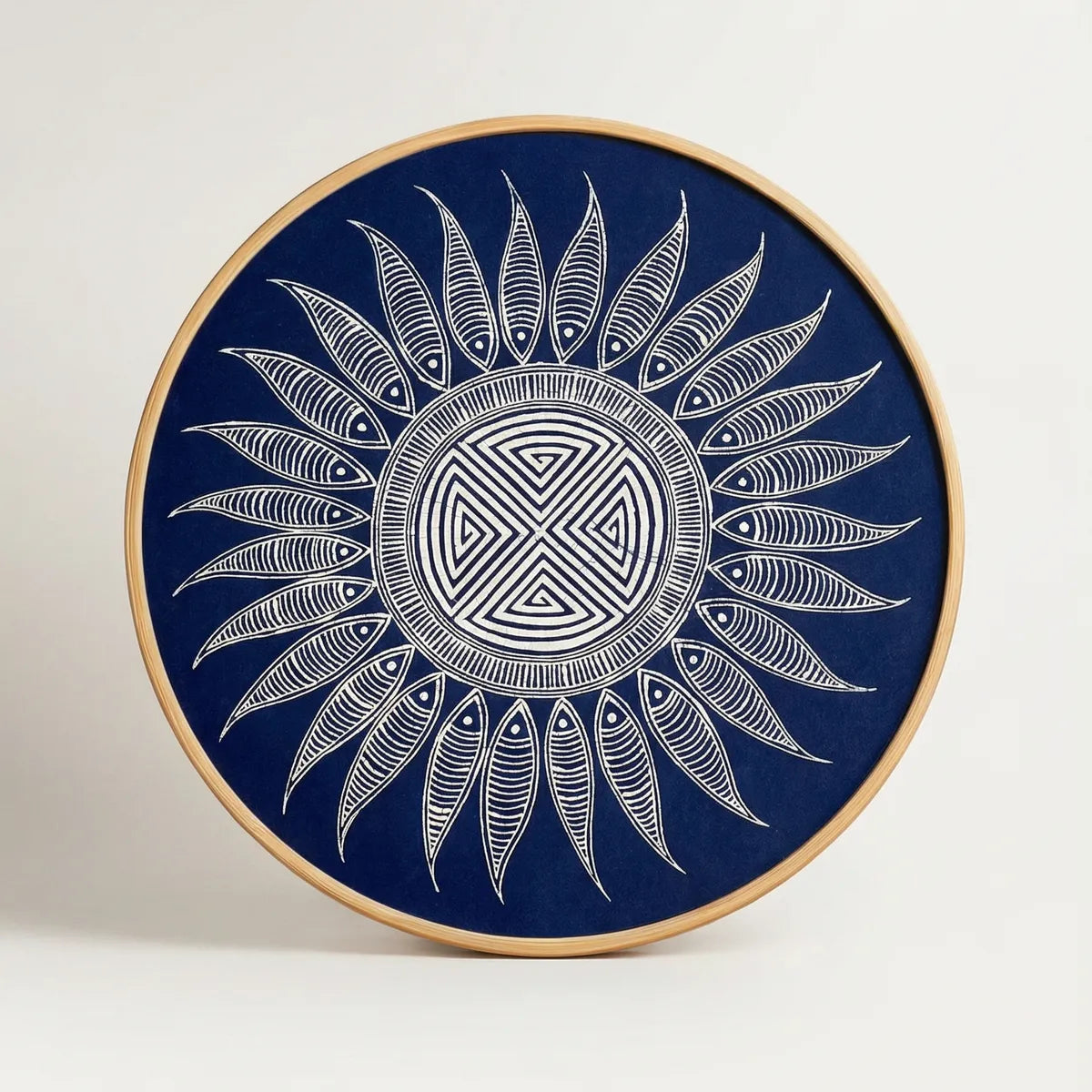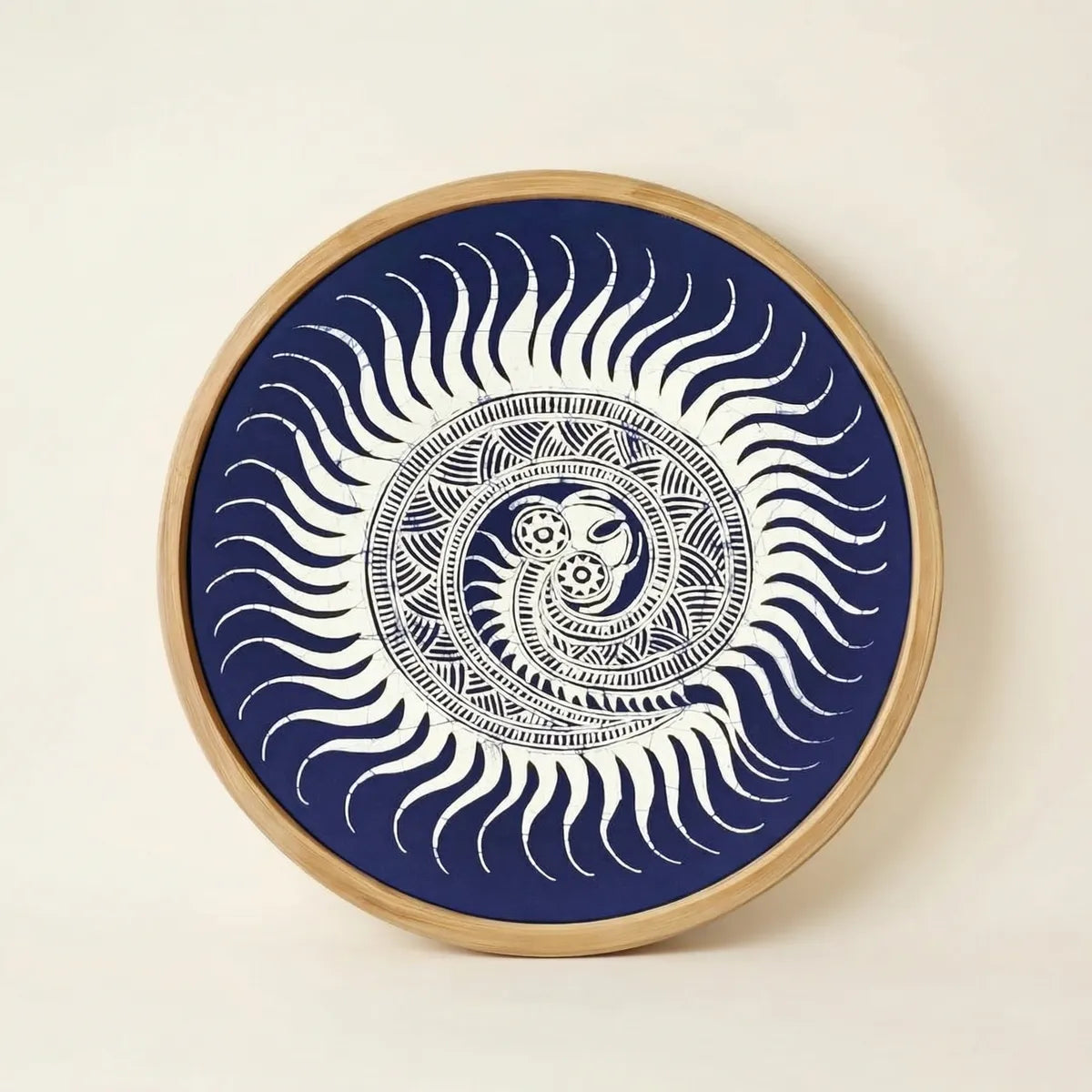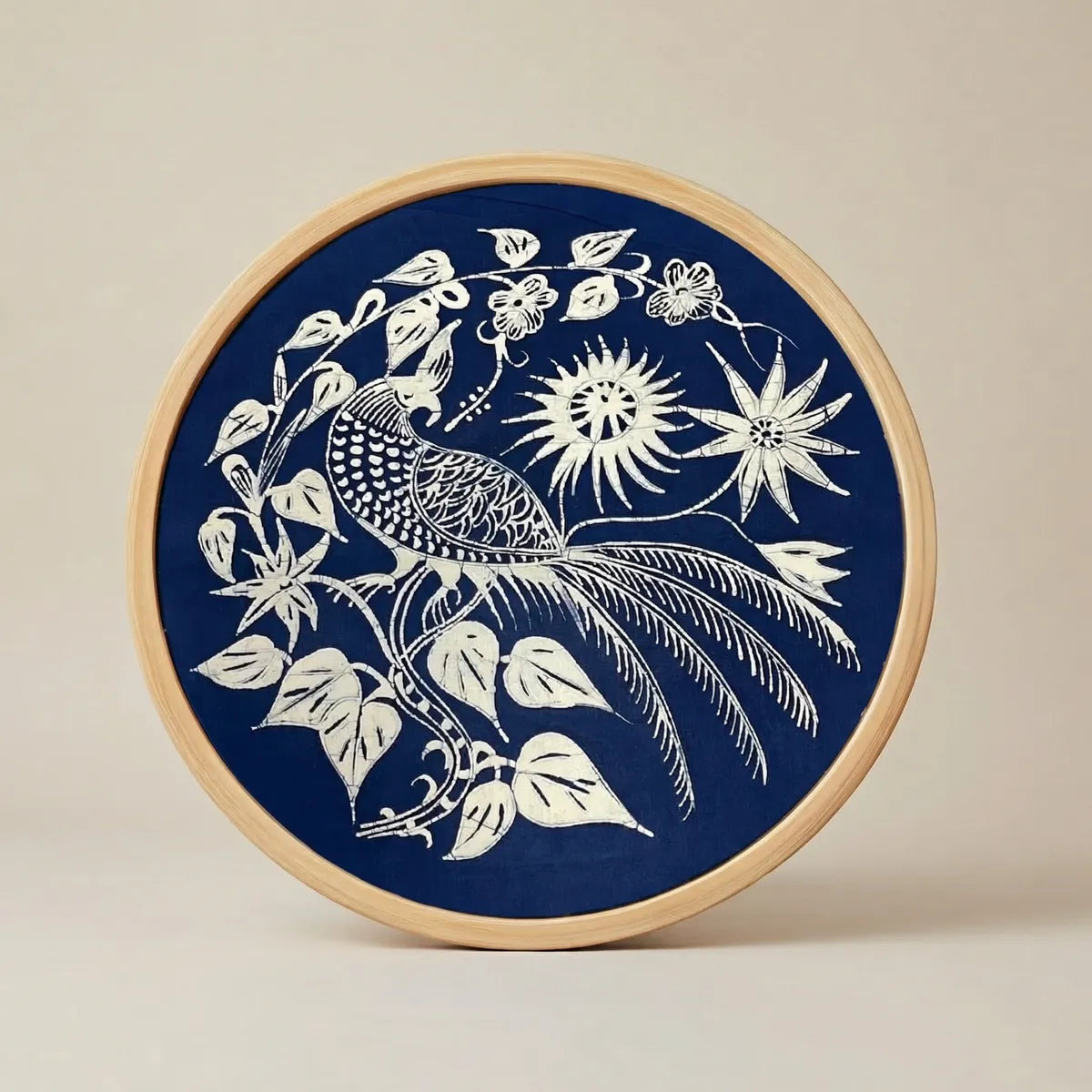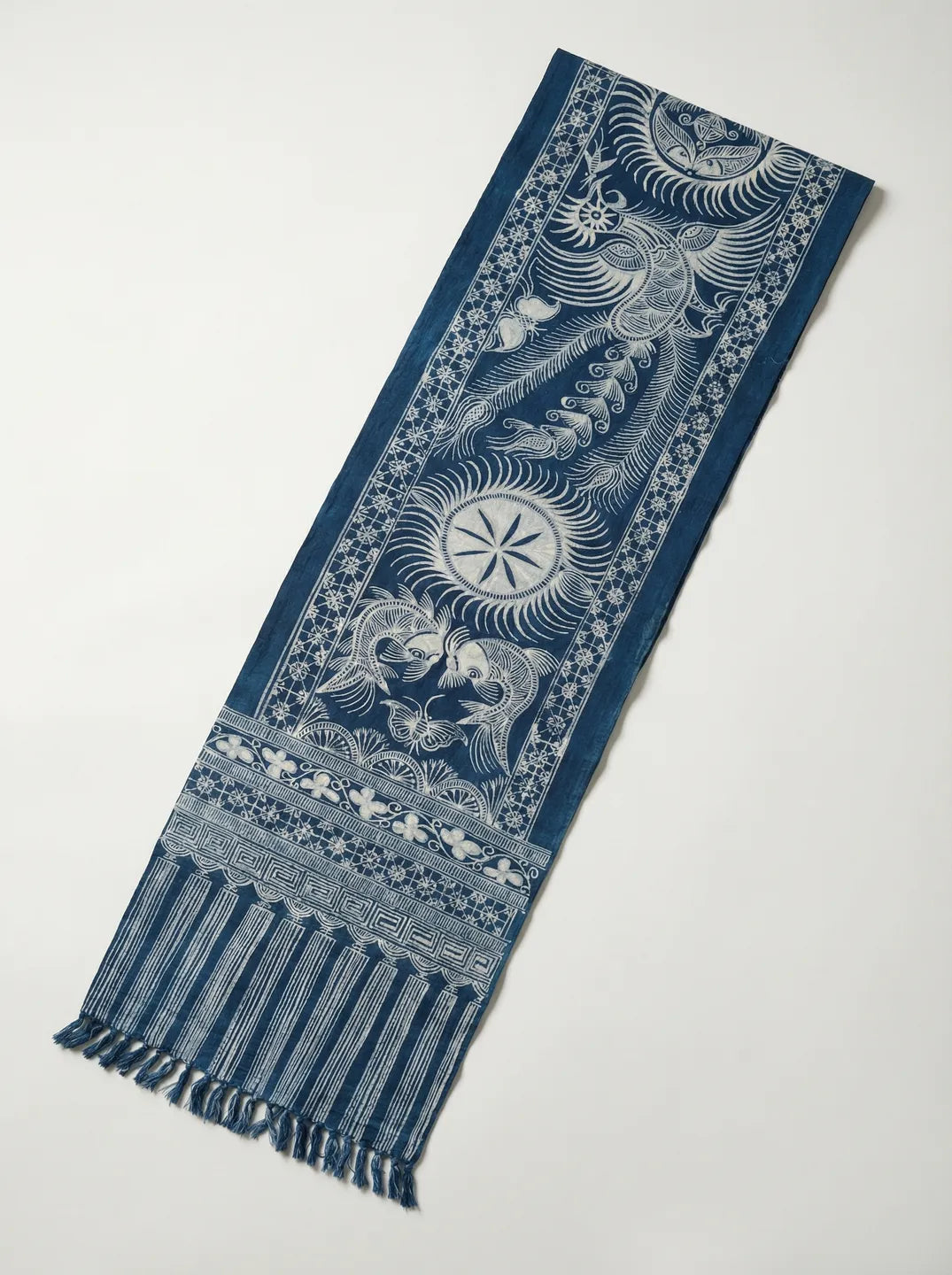

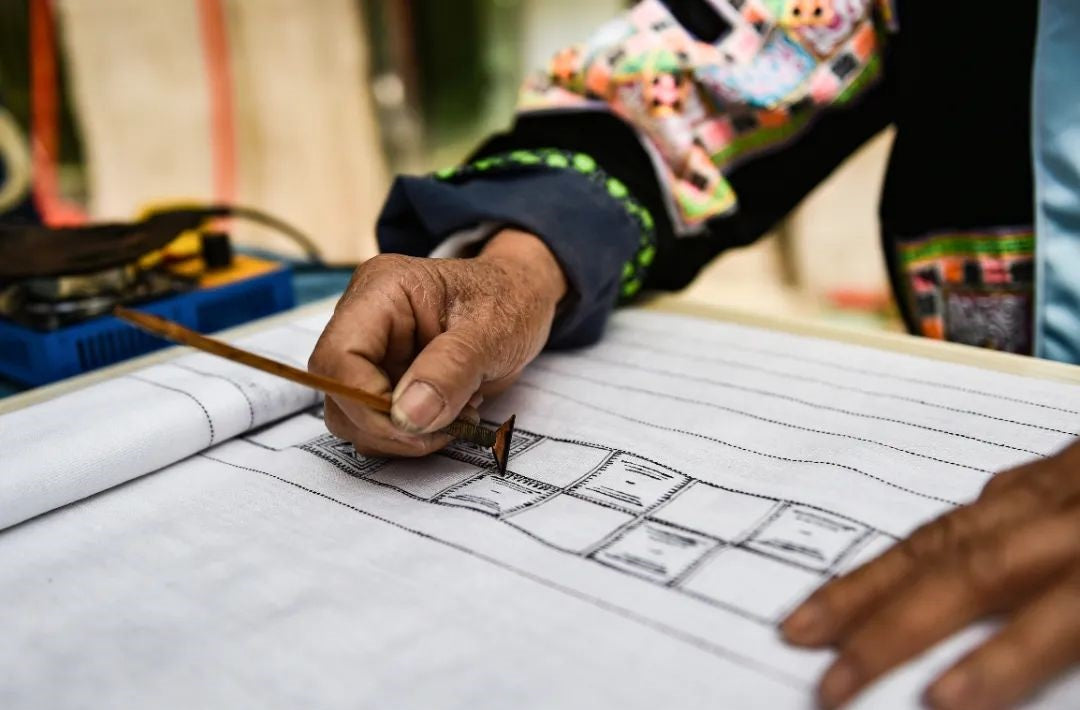
In traditional Miao wax-resist dyeing (làrǎn 蜡染), you are never drawing lines on cloth. You are drawing boundaries for light. Because every stroke of molten beeswax shields the natural cotton beneath it from liquid indigo, the pattern you see on the finished textile is actually the negative space of the cloth itself. When your wax lines are boiled clean in water, the covered areas emerge as luminous, bone-white motifs against a sea of midnight blue.
For anyone picking up a drawing tool for the first time, this reverse logic feels completely counterintuitive. And because hot wax cools in under three seconds and permanently locks into textile fibers, the mountain workshops of Guizhou have an unwritten rule for every apprentice: never touch hot wax until your hand has memorized the lines on paper.
Whether you want to try traditional indigo vat dyeing, explore folk embroidery, or practice historic geometric patterns, this guide deconstructs how authentic Miao motifs are drawn, how to build line momentum on paper first, and how to transfer clean vector templates directly to your fabric.
1. The Mental Shift: Seeing in Reverse (Resist Logic)
When you sketch with graphite or ink, your brain is conditioned for additive creation: where your hand moves, darkness appears.
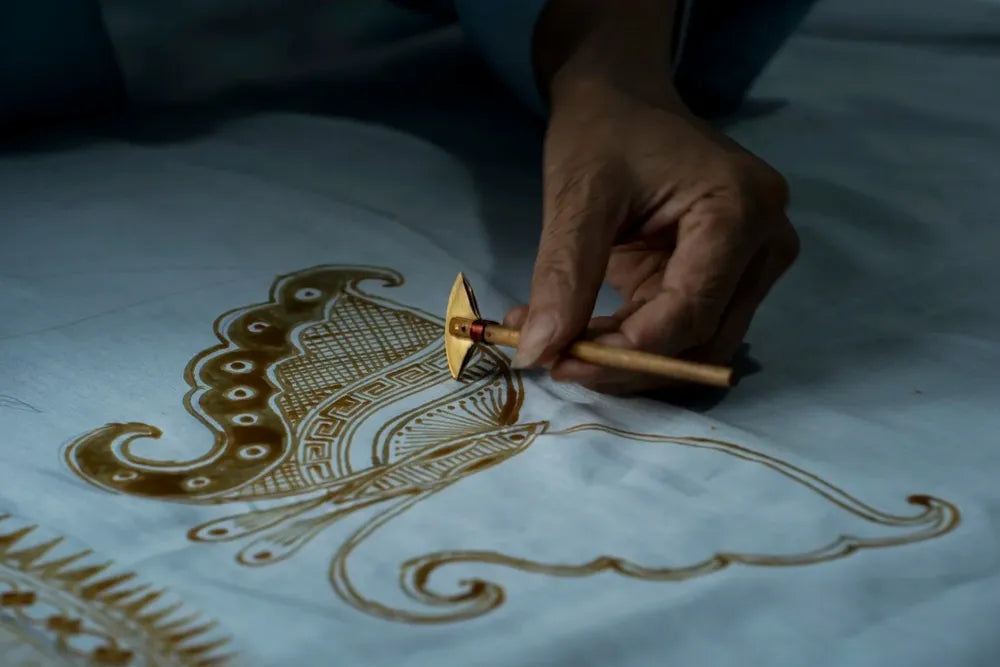
Batik turns this entirely on its head. In wax-resist dyeing:
- The line is a shield, not an ink: Where your wax knife glides, the fabric is protected from the indigo vat.
- The unpainted space absorbs the dye: If you draw a solid shape with wax, it will remain a solid white shape. If you draw an outline with internal hatching, the hatched lines stay white while the gaps soak up deep indigo.
- Line density dictates mood: If wax lines are spaced too far apart, the piece becomes an overpowering field of blue with lost detail. If lines are crammed too tightly, the wax bridges together and the pattern clogs.
Before touching fabric, sketch your motif in dark ink on a sheet of thin paper, then hold it up backward against a bright window or a dark tabletop. What you drew in black ink is exactly what will remain crisp white fabric; the untouched paper is what will soak up midnight indigo. Training your eyes to read the white silhouette first prevents 90% of beginner composition mistakes.
2. Deconstructing the Three Sacred Motifs (Stroke by Stroke)
In the mountain communities of Guizhou—where Miao batik was recognized in 2006 as China's first national intangible cultural heritage craft—patterns are not random doodles. They are an ancient, wearable pictorial history. Here is how three of the most foundational ancestral motifs are constructed, from initial anchor stroke to finished textile.
Motif 1: The Sacred Spiral & Concentric Rays (The Sun & Drum)
The spiral (wo) represents the cosmic sun, ancestral bronze drum heads, and the seasonal cycle of rain and harvest.
- The Anchor Pivot: Begin with a tight, central spiral loop roughly the size of a pumpkin seed. Do not attempt to draw separate concentric rings. Draw one unbroken, widening spiral moving steadily clockwise.
- The Elbow-Pivot Technique: The secret to steady spirals is locking your wrist at a comfortable 45° angle and letting the pivot motion originate from your elbow and shoulder. If you only move your fingers, the spiral will wobble and flatten into an oval.
- The Solar Teeth: Once your spiral reaches its desired width (typically 6 cm to 12 cm for medallions), encircle the perimeter with outward-pointing triangular rays or feather ticks.
Motif 2: The Butterfly Mother (Mai Bang Mai Liu)
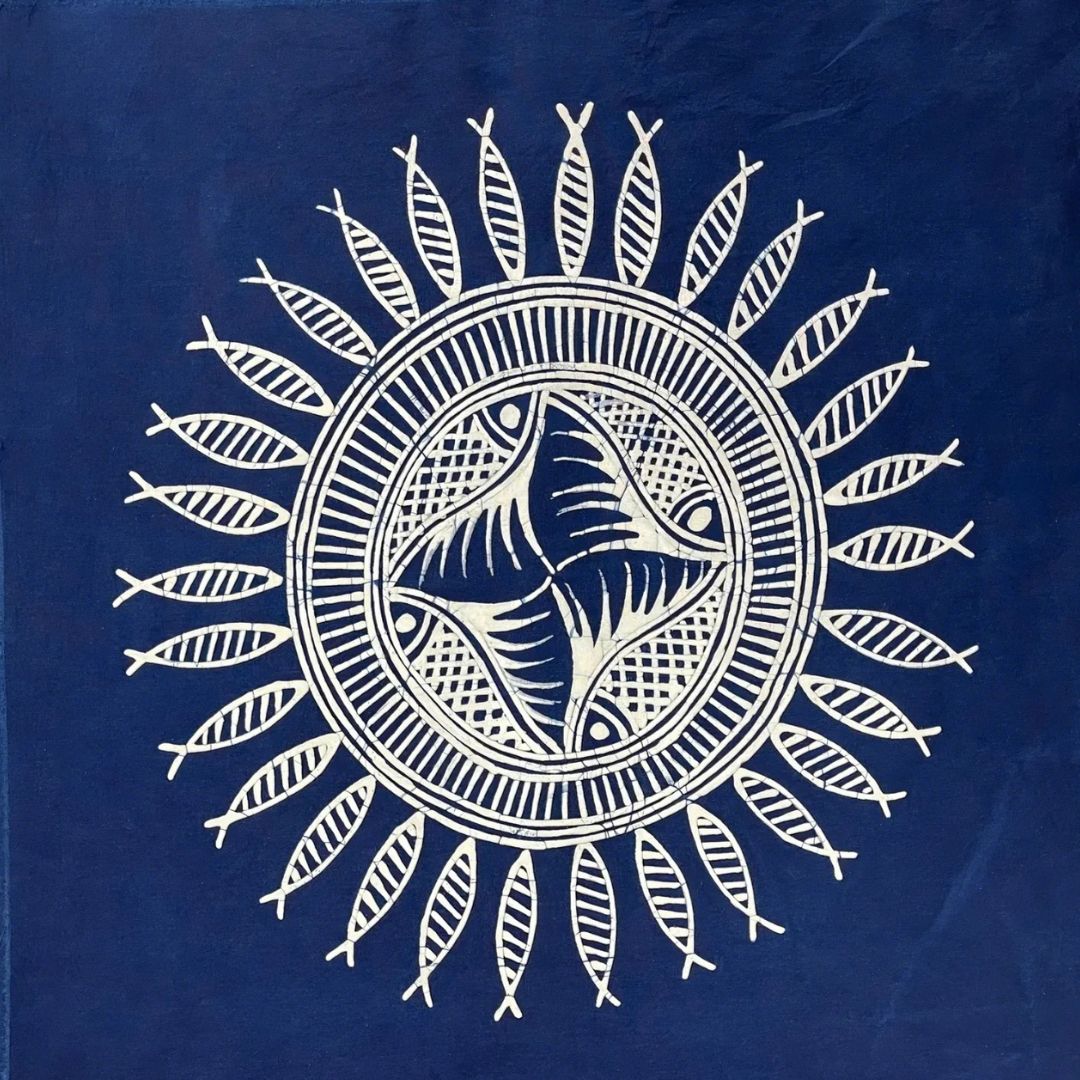
According to Miao ancestral epics, the Butterfly Mother (Mai Bang Mai Liu, 妹榜妹留) emerged from the heart of a sacred sweetgum tree and laid twelve divine eggs that gave birth to humanity and the natural world.
- The Heart Core: Draw two symmetrical, inward-turning spirals that meet at a central spine, establishing the butterfly's head and thorax.
- The Wing Boundary: Sweep two expansive, teardrop-shaped arches outward. The perimeter of each wing should be drawn in a bold, single continuous motion that tapers gracefully as it loops down to the lower wings.
- Internal Hatching & Life Eggs: Fill the interior of the wings with rhythmic parallel lines and small circular spirals. These clusters represent the twelve divine eggs—symbols of fertility, ancestral remembrance, and renewal.
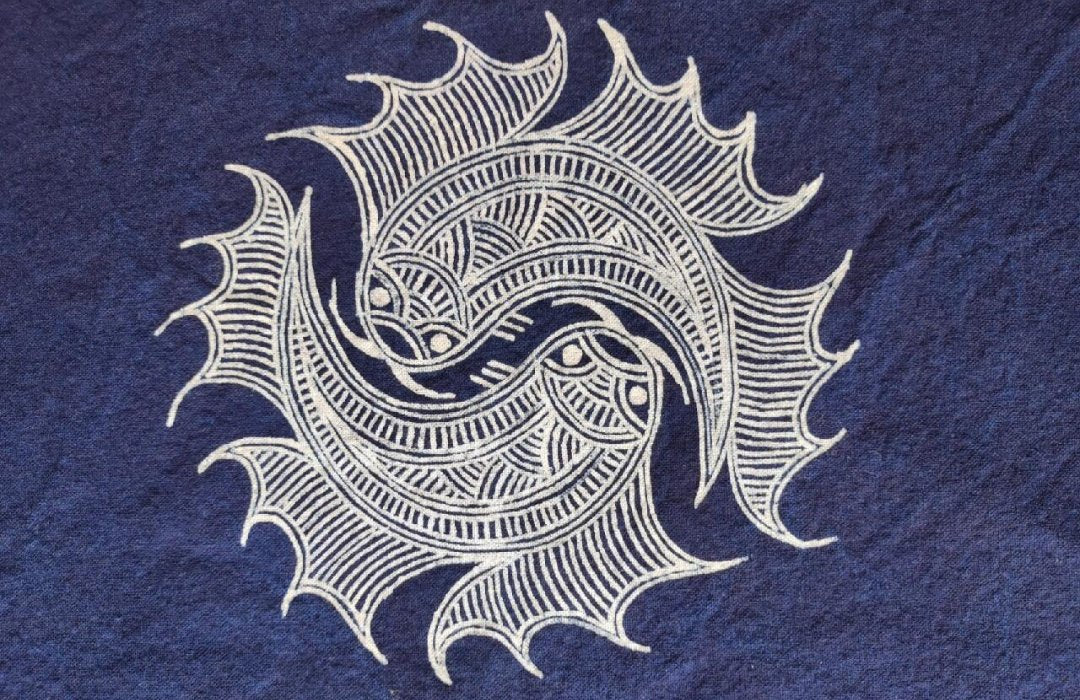
Motif 3: River Waves & The Double Fish
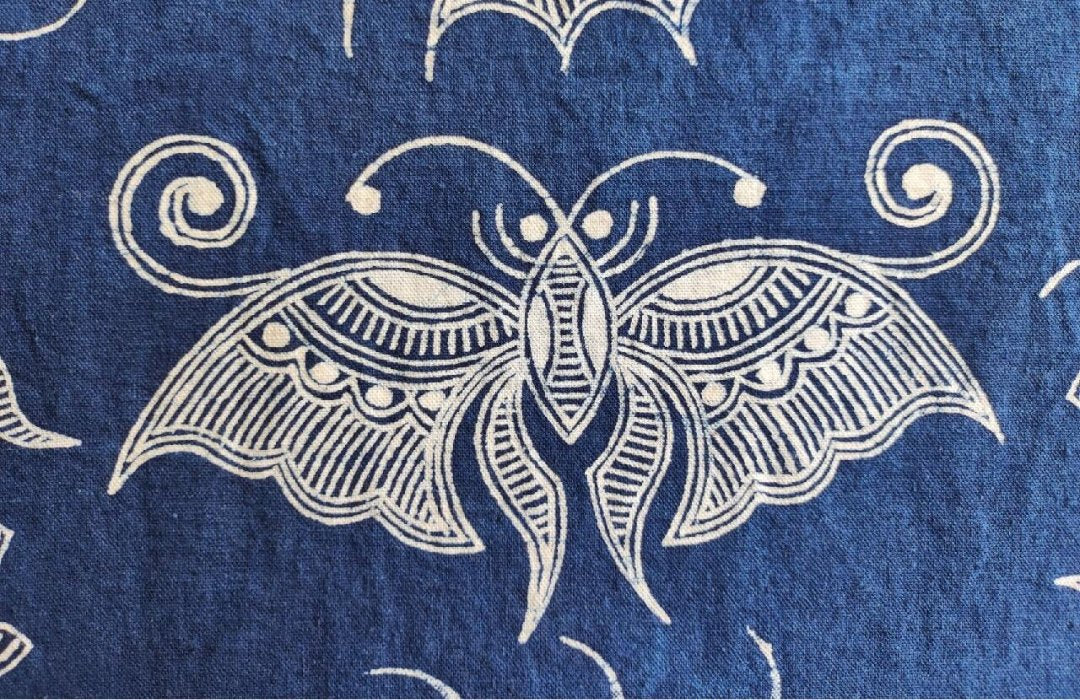
Guizhou's river networks historically provided trade, sustenance, and migration routes. The double-fish motif signifies abundance, harmony, and safe passage.
- The Spine Arc: Draw an elongated, gentle S-curve to establish the movement of the fish body.
- The Contour Enclosure: Sweep back from the head to meet the tail fin in a streamlined fish shape.
- Geometric Scale Grids: Rather than drawing realistic scales, traditional Miao batik fills fish bodies with clean diagonal diamond grids, parallel wave hatching, or interlocking triangles.
3. The Paper-to-Cloth Transition: Why Paper Practice Prevents Ruined Fabric
In artisan villages like Danzhai and Anshun, apprentices spend weeks drawing motifs on rough paper before ever lighting a wax pot.
- Wax cools in 2 to 3 seconds: Once liquid beeswax leaves the heated copper reservoir of your wax knife, it solidifies almost instantly upon contacting room-temperature cloth. If your hand hesitates while thinking about the next curve, the wax pools into an uneven lump.
- Developing constant velocity: A smooth wax line requires your hand to glide at an even 2 to 3 centimeters per second. Practicing on paper with a 0.5 mm or 0.8 mm fine-liner builds the necessary rhythm and confidence.
- No eraser on fabric: You cannot wipe away hot wax. Paper is where mistakes are free and muscle memory is forged.
How to Transfer Your Design to Cotton Once Practiced:
- The Window/Lightbox Method (Recommended): Tape your printed 1:1 scale paper template to a brightly lit window or an LED lightbox. Lay your smooth, ironed unbleached cotton over the paper. Lightly trace the primary contour lines using a water-soluble fabric marker or a heat-erasable tailor's pen.
- The Chalk Carbon Method: Place dressmaker's chalk carbon paper face-down on your stretched fabric, place your paper pattern on top, and trace firmly with an empty ballpoint pen. The chalk markings will completely wash out during the final boiling step.
4. The 9 Heritage Motifs: Printable Studio Templates
To spare beginners the frustration of squinting at distorted museum photographs or blurry online thumbnails, our Guizhou artisan studio has vectorized nine foundational ancestral motifs into ready-to-print workshop templates.
Each motif includes clear line boundaries, wax-resist area guides (showing exactly what stays white vs. what turns blue), and printable scales formatted for home printers.
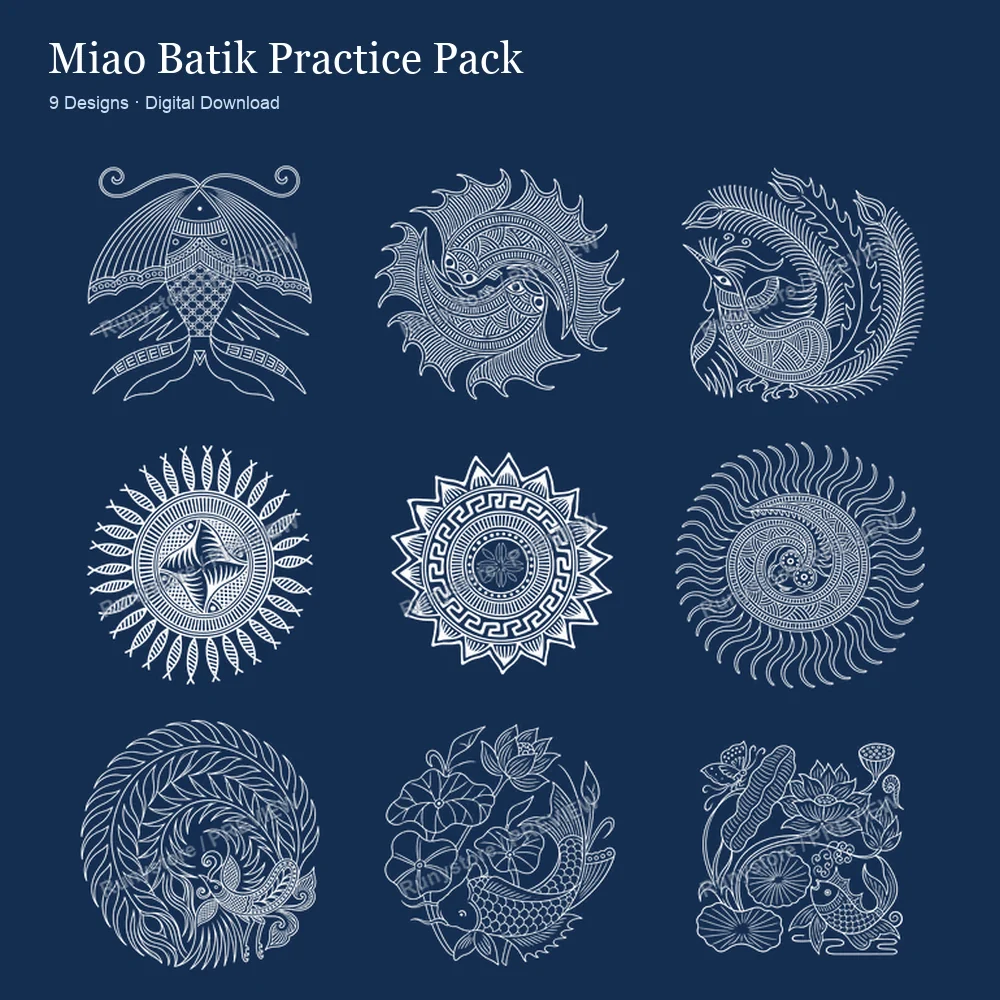
Miao Batik Practice Patterns - 9-Design Digital Pack
Printable A4 & US Letter PDFs, scalable SVG vectors, and 6000px high-resolution references. Includes Butterfly Mother, Sacred Sun & Bronze Drum, Double Fish, Phoenix, and Geometric Borders with wax-area guides.
$9.90 USD · Instant Digital Download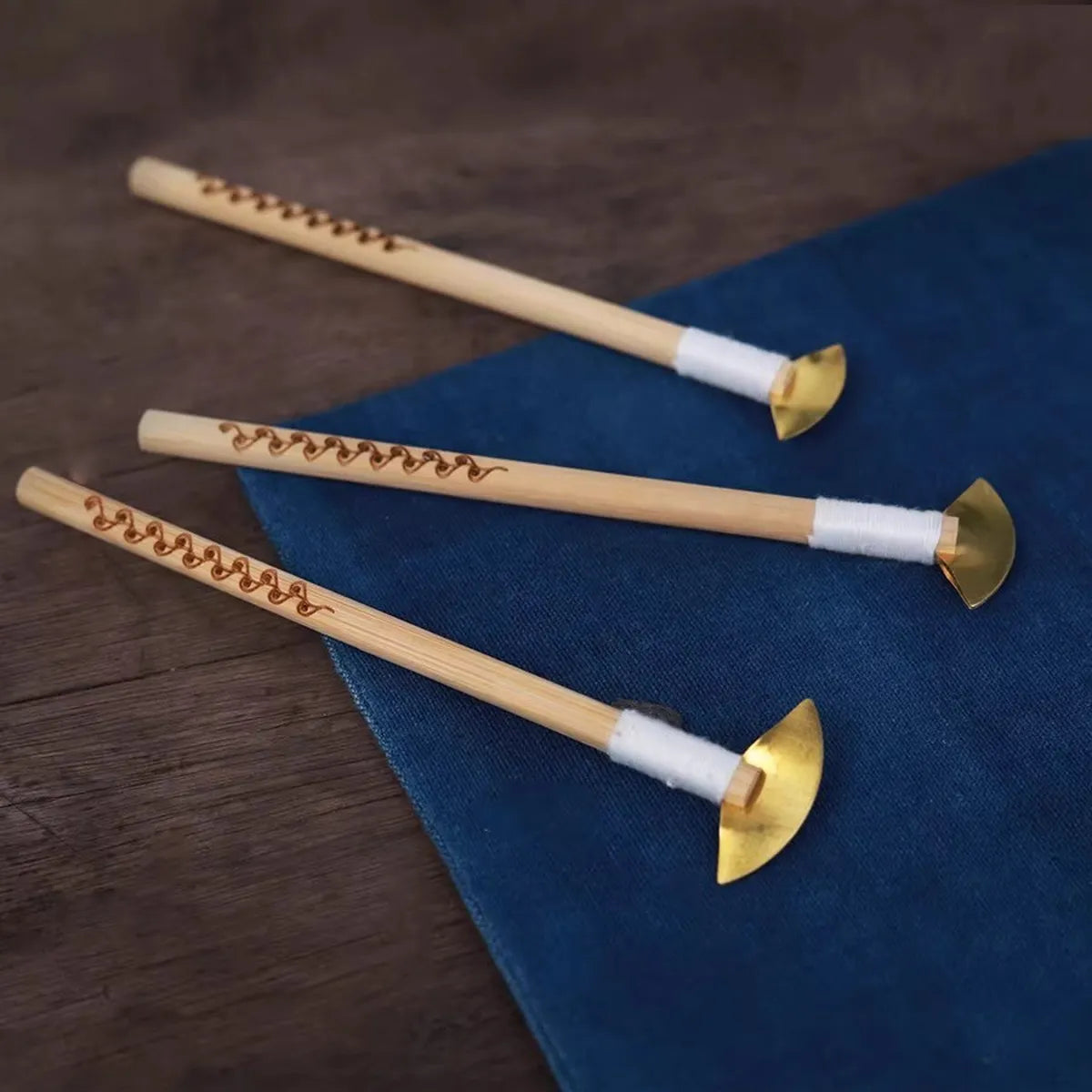
Authentic Miao Batik Wax Knife (Ladao)
Traditional dual copper blade wax drawing instrument bound to a hand-carved bamboo handle. Handcrafted by Guizhou artisans for smooth molten beeswax delivery.
$19.00 USD · Handcrafted in Guizhou5. Lighting the Wax Pot: Transitioning to the Traditional Wax Knife
When your hand moves effortlessly through the curves on paper, drawing with molten wax is one of the most rewarding sensory experiences in textile art.
- The Temperature Sweet Spot: Melt pure beeswax (or a 70:30 beeswax-paraffin mix) in an electric wax pot between 70°C and 80°C (158°F–176°F).
- Charging the Copper Blades: Dip the triangular head of your ladao into the hot wax for five seconds. The heated copper draws a charge of liquid wax into the gap between its twin blades through capillary action.
- Touch and Glide: Lightly tap the flat edge of the tool against the rim of your pot to shed any hanging drop. Bring the blade tip to the fabric at a 45° angle and move immediately. Never let the tool rest stationary on the cloth.
- The Penetration Check: Look at the reverse side of your cloth. A proper wax stroke penetrates all the way through the weave. If the back remains dry white cotton, the wax was too cool or you moved too quickly.
You don't need a digital thermometer in the studio once you recognize the visual cues. If you touch wax to cloth and it turns milky-white within one second, it is too cold and will flake off in the dye vat. If the wax pot gives off wisps of white smoke, it is overheating. Look for clear, honey-like fluidity that sinks instantly into the cotton weave.
6. Workshop Troubleshooting: What Went Wrong on the Cloth?
Even experienced makers hit hurdles. Here is how master artisans diagnose and solve the four most common drawing challenges:
"My line pooled into a thick blob the moment my tool touched the fabric."
The Cause: Hesitation. Pausing for even a fraction of a second while bringing the blade down releases the entire capillary reservoir in one spot.
The Fix: Begin your arm motion in the air just above the fabric, touching down as you glide—like an airplane landing smoothly on a runway. Touch and motion must be simultaneous.
"My lines vanished or became blurred and blotchy after indigo dyeing."
The Cause: Shallow wax penetration. The wax sat on top of the surface threads rather than soaking through the fabric core, allowing liquid indigo to seep underneath during extended vat immersion.
The Fix: Raise your wax pot temperature by 3°C to 5°C and ensure you pre-washed your fabric in hot water to remove factory sizing starches. Sizing acts as an invisible barrier that repels wax.
"Can I practice these patterns if I do not have an indigo dye vat?"
The Answer: Absolutely. Miao motif geometry is celebrated worldwide by quilters, embroiderers, and printmakers. Many fiber artists use our printable vector templates for sashiko stitching, woodblock carving, fabric marker illustration, or linocut prints. The rhythm of the lines is an art form in its own right.
"How do I remove the beeswax once dyeing is completed?"
The Fix: Submerge your dried, dyed textile into a pot of simmering water (above 85°C / 185°F) with a single drop of neutral dish soap. The beeswax melts within seconds and floats to the surface. Allow the pot to cool completely until the wax hardens into a solid disc on top, lift the wax disc out to reuse in your next project, and rinse your finished blue-and-white cloth in cold water.
The Next Step in Your Craft
Traditional batik rewards patience. Start on paper, master the cadence of the spiral, and let your hand find its rhythm before you melt a single gram of beeswax. When you feel the copper blade glide smoothly across cloth, you are not merely making a decorative print—you are taking part in a living two-thousand-year craft lineage.
Explore our complete artisan collection of Handmade Miao Batik Textiles and traditional tools at RunyStore.com.